The Global War for Routes and Resources: Why the American Empire is Losing
07/27/2026 / By Mike Adams
The Real Global Battle is About Routes and Resources
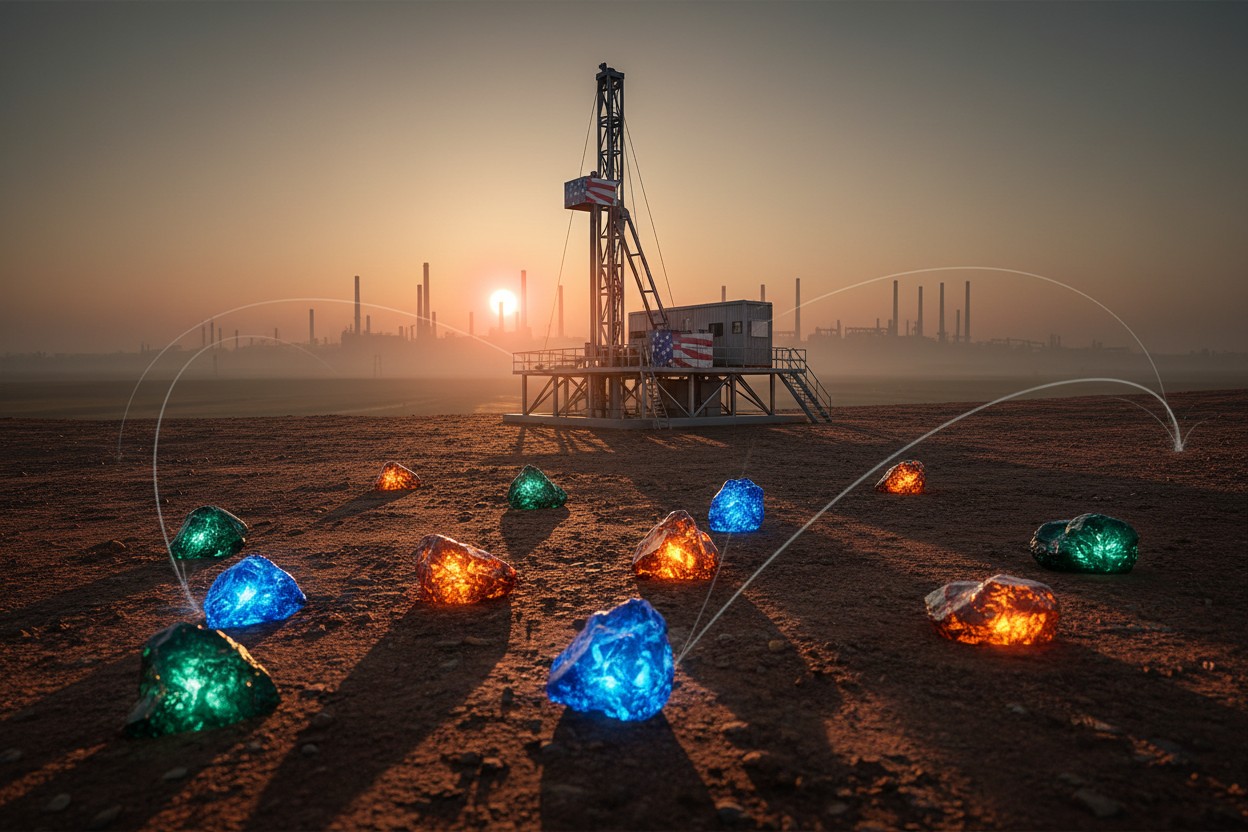
We are told that wars are about democracy or freedom, but they’re actually about something far more primal: control over sea routes and natural resources. The world is not fighting over ideology; it is fighting over energy, food, and the narrow maritime corridors that move them.
This single truth explains everything from the war in Ukraine to the Houthi attacks on Saudi ships in the Red Sea. The U.S. Empire, in its final desperate campaign to maintain total dominance, is waging a losing battle against the forces of geography and multipolar self-reliance.
As an article by Belle Carter titled “Chokepoints & Chaos” correctly notes, global conflicts are not driven by ideology but by control over maritime chokepoints such as the Panama Canal, Suez Canal, Strait of Hormuz, and others, where trade and energy flows can be weaponized to exert power [1]. The U.S. strategy, accelerated under Trump, has been to seize or threaten these chokepoints to strangle rivals like China and Iran. But as I wrote in “Routes of Fire,” this approach underestimates the resilience of those who refuse to be dominated [2]. The empire is learning that geography cannot be bombed into submission.
The Chokepoints That Control the World
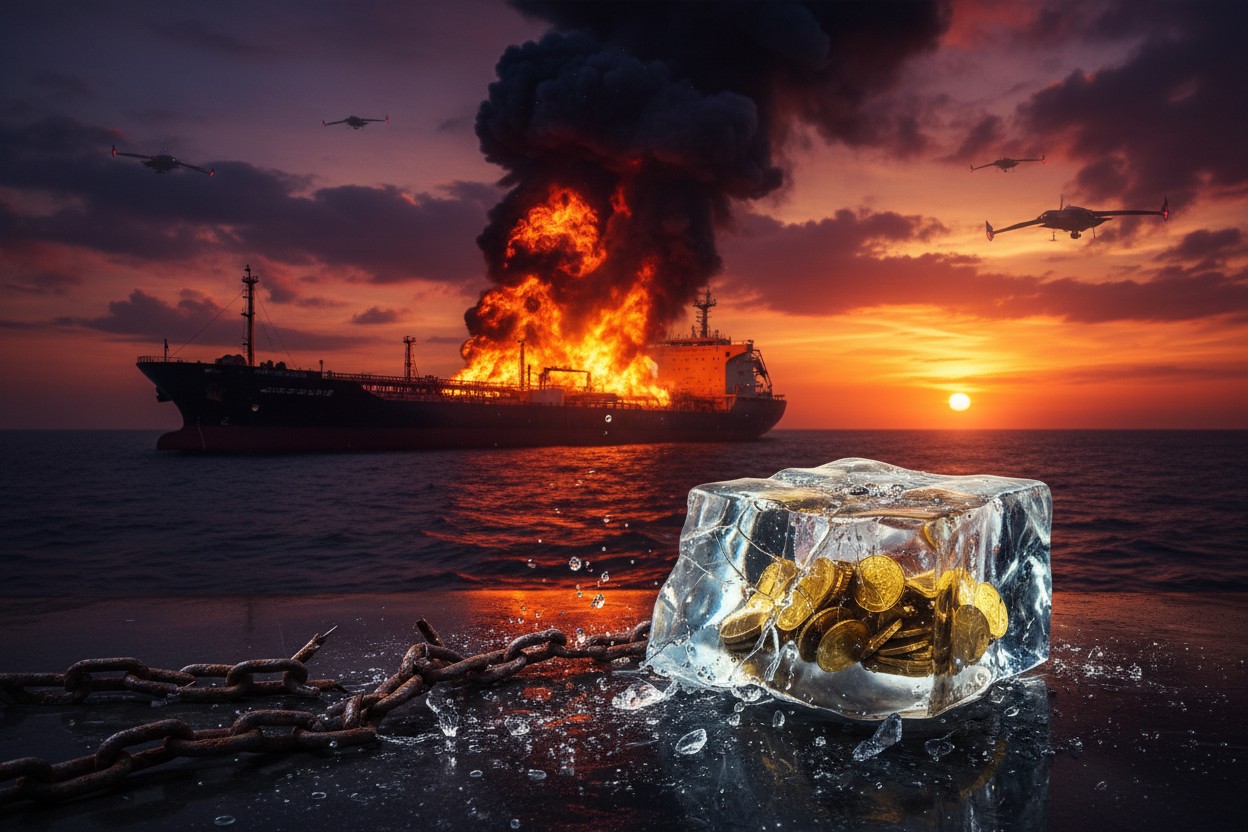
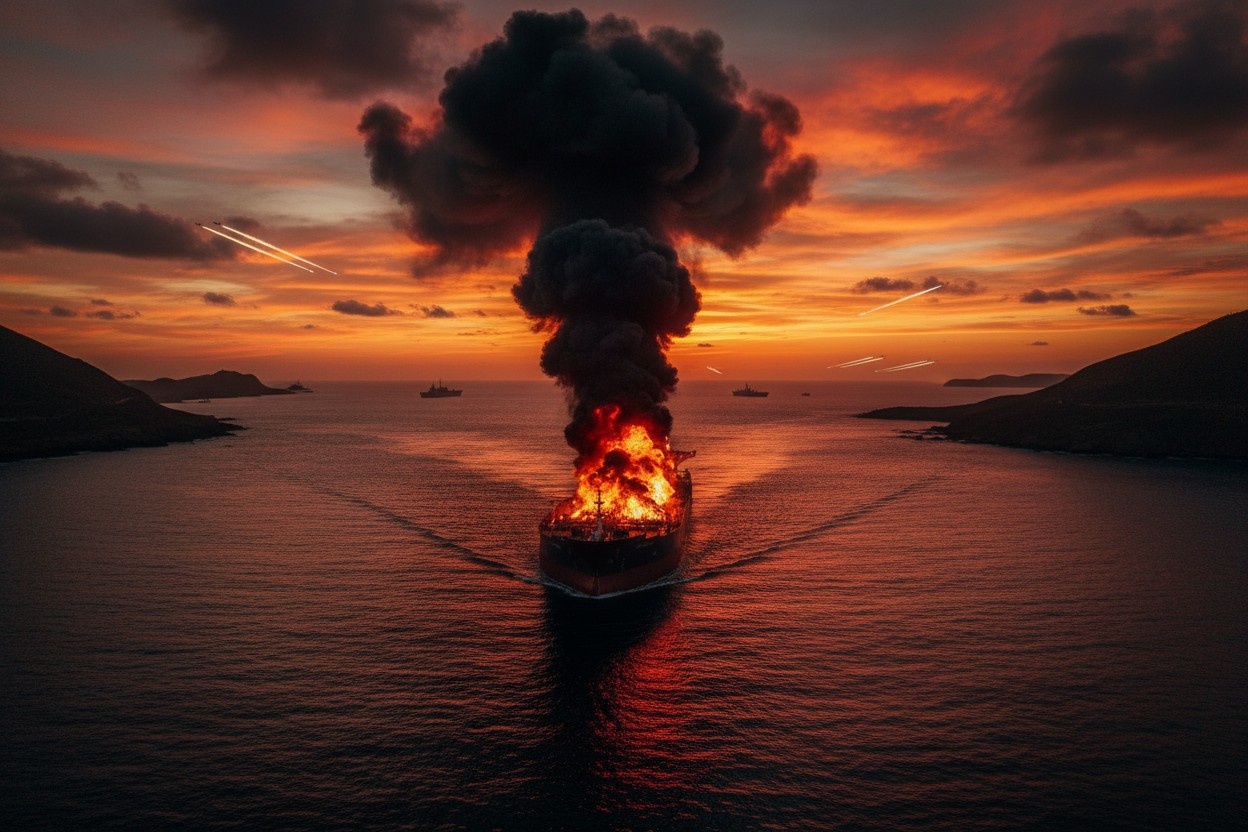
The Strait of Hormuz, the Suez Canal, the Bab al-Mandeb, and the Panama Canal are the arteries of global trade. Approximately 20% of the world’s oil shipments pass through the Strait of Hormuz alone [3]. When Iran escalated maritime attacks in the Persian Gulf in March of this year, it targeted commercial shipping indiscriminately, aiming to cripple global trade routes [3]. The Houthis have now expanded their campaign, recently striking Saudi oil tankers in the Red Sea with major energy supply implications [4]. These are not random acts of violence; they are calculated moves in a resource war.
Historical patterns confirm this. Terrence Edward Paupp, in “Exodus from Empire,” describes how resource wars would continue and even worsen as the U.S. empire declines [5]. The United Arab Emirates is building a maritime empire of its own, seizing control of vital trade arteries like Syria’s Tartous Port through corporate might [6]. Meanwhile, China’s Belt and Road Initiative is a strategic move to bypass Western-controlled routes [1]. The U.S. cannot bomb its way out of this; every chokepoint it tries to dominate becomes another battlefield it cannot conquer.
Why Trump’s Empire Strategy is Backfiring
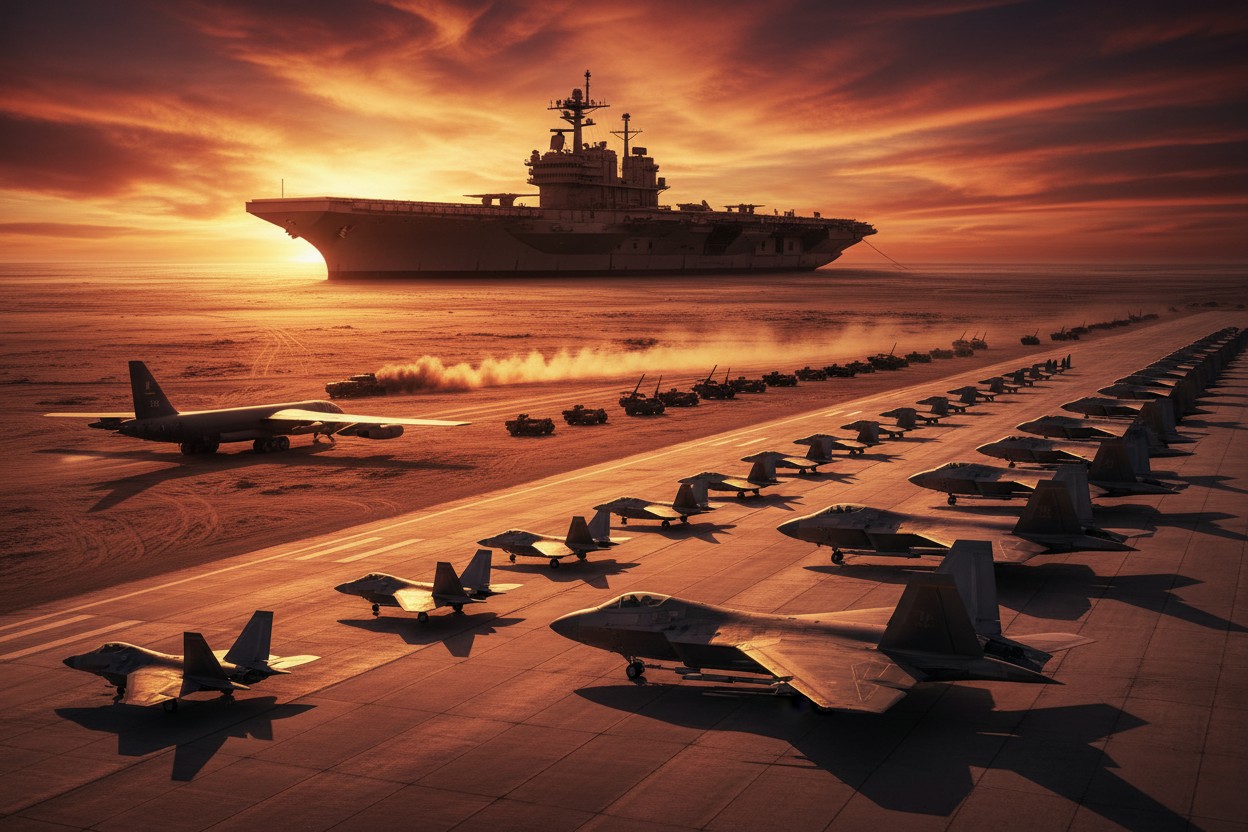
The U.S. military, despite its nearly $1 trillion annual budget, is being neutralized by asymmetric warfare. As I noted in a recent broadcast, Yemen’s military operates on mere millions, yet it has managed to neutralize American naval power in the Red Sea [7].
The U.S. is now reportedly running out of munitions, and its credibility is shattered. Even worse, a global supply shock is underway: with the Strait of Hormuz effectively sealed by Iranian forces, the global economy faces an abyss where energy, food, and basic survival costs spiral beyond control [8]. The dollar is weakening, sanctions are losing bite, and the world is watching a paper tiger crumble.
China is not sitting idle. As Lance D. Johnson reported, China has armed Iran with advanced missiles, refuting U.S. narratives of Iran’s containment [9]. In my interview with Michael Yon, he explained that China’s economy depends heavily on exporting manufactured goods via sea lanes, and if the U.S. monopolizes control over crucial waterways, China is compelled to respond [10].
Despite its escalations, the American empire’s strategy of economic coercion through sanctions and military threats is backfiring, driving rivals to build alternative systems. As Glenn Diesen writes in “Europe as the Western Peninsula of Greater Eurasia,” geoeconomic dominance is attained by developing strategic industries that create dependencies [11]. The U.S. is now losing that dominance, just as it’s losing the war with Iran over the control over the Strait of Hormuz.
The Rise of Multipolar Self-Reliance
While the U.S. empire fumbles, China, Russia, and Iran have been stockpiling resources and building domestic industries (and supply chains). China has invested heavily in solar, electric vehicles, and robotics, making it resilient to supply shocks. Russia and Iran have developed weapon systems and domestic production capabilities that bypass U.S. control. BRICS nations are building alternative payment systems backed by gold and commodities, signaling the end of dollar dominance. As an interview with Brian Berletic highlighted, multipolarism is rising, and the Western hegemony that followed World War II is failing [12].
The twenty-first century has introduced a form of confrontation that is quieter but more consequential than conventional war, as Madge Waggy describes in “How The Global Economy Became The World’s Most Dangerous Battlefield” [13]. Strategic industries, as Diesen notes, are defined by scarcity and their importance to socioeconomic development [11]. By controlling resources and trade routes, the multipolar powers are creating a world where no single nation can dictate terms. The empire’s last gasp will only accelerate this transition.
What This Means for You: Prepare for the Collapse
Millions may die from famine and energy shortages as the U.S. Empire’s final thrashing creates chaos. I have written extensively about this in “The Coming Storm,” where I detail the fragility of modern civilization and the engineered scarcity driving food and energy crises [14].
The only sane response is personal preparedness. In my interview with Alexander Macris, I emphasized the importance of growing your own food, having backup power, and storing essential supplies [15]. Global famine is now certain, as fertilizer and urea supplies dwindle and natural gas goes offline [16]. Heirloom seeds, water filtration, and self-reliance are no longer optional; they are survival imperatives.
The silver lining is that a multipolar world could bring a more balanced global order, but only if we survive the transition. I believe we are witnessing the birth of a decentralized future, where local communities and individual resilience replaces dependence on crumbling empires. The collapse of the American empire does not have to mean the collapse of your life, but only if you prepare now. Decentralize your finances, learn to grow food, and build local networks of mutual aid. The war for routes and resources is global, but the battle for your family’s survival is local.
Learn more about decentralized living by watching my interviews at Decentralize.TV and download thousands of free books and audiobooks about preparedness and survival at BrightLearn.ai
References
- Chokepoints & Chaos: The hidden battlegrounds of global power. – NaturalNews.com. Belle Carter. February 2, 2026.
- Routes of Fire: A journey through the dark heart of global power. – NaturalNews.com. June 8, 2026.
- Iran escalates maritime attacks in Persian Gulf as US Israel strikes trigger wider conflict. – NaturalNews.com. Patrick Lewis. March 4, 2026.
- Houthis Now Attacking Saudi Oil Tankers In Red Sea, Major Energy Supply Implications. – The War Zone. July 22, 2026.
- Exodus from empire: the fall of America’s empire and the rise of the global community. – Terrence Edward Paupp.
- The UAE is building a maritime empire to control global trade and potentially wage proxy wars. – NaturalNews.com. Belle Carter. November 15, 2025.
- Health Ranger Report – HISTORY of collapsed world. – Mike Adams. Brighteon.com. June 18, 2024.
- A global supply shock As Trumps Iran War shuts the Strait of Hormuz economic recession becomes the unavoidable c. – NaturalNews.com. Lance D. Johnson. April 1, 2026.
- Cold War escalates as China arms Iran with advanced missiles refuting US narratives of Irans containment. – NaturalNews.com. Lance D. Johnson. July 11, 2025.
- Mike Adams interview with Michael Yon. – March 27, 2025.
- Europe as the Western Peninsula of Greater Eurasia: Geoeconomic Regions in a Multipolar World. – Glenn Diesen.
- Mike Adams interview with Brian Berletic. – October 13, 2023.
- How The Global Economy Became The World’s Most Dangerous Battlefield. – ZeroHedge. Madge Waggy. July 9, 2026.
- The Coming Storm: Surviving the orchestrated collapse of food, energy and freedom. – NaturalNews.com. April 23, 2026.
- Mike Adams interview with Alexander Macris. – July 10, 2024.
- 2026-03-13-BVN-GLOBAL FAMINE NOW CERTAIN. – Bright Videos Network.
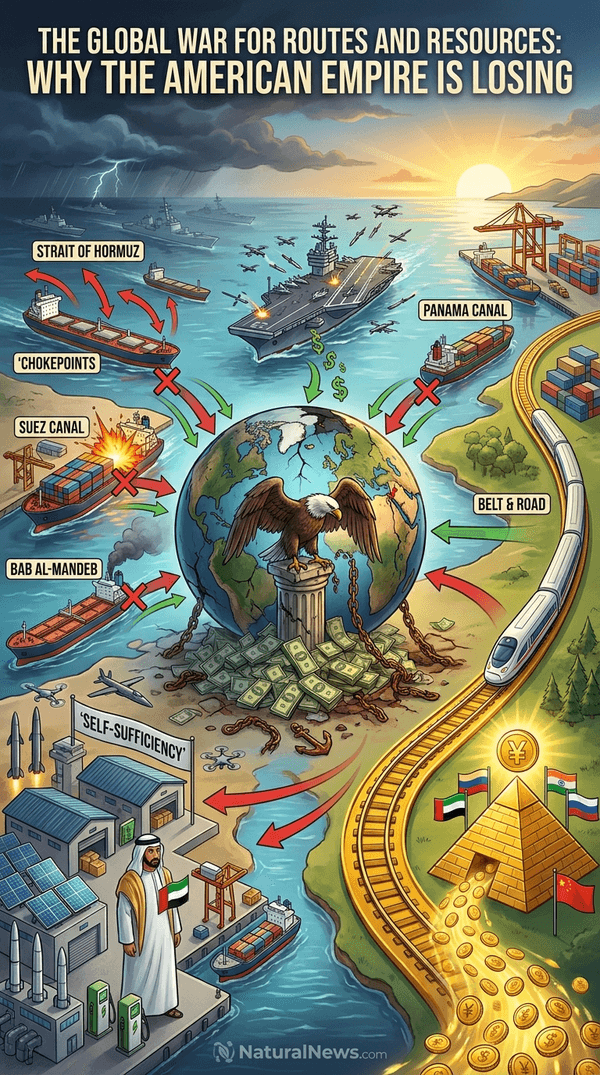
Explainer Infographic
Submit a correction >>
Tagged Under:
conspiracy, corruption, current events, deception, government, lies, national security, politics, resources, self-reliance, supply chain, trade routes, Trump, war on Iran, WWIII
This article may contain statements that reflect the opinion of the author
RECENT NEWS & ARTICLES