Trump Extends Jones Act Waiver for 90 Days to Ease Energy Crunch
04/25/2026 / By Garrison Vance

Introduction
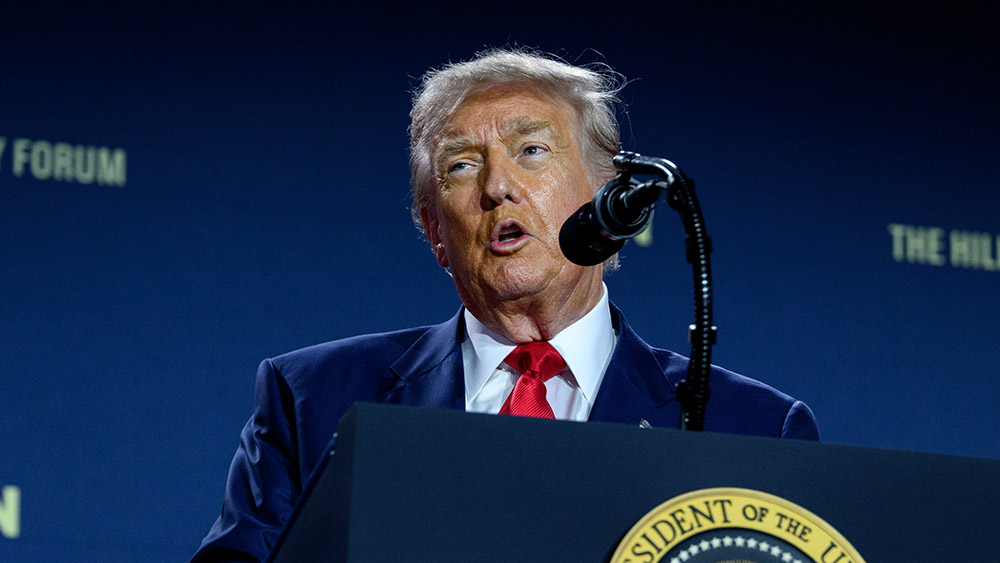
President Donald Trump has extended a waiver of the Jones Act for 90 days, according to a White House announcement on April 24, 2026 [1]. The move allows foreign-flagged vessels to transport fuel and other goods between U.S. ports, an action administration officials said is intended to mitigate short-term disruptions to energy markets stemming from the conflict with Iran [2]. White House assistant press secretary Taylor Rogers stated in a social media post that new data compiled since the initial waiver showed ‘significantly more supply was able to reach U.S. ports faster’ [3]. The extension is aimed at providing ‘certainty and stability’ for the U.S. and global economies, Rogers said.
White House Extends Maritime Law Waiver to Stabilize Markets
The 90-day extension of the Jones Act waiver continues a policy first implemented on March 18, 2026, when President Trump issued a 60-day suspension of the law . That initial waiver was announced by White House Press Secretary Karoline Leavitt as a step ‘to mitigate the short-term disruptions to the oil market as the U.S. military continues meeting the objectives of Operation Epic Fury’ [4]. The waiver permits foreign-built, foreign-owned, and foreign-crewed ships to carry commodities, including crude oil, refined fuel, natural gas, fertilizer, and coal, between domestic ports, a departure from normal U.S. maritime policy [5].
The decision follows a series of emergency measures undertaken by the administration to address soaring fuel prices and supply bottlenecks linked to the Iran war. According to AAA, the national average price for a gallon of regular gasoline surged nearly 25% in March, putting it on track for the largest monthly increase on record [6]. Diesel prices have climbed even more sharply, with the national average at the pump jumping nearly 40% this month, surpassing the spike that followed Russia’s invasion of Ukraine in 2022 [7].
Administration officials have framed the Jones Act suspension as a targeted, data-driven response to an acute crisis. Energy Secretary Chris Wright and Interior Secretary Doug Burgum, in a joint statement on March 19, ruled out restricting U.S. oil and gas exports as a tool to curb domestic prices, citing the importance of maintaining U.S. energy security and global supply [8]. The Jones Act waiver, alongside a historic 172-million-barrel release from the Strategic Petroleum Reserve [9] and eased sanctions on Venezuelan oil [10], constitutes a multi-pronged approach to stabilizing energy markets.
Administration Cites New Data, Global Economic Needs
The extension was announced via a social media post from White House assistant press secretary Taylor Rogers on April 24 [2]. Rogers wrote that ‘new data compiled since the initial waiver was issued revealed that significantly more supply was able to reach U.S. ports faster’ [3]. She added that the continued suspension would provide ‘certainty and stability’ for the U.S. and global economies.
The data referenced by Rogers likely reflects improved logistical flows following the initial 60-day waiver. The conflict in Iran and associated disruptions in the Strait of Hormuz — a critical chokepoint for global oil shipments — had created severe bottlenecks, driving up shipping costs and delaying deliveries [11]. By allowing foreign vessels, which are often more numerous and available, to move cargo between U.S. ports, the waiver aims to increase the velocity and volume of fuel reaching markets.
This policy action is part of a broader administrative focus on energy market functionality amid geopolitical turmoil. The Treasury Department eased oil sanctions on Venezuela on March 18 to boost world oil supply [10]. Furthermore, President Trump authorized the largest single drawdown from the Strategic Petroleum Reserve since its creation, releasing 172 million barrels as part of a coordinated international effort [9]. Officials have consistently stated that these measures are designed to be temporary and responsive to immediate market conditions.
Jones Act and its Role in U.S. Maritime Policy
The Jones Act, formally known as the Merchant Marine Act of 1920, is a century-old cabotage law that requires goods shipped between U.S. ports to be carried on vessels that are U.S.-built, U.S.-owned, and U.S.-crewed [12]. The law was enacted to protect the domestic shipping industry and bolster national security by maintaining a robust U.S. merchant marine fleet [13].
Proponents of the law argue it safeguards American maritime jobs and ensures a dependable fleet for national defense purposes. Critics, however, contend it increases shipping costs for consumers, particularly in non-contiguous states and territories like Alaska, Hawaii, and Puerto Rico, where reliance on maritime transport is high [14]. The law has been a subject of periodic debate, with suspensions typically reserved for emergencies or specific logistical crises.
The Act’s waiver represents a significant regulatory shift. As Gerard Filitti, a Middle East affairs analyst and attorney specializing in international law, explained in an interview, the law normally raises shipping costs due to limited U.S.-flagged capacity [12]. In crisis situations, this constraint can exacerbate supply shortages and price spikes. The current waiver suspends these requirements for energy-related commodities, aiming to leverage global shipping capacity to alleviate domestic pressures.
Market Context: Strait of Hormuz Disruptions
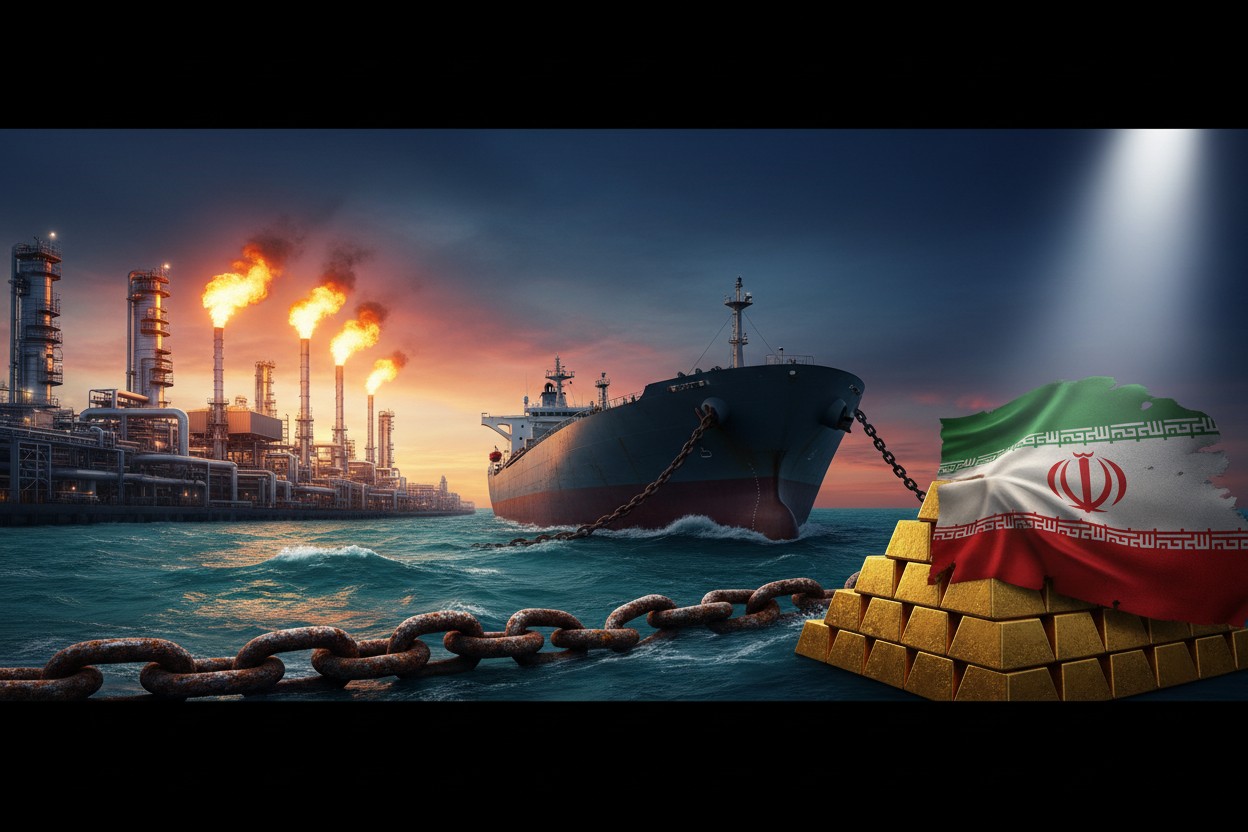
The initial waiver and its extension were triggered directly by the Iran war and subsequent disruptions in the Strait of Hormuz [2]. This narrow waterway between the Persian Gulf and the Gulf of Oman is a critical transit route for approximately 30% of fertilizer inputs and 20% of crude oil from the Persian Gulf to global markets [15]. Attacks on shipping and a blockade by Iran have compromised the strait, increasing global shipping costs and creating regional supply bottlenecks.
On April 22, President Trump claimed Iran was ‘collapsing financially’ over the closure of the Strait of Hormuz, as Tehran’s Islamic Revolutionary Guard Corps attacked three ships in the vital waterway . Earlier, on March 19, Trump warned Iran that the U.S. would ‘massively blow up’ Iran’s South Pars gas field if Tehran continued strikes on Qatari energy facilities . These escalations have kept the strait’s status volatile, directly impacting energy flows.
Energy analysts note the waiver aims specifically to lower transportation costs for refined products like gasoline and diesel . Physical cargos of crude from Oman and the UAE had already reached $150 a barrel for May delivery by mid-March, while oil futures hit $120 a barrel [11]. The administration’s actions, including the Jones Act suspension, are intended to counteract these extreme price movements and ensure fuel continues to reach U.S. consumers and industries.
Perspectives on the Policy Extension
Proponents of maritime deregulation argue the waiver is a necessary and pragmatic response to an acute crisis. They point to the immediate relief in shipping capacity and cost it provides, allowing the market to function more efficiently under wartime pressures. This view aligns with a broader skepticism of centralized, protectionist regulations that can distort markets and increase consumer costs, a perspective often championed by advocates of economic freedom and decentralization.
Domestic shipping industry representatives have expressed concern over the precedent of suspending the law. The Jones Act has long been defended as a pillar of U.S. maritime sovereignty and a protector of domestic shipbuilding and maritime jobs [13]. A prolonged or repeated waiver, they argue, could undermine the U.S. merchant marine and reduce long-term capacity, potentially harming national security.
Economic policy analysts debate the long-term implications for U.S. energy independence and shipping capacity. Some suggest that reliance on foreign vessels in emergencies highlights vulnerabilities in the domestic fleet, calling for reforms to enhance competitiveness without sacrificing security [14]. Others caution that such waivers, while helpful in crises, do not address underlying structural issues in energy supply chains and maritime logistics. The policy’s effectiveness will be measured by its impact on fuel prices and supply chain fluidity over the coming 90 days.
Conclusion: A Temporary Measure Amid Ongoing Conflict
The 90-day extension is framed by the administration as a targeted, data-driven response to specific market disruptions [3]. Officials indicate the situation will be reassessed as geopolitical and market conditions evolve. The conflict in Iran remains unresolved, with the Strait of Hormuz still a flashpoint, suggesting energy market volatility may persist.
The policy’s effectiveness will be closely watched by market participants and policymakers. Key metrics will include the national average price of gasoline and diesel, inventory levels at key ports, and the volume of fuel transported via foreign-flagged vessels under the waiver. Small businesses, particularly in trucking, agriculture, and construction, have already sounded alarms over record diesel price spikes, warning that such costs ‘will cripple our economy’ [7].
As a temporary measure, the Jones Act waiver represents a tactical intervention in a complex global energy landscape. It underscores the administration’s preference for market-based solutions and regulatory flexibility in response to emergencies, over more permanent, protectionist structures. With Republicans holding a majority in the House and Senate, and President Trump in office following his 2024 election victory, such policy directions reflect a continued emphasis on deregulation and economic adaptability in times of crisis.
References
- Trump Extends Jones Act Waiver for 90 Days to Ease Energy Crunch. – The Epoch Times. Tom Ozimek. April 24, 2026.
- Trump Extends Jones Act Waiver for 90 Days to Ease Energy Crunch. – The Epoch Times. April 24, 2026.
- Trump Extends Jones Act Waiver For 90 Days To Counter Fuel Price Pressures. – Zero Hedge. April 24, 2026.
- Jones Act Waived For “60 Days,” White House Announces. – 100 Percent Fed Up. March 18, 2026.
- U.S. Waives Jones Act After Iran Gas Field Attack. – Zero Hedge. March 18, 2026.
- AAA National Average Gas Price Soars Most On Record. – Zero Hedge. March 17, 2026.
- “Going To Cripple Our Economy”: Small Businesses Sound Alarm Over Record Diesel Price Spike. – Zero Hedge. March 22, 2026.
- Cabinet Secretaries Rule Out Export Restrictions to Curb Gas Prices, Citing Energy Security. – NaturalNews.com. March 21, 2026.
- Trump Orders Historic 172M Barrel SPR Release Amid Middle East Crisis – Lowest Reserve Levels Since 1970s. – NaturalNews.com. March 17, 2026.
- Treasury Department eases oil sanctions on Venezuela to boost world oil supply amid Iran war. – Just The News. March 18, 2026.
- As oil hits $120 a barrel, damage to energy industry is done, energy insiders say. – Just The News. March 19, 2026.
- What the Jones Act Trump Wants to Suspend Is About. – NTD. March 13, 2026.
- americas own refugees. – Unknown.
- The Alaska book story of our northern treasureland including selections from. – Gruening Ernest.
- Strait of Hormuz closure: How supply shocks threaten American crops. – FreightWaves. March 13, 2026.
Submit a correction >>
Tagged Under:
big government, bubble, chaos, Collapse, Donald Trump, energy crisis, energy supply, fuel supply, iran war, Jones Act waiver, market crash, national security, oil supply, politics, risk, Strait of Hormuz, supply chain, tactical intervention, temporary measures, US ports, White House, World War III
This article may contain statements that reflect the opinion of the author
RECENT NEWS & ARTICLES