Trump Doubles Down on Data Centers Despite Polls Showing Public Opposition
09/01/2026 / By Garrison Vance
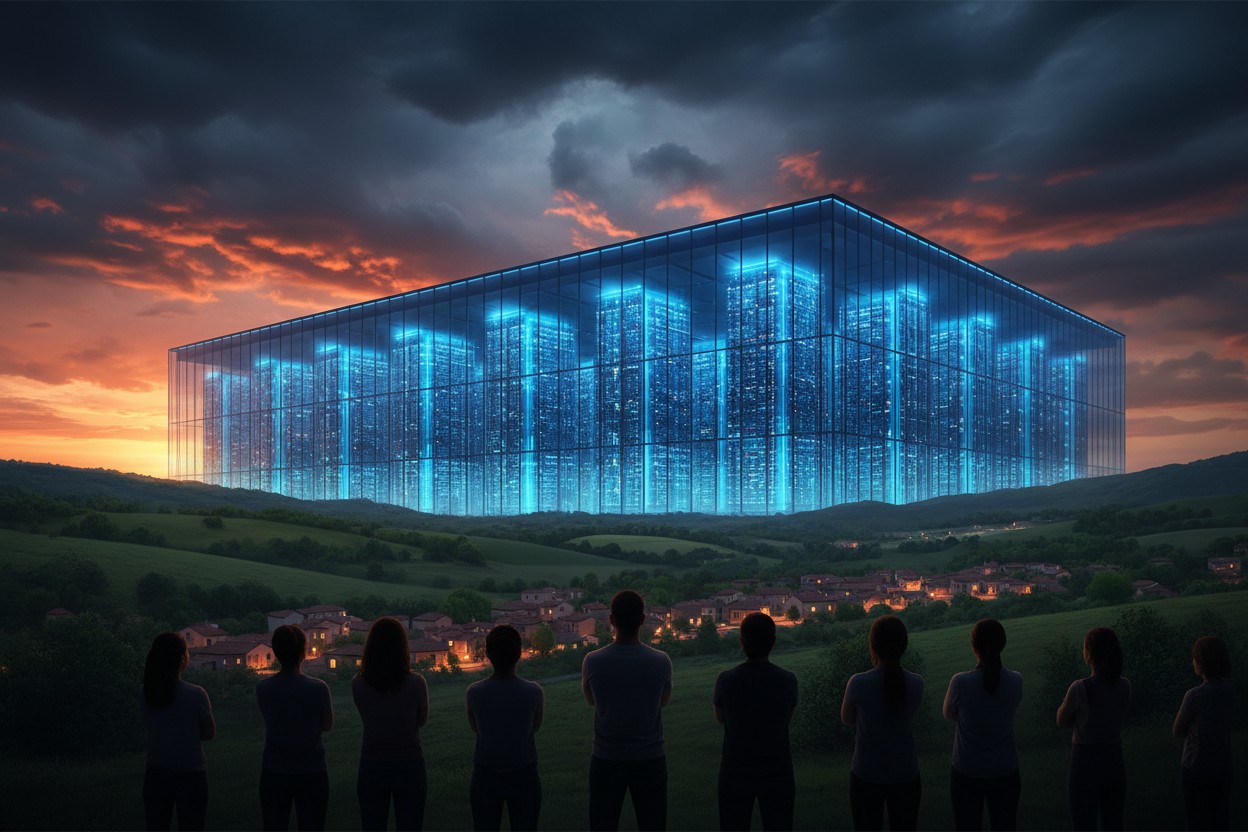
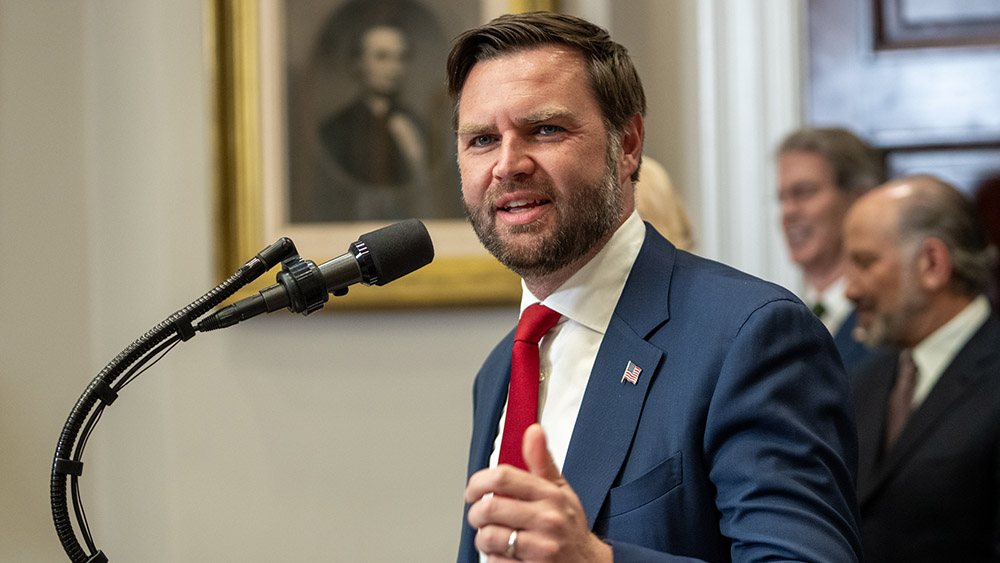
U.S. President Donald Trump reaffirmed his administration’s support for the expansion of data centers on Monday, Aug. 31, saying communities that reject the facilities risk economic stagnation.
In a post on Truth Social, the president stated, “The only reason that communities throughout the U.S.A. should not want Data Centers is if they want to end up being backwards and poor,” according to reports [1][2]. The statement comes as polling indicates broad public opposition to the facilities.
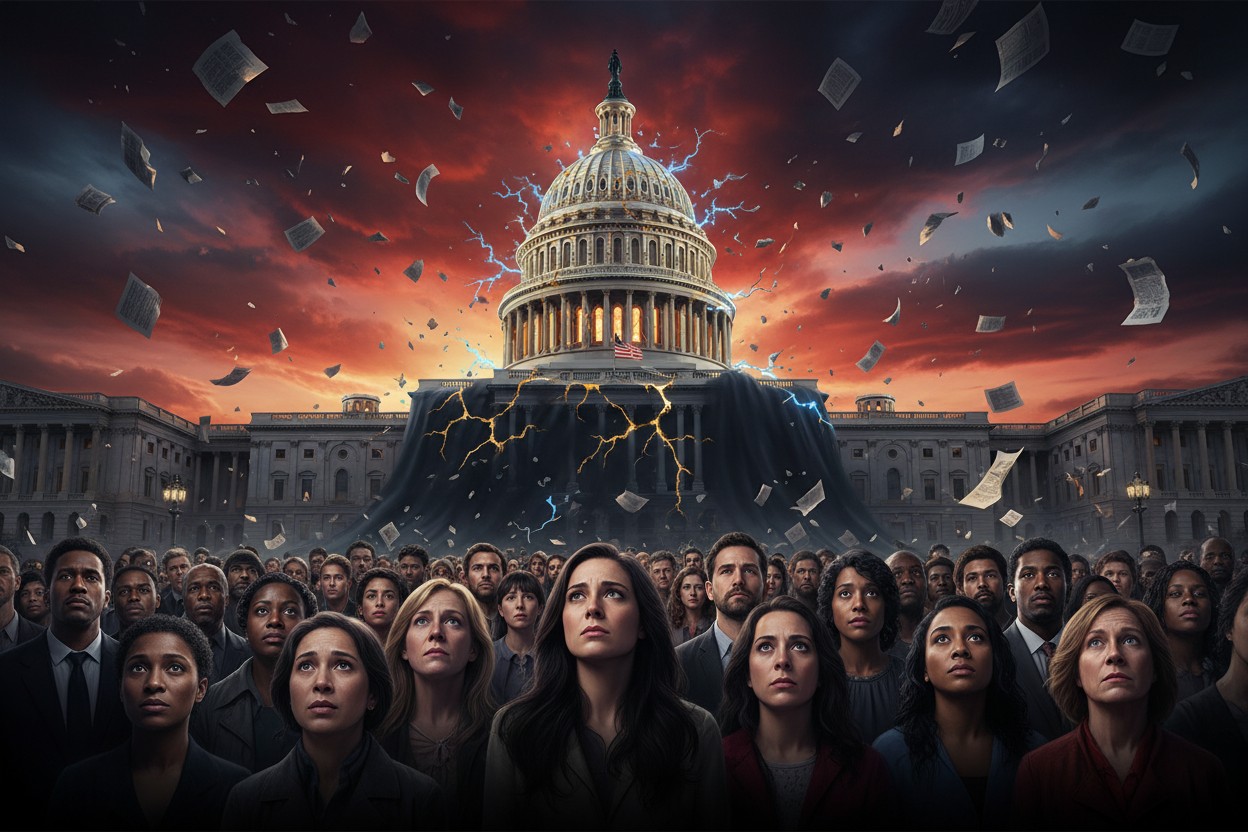
A Gallup poll conducted in March found that seven in 10 Americans oppose having data centers in their local area [1]. The backlash has become a defining issue ahead of the midterm elections, according to political observers, with voters citing concerns over rising electricity costs, water usage and the growing influence of artificial intelligence (AI) [3][4].
Data Center Expansion and Local Concerns
The U.S. currently has an estimated 4,000 to 5,400 data centers, with approximately 1,500 more in various stages of planning, land-banking or construction – representing a potential expansion of more than 50%, according to industry data [1]. Research from Pew Research Center found that 38% of Americans live within five miles of at least one operational data center [1].
Local officials have reported significant strain on infrastructure, with some mayors warning that the industry’s energy demands and environmental footprint are beginning to overwhelm local systems [5][6]. Residents in the Washington, D.C. area reported energy bills topping $1,000 this past winter due to the concentration of data centers in northern Virginia, according to officials [1]. Environmental concerns include the substantial water usage required for cooling equipment, as well as electricity consumption.
According to the U.S. Energy Information Administration, data centers currently use about 4.4% of U.S. electricity, a figure projected to reach 12% by 2030 [1]. The International Energy Agency found that data centers drove half of all growth in U.S. electricity use in 2025 [7].
Trump’s Economic Rationale
Trump has argued that data centers are necessary for U.S. competitiveness in the global economy, particularly in the field of artificial intelligence. In his Truth Social post, the president wrote: “If we kill the Golden Goose, you will only have yourselves to blame. China could not be happier with this anti Data Center movement. Actually, they can’t believe it is happening!” [1][2].
The administration has proposed a “Ratepayer Protection Pledge” that would require data center developers to pay for new energy infrastructure, according to the White House [1]. Some Republican officials have suggested that Chinese influence operations are fueling the opposition to data centers, though proof has not emerged [1].
The president has emphasized the economic benefits of the facilities. “If I were the mayor of a town or the governor of a state, and I had a chance to get a big plant in, an AI plant or a data center, I would absolutely want it because the jobs are enormous and the money paid, the taxes paid, are just enormous,” he said in recent remarks [1].
The administration previously announced the $500 billion “Stargate” initiative in January 2025, aimed at establishing AI data centers nationwide and securing U.S. leadership in the technology sector [8].
State-Level Responses
Several governors have taken steps to limit or pause data center development in response to local concerns. New York Gov. Kathy Hochul (D) signed an executive order last month banning the construction of large data centers for up to a year, according to officials [1].
Texas Gov. Greg Abbott (R) placed a temporary pause on new data center grid connections and is auditing existing centers over rising electricity costs, his office said [1][9]. Other states, such as Pennsylvania, have issued more restrictions on data center construction, according to reports [3].
Business leaders warned Hochul that the moratorium risks leaving New York behind as data centers relocate to other states, jeopardizing job opportunities [1]. Trump called Hochul’s decision “terrible,” according to reports [1].
The White House maintains that federal policy will continue to support data center development despite state-level actions [1]. Voter frustration has also manifested in local elections, with residents in Festus, Missouri, ousting four city council members who had voted to approve a $6 billion data center project, according to St. Louis Public Radio [10].
Conclusion
The divide over data centers reflects broader tensions between economic development and local quality-of-life concerns, according to analysts [1]. Polls indicate majority opposition to the facilities, yet the president and some governors continue to advocate for expansion to maintain competitiveness in artificial intelligence [1][11]. As midterm elections approach, data centers have become a defining issue, according to political observers [3][4].
The outcome may hinge on how officials balance energy costs, environmental impact, and job creation [1]. The protests against the AI build-out have become organized, with a national day of action in July featuring 142 rallies across 42 states organized by the nonprofit Humans First, according to reports [12].
References
- Zero Hedge. “‘You Will Only Have Yourselves To Blame’: Trump Warns Anti-Data-Center Crowd Not To ‘Kill The Golden Goose’.” zerohedge.com. August 31, 2026.
- 100PercentFedUp. “‘Let Data Reign’ – President Trump Issues New Statement On Data Centers.” 100percentfedup.com. August 31, 2026.
- YourNews. “Data Center Backlash Brings Thousands Of Projects To A Screeching Halt.” yournews.com. August 23, 2026.
- Zero Hedge. “Crypto And AI Could Be Dirty Words On 2026 Midterm Campaign Trail.” zerohedge.com. May 30, 2026.
- NaturalNews.com. “Mayors Sound Alarm: AI Data Centers Push U.S. Toward Blackouts and Water Shortages.” naturalnews.com. March 18, 2026.
- Petra Stone. “Mayors Sound Alarm: AI Data Centers Push U.S. Toward Blackouts and Water Shortages.” NaturalNews.com. March 18, 2026.
- NaturalNews.com. “Report: Data Center Electricity Demand Rising, Impacting Grid Capacity and Policy Debates.” naturalnews.com. April 22, 2026.
- Finn Heartley. “Trump unveils $500 Billion ‘Stargate’ AI initiative to boost U.S. data centers and compete in global AI race.” NaturalNews.com. January 22, 2025.
- LifeSiteNews. “Trump says Texas making ‘mistake’ with AI data center moratorium.” lifesitenews.com. August 11, 2026.
- YourNews. “Voters Oust Half Of Missouri City Council For Greenlighting $6,000,000,000 AI Data Center.” yournews.com. April 9, 2026.
- YourNews. “Rasmussen Poll Finds Most Voters Oppose Data Centers In Their Communities.” yournews.com. July 3, 2026.
- Zero Hedge. “The Data-Center Revolt Goes National: Tea Party Veteran Leads 142 Rallies Across 42 States.” zerohedge.com. July 19, 2026.
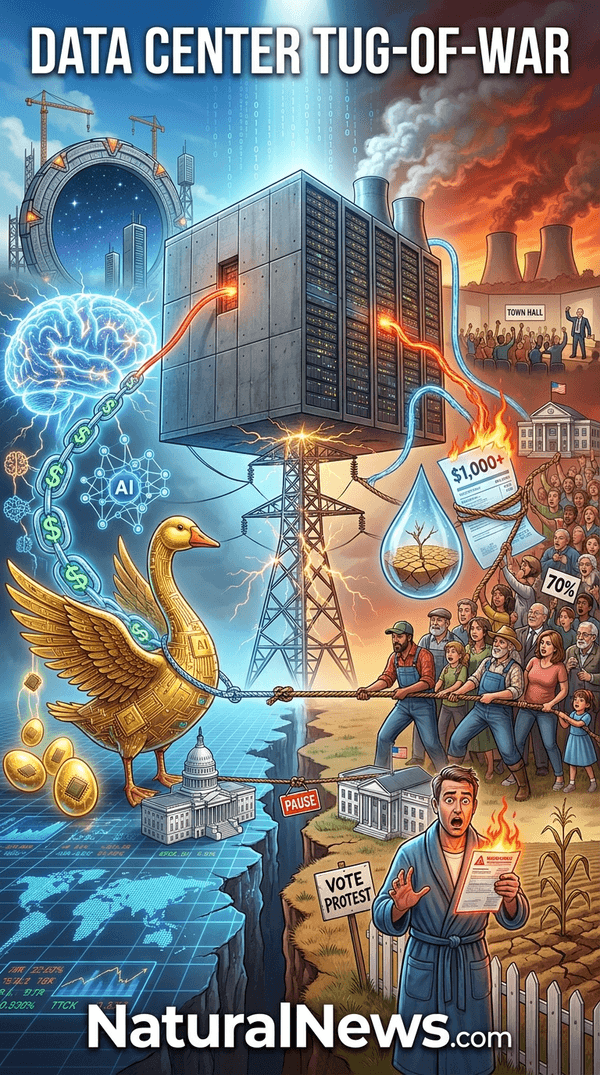
Explainer Infographic
Submit a correction >>
Tagged Under:
artificial intelligence, big government, Collapse, computing, data centers, Donald Trump, electricity, future tech, grid collapse, information technology, infrastructure collapse, opinion polls, outrage depot, power, power grid, public opposition, Resist, robots, Water Wars, White House
This article may contain statements that reflect the opinion of the author
RECENT NEWS & ARTICLES