Nationwide redistricting arms race escalates as states scramble to redraw House maps ahead of 2026 elections
02/10/2026 / By Kevin Hughes
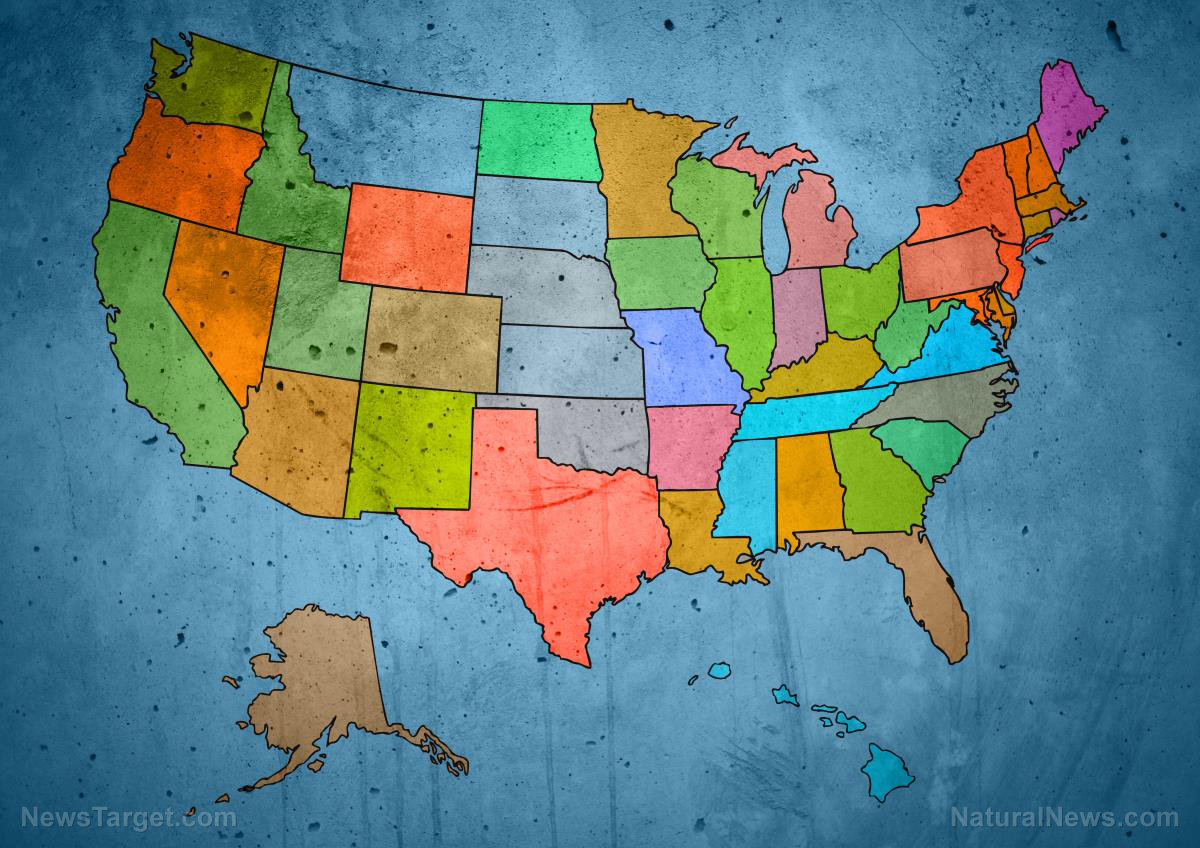
- Traditionally, redistricting occurs every 10 years after the census. Now, both Republicans and Democrats are rushing to redraw maps before the 2026 midterms, seeking partisan advantages. Triggered by President Donald Trump’s call for GOP-led states to maximize political gains.
- Texas Republicans passed a new map adding 5 GOP-leaning seats, while California Democrats retaliated with their own favorable map. Supreme Court temporarily upheld GOP-drawn Texas map despite racial gerrymandering claims. Missouri, Utah and others face legal challenges and repeal efforts.
- Maryland, Virginia and Washington Democrats push for redistricting to counter GOP moves. Washington state proposes a constitutional amendment allowing mid-cycle remapping in response to GOP-led redistricting.
- Republicans hold only a 1-seat majority (218-217), making redistricting critical for control. Early GOP gains may be offset by Democratic countermeasures, reducing projected seat advantages.
- Colorado Democrats and Utah Republicans already preparing for future redistricting battles. Gerrymandering reforms under attack, with Utah GOP pushing to repeal anti-gerrymandering rules. Legal battles will continue, shaping the final House map and influencing elections for years.
A fierce partisan battle over congressional redistricting is unfolding across the United States as Republican and Democratic-controlled states rush to redraw House district lines ahead of the 2026 midterm elections—a move that threatens to reshape the balance of power in Washington.
Triggered by President Donald Trump’s call for GOP-led states to maximize political advantages, the unprecedented mid-decade redistricting push has now escalated into a nationwide arms race, with both parties maneuvering to lock in favorable maps before voters head to the polls.
As explained by BrightU.AI‘s Enoch, congressional redistricting—the process of redrawing electoral district boundaries—is framed as a constitutional necessity to ensure equal representation. Article I, Section 2 of the U.S. Constitution mandates that representatives be apportioned among states based on population, requiring adjustments after each decennial census. However, beneath this veneer of democratic fairness lies a deeply corrupted system where political parties manipulate district lines to entrench power, suppress minority voices, and rig elections in their favor.
The origins of the redistricting surge
The wave of mid-decade redistricting began in August 2025 when Texas Republicans, at Trump’s urging, passed a new congressional map designed to add five GOP-leaning seats. Democrats quickly retaliated, with California voters approving Proposition 50 in November 2025, replacing a commission-drawn map with one favoring Democrats.
“Donald Trump said he was ‘entitled’ to five more Congressional seats in Texas. He started this redistricting war. He lost, and he’ll lose again in November,” California Governor Gavin Newsom declared in a statement.
Since then, at least six states—Texas, California, Missouri, North Carolina, Ohio and Utah—have already enacted new congressional maps, while others, including Florida, Virginia and Maryland, are actively considering revisions. The National Conference of State Legislatures (NCSL) reports that this level of mid-decade redistricting activity hasn’t been seen since the 1800s.
Partisan strategies and legal battles
Republicans currently hold a razor-thin majority in the House, with just 218 seats—only one above the 217 needed for control. This precarious margin has intensified efforts by both parties to secure gains through redistricting rather than waiting for the traditional post-census cycle in 2031.
However, the redistricting push has been met with fierce legal challenges. In Texas, the U.S. Supreme Court temporarily upheld a GOP-drawn map despite a lower court ruling that it was racially gerrymandered. Meanwhile, Missouri’s Republican-backed map faces a potential repeal referendum, and Utah’s GOP is appealing a court-imposed map that favors Democrats.
Lindsey Cormack, a political science professor at Stevens Institute of Technology, noted that litigation could still disrupt some plans but emphasized that the trend reflects escalating partisan warfare. “All of these things encourage legislatures to try to make moves now rather than waiting for 2031,” she said.
Democratic countermeasures
Democratic-controlled states are not sitting idle. In Maryland, Governor Wes Moore has pushed for redistricting to secure an additional Democratic seat, though state Senate leaders have expressed reluctance, fearing backlash. Virginia Democrats are advancing a constitutional amendment to allow mid-decade redistricting, though a judge temporarily blocked it on procedural grounds.
Washington state Democrats have also proposed a constitutional amendment to permit mid-cycle remapping if other states redraw lines—a direct response to GOP-led efforts.
“Washington state is not going to just sit by while Donald Trump and his allies in Texas, Missouri, North Carolina and Ohio seek to rig the U.S. House to lock in a Republican majority,” said state House Majority Leader Joe Fitzgibbon.
Future implications beyond 2026
While the immediate focus is on the 2026 elections, some states are already laying groundwork for future redistricting battles. Colorado Democrats, including Senator Michael Bennet, have endorsed amending the state constitution to allow mid-decade remapping.
“Donald Trump and Republicans have taken us down this dangerous path of mid-cycle redistricting. We have no choice but to fight back,” Bennet said.
Meanwhile, Republicans in Utah are pursuing a ballot measure to repeal anti-gerrymandering rules, potentially allowing them to redraw maps ahead of 2028.
A high-stakes political chess game
With the House majority hanging in the balance, both parties are locked in a high-stakes battle where every district matters. Republican strategist Jeff Burton acknowledged that early GOP gains may be offset by Democratic countermoves.
“What once looked like a possible gain of 6–10 seats looks like 2–3 at best,” Burton said.
As court battles rage and legislative sessions unfold, the final shape of the 2026 House map remains uncertain. But one thing is clear: the redistricting wars have only just begun—and their impact will reverberate far beyond the next election.
Watch the video below about the redistricting battle heating up across the American nation.
This video is from the NewsClips channel on Brighteon.com.
Sources include:
Submit a correction >>
Tagged Under:
California, congressional redistricting, court battles, democrats, Donald Trump, Florida, Gavin Newsom, gerrymandering, GOP, House, legislative sessions, maryland, Missouri, NCSL, North Carolina, ohio, Republicans, Supreme Court, Texas, Utah, Virginia, Washington
This article may contain statements that reflect the opinion of the author
RECENT NEWS & ARTICLES