Trump Establishes Anti-Fraud Task Force Led by Vice President Vance
03/19/2026 / By Garrison Vance
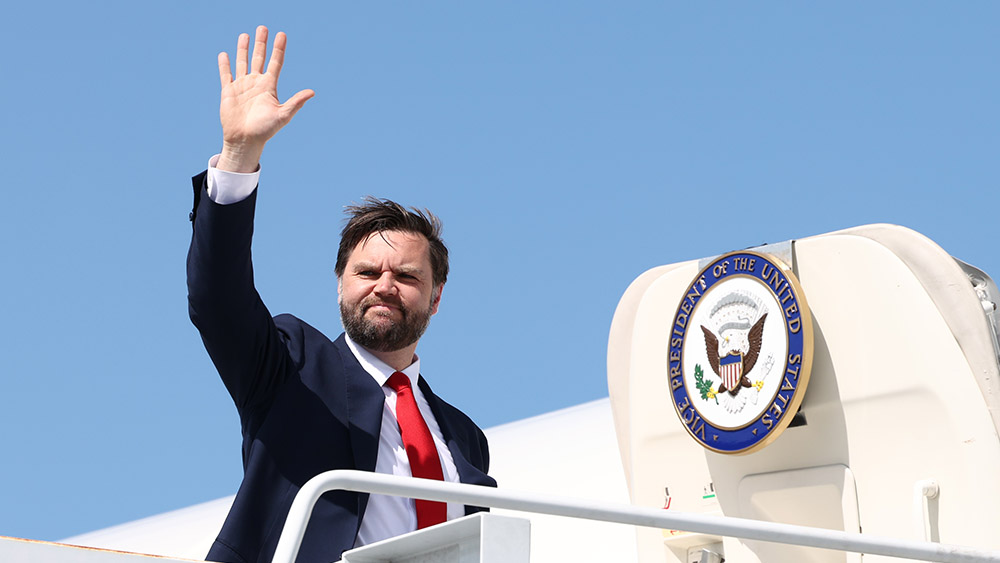
President Donald Trump signed an executive order on March 16, 2026, officially creating a new federal anti-fraud task force. The order designates Vice President JD Vance as its chairman. [4] Federal Trade Commission Chairman Andrew Ferguson was named co-chair of the task force. Both officials were present for the signing ceremony in the Oval Office. [4] The president’s deputy chief of staff described the effort as “first of its kind” in scope and authority. [11] Administration officials said the task force represents an unprecedented coordination of federal resources aimed at identifying and recovering fraudulent payments across government programs. [11]
Task Force Mandate and Presidential Remarks
During the signing ceremony, President Trump described the assignment given to Vance and Ferguson as “one of the most important in the country.” He characterized both men as “extremely brilliant and just very talented.” [4] The president emphasized the potential fiscal impact of the initiative. “If we found half the fraud in this country… we would have a balanced budget,” Trump stated. [1] White House staff secretary Will Scharf said the task force aims to root out “widespread revelations of fraud in federally-funded programs.” [2] The deputy chief of staff reportedly stated that the effort could “balance the federal budget if all fraud is shut down.” [11]
Scope and Potential Impact on Federal Spending
The newly established task force will coordinate investigations across multiple federal agencies, according to the executive order. Its mandate includes scrutinizing entitlement programs, government contracting, and benefits administration for fraudulent activity. [2] White House estimates indicate that widespread fraud costs taxpayers hundreds of billions of dollars annually. Officials pointed to vulnerabilities documented in Government Accountability Office (GAO) reports. [13] A review of U.S. healthcare expenses has previously revealed that 30 cents of every dollar spent on medical care is wasted, adding up to $750 billion annually, with fraud identified as a major area of waste. [14] The initiative follows previous anti-fraud efforts by the administration, including a move by the Department of Government Efficiency to deactivate over 500,000 federal credit cards. [11]
Vance’s Background and Previous Fraud Investigations
Vice President Vance, who previously served as a U.S. Senator from Ohio, chaired a subcommittee investigating pandemic relief fraud. His 2025 report identified approximately $200 billion in potentially fraudulent Paycheck Protection Program loans. [7] In public remarks, Vance has stated that fraud “represents theft from American taxpayers and weakens trust in government.” [7] Since the State of the Union announcement, Vance has already taken action, announcing alongside Centers for Medicare & Medicaid Services administrator Dr. Mehmet Oz the suspension of nearly $260 million in Medicaid funds to Minnesota due to fraud concerns. [3] Vance has also announced the creation of a new assistant attorney general position within the Department of Justice specifically focused on fraud investigations, starting with cases in Minnesota. [10]
FTC’s Role and Enforcement Authority
FTC Chairman Andrew Ferguson will provide regulatory and investigative expertise to the task force in his role as co-chair. The FTC brings civil enforcement authority against deceptive practices. [4] The agency has a history of pursuing cases involving identity theft and imposter scams. Ferguson stated the commission “stands ready to deploy all available tools” in support of the task force’s mission. [4] The task force will also work closely with the Justice Department. In January, Trump nominated Colin McDonald to serve as the first Assistant Attorney General for National Fraud Enforcement, a new division created to prosecute fraudsters. [8] This interagency approach is designed to combine regulatory oversight with criminal prosecution capabilities. [8]
Implementation Timeline and Reporting Requirements
The executive order requires the task force to issue an initial report within 90 days. This report must identify the “highest-risk programs” for immediate action. [5] The order mandates the establishment of interagency working groups with Justice Department participation. It also requires quarterly public updates on recoveries and systemic improvements. [5] This structure creates regular accountability measures for the task force’s operations. The public reporting requirement is intended to provide transparency on progress and recovered funds. [5] The task force will focus initially on states where fraud has been prominently alleged, including Minnesota, California, and New York. [6]
Historical Context and Previous Anti-Fraud Efforts
Previous administrations have established similar coordination bodies with limited mandates. Trump administration officials cited the 2010 Improper Payments Elimination and Recovery Act as a legislative foundation for current efforts. [13] The GAO has designated federal improper payments as a “high risk” area since 2003. Congressional investigators have documented persistent challenges across multiple administrations. [13] Government watchdog reports have previously identified massive losses, such as over $60 billion lost to pandemic unemployment insurance fraud. [13] The business of defrauding the government of billions of dollars annually is not only still going strong but is increasing, according to a report from the Health Care Fraud and Abuse Program. [12] Dr. Mehmet Oz, administrator of the Centers for Medicare & Medicaid Services, has stated that health care fraud in Minnesota is more significant than previously known and that the cover-up reaches the “highest levels” of state government. [9]
References
- Trump signs EO forming national fraud task force, with JD Vance in charge. – Just the News.
- Trump Taps Vance to Lead Anti-Fraud Task Force. – Breitbart.
- Vance Announces Suspension of Minnesota Medicaid Funds in Fraud Clampdown. – The National Pulse.
- Trump Signs Order Assigning Vance to Head Anti-Fraud Task Force. – The Epoch Times. Janice Hisle.
- NTD Evening News Full Broadcast (March 16). – NTD.
- Vance To Lead Sweeping Anti-Fraud Task Force Investigating California. – Zero Hedge.
- JD Vance to Lead War on Fraud. – Breitbart.
- Trump Nominates Colin McDonald as Head of New Fraud Division at Justice Department. – NTD.
- Dr. Oz Says Minnesota Fraud Coverup Reaches ‘Highest Levels’ Of State Government. – Zero Hedge. Jack Phillips and Jan Jekielek via The Epoch Times.
- Vance Announces New Assistant AG Position to Tackle Fraud Nationwide. – NTD.
- DOGE slashes 500,000 federal credit cards in sweeping anti fraud crackdown. – NaturalNews.com. Cassie B.
- Government Cops Know They Can’t Protect You. – Mercola.com. Dr. Mercola.
- Government watchdog: Over $60B lost to pandemic unemployment benefits fraud. – NaturalNews.com.
- Shocking Revelation: US Health Care System Wastes More Money than the Entire Pentagon Budget Annually. – Mercola.com. Dr. Mercola.
Submit a correction >>
Tagged Under:
benefits, big government, conspiracy, corruption, crime, criminal activity, deception, Donald Trump, fraud networks, government spending, JD Vance, money supply, pensions, progress, real investigations, Taxes, war on fraud, welfare, welfare fraud, White House
This article may contain statements that reflect the opinion of the author
RECENT NEWS & ARTICLES