ICE Arrest of U.S. Citizen Christian Cerna Draws Judicial Rebuke Over Tactics
05/19/2026 / By Morgan S. Verity
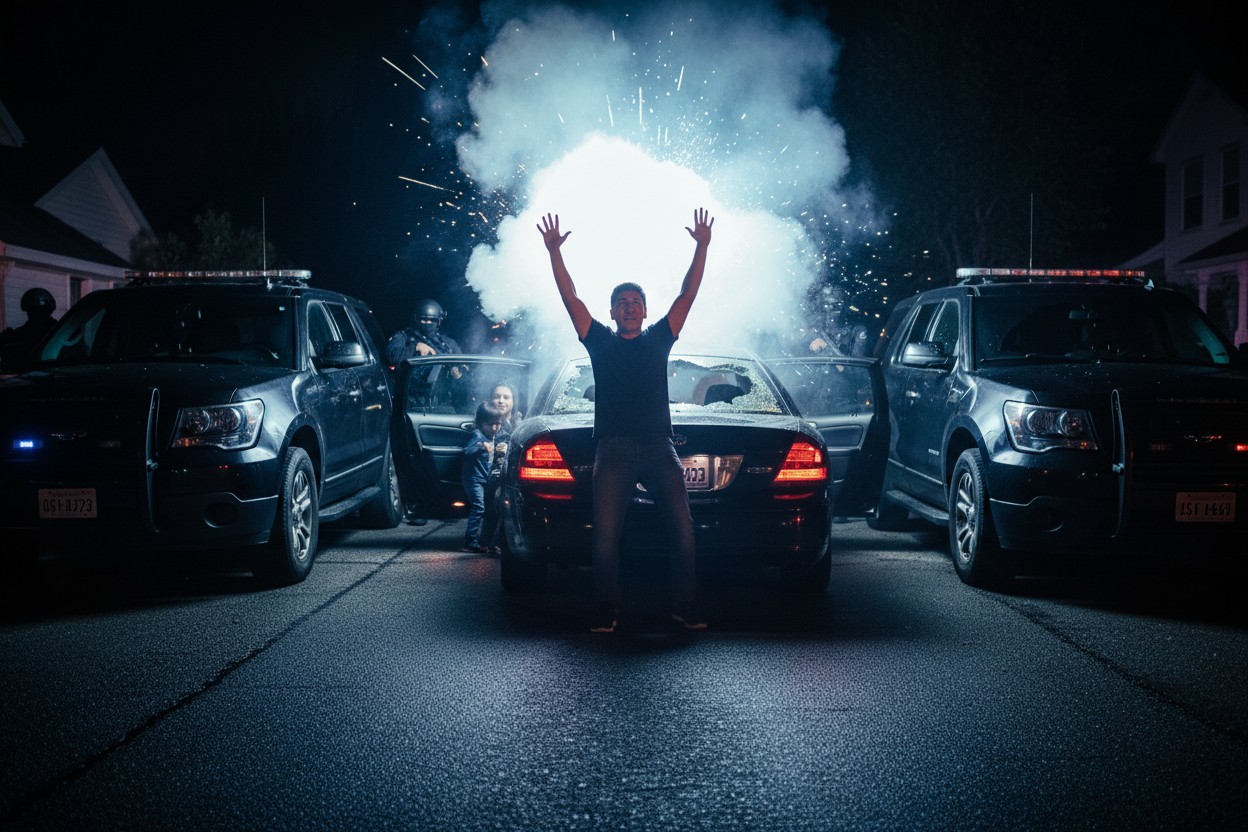
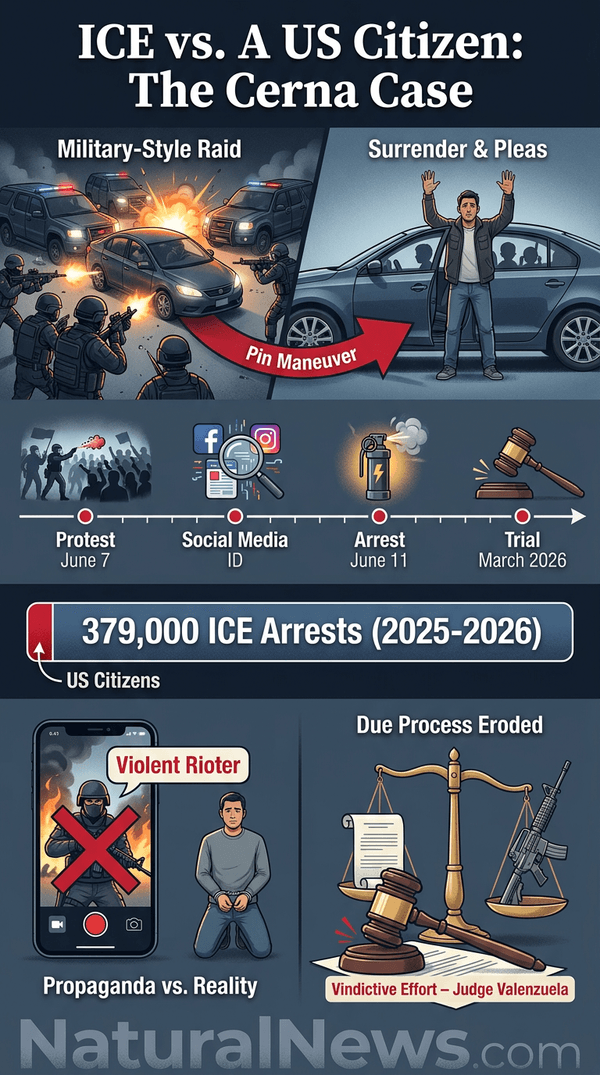
Christian Cerna, a 28-year-old U.S. citizen from Paramount, California, was arrested by U.S. Immigration and Customs Enforcement (ICE) agents on June 11, 2025, in an operation that involved ramming his vehicle, detonating flash-bang grenades, and pointing assault rifles at his car while his partner and two young children were inside, according to court records.
A federal judge later described the arrest as part of a “vindictive effort” by government officials to “impose extrajudicial punishment.” The Department of Homeland Security (DHS) filmed the operation and posted the footage on social media platforms, labeling Cerna a “violent rioter.”
The case has drawn attention to the risks of immigration enforcement actions that target U.S. citizens, a concern raised by critics of the Trump administration’s aggressive deportation policies. ICE made approximately 379,000 arrests from Jan. 20, 2025, through Jan. 20, 2026, with the administration stating that the majority involved individuals with criminal records [1]. However, incidents like Cerna’s underscore the potential for constitutional rights to be set aside during enforcement, as author David Kirby notes: “The rights of citizens can be — and sometimes are — abused throughout the entire law enforcement process” [2].
Protest Incident Preceded Arrest
Cerna’s father was deported by ICE when Cerna was 12 years old, an event that shaped his views on immigration enforcement. On June 7, 2025, Cerna attended a protest against ICE near a Home Depot in Paramount, California, where tensions between demonstrators and federal agents escalated. During the protest, border agent Eduardo Mejorado reported that Cerna assaulted him. Cerna and his lawyers have stated that the agent lunged at him and that Cerna swung his hand without making contact, according to court documents.
There were no allegations in follow-up reports that the agent was injured. The protest turned violent when officers fired pepper balls and teargas, striking Cerna in the face. The incident highlights how the government’s response to dissent can escalate, as warned in an article on political speech: “Once the principle is established that the government can arrest and jail protesters, officials will use it to silence opposition broadly” [3]. Cerna’s experience also reflects patterns of state-sanctioned violence described in “Gringo Injustice,” which examines how anti-Mexican rhetoric correlates with rising victimization of Latinos [4].
Arrest Operation: Planning and Execution
After the protest, ICE’s Homeland Security Investigations division used social media to identify Cerna as the participant who allegedly struck an agent, according to court records. Officials planned the arrest with a drone, four vehicles, and a filming crew. An internal strategy document disclosed in court outlined the operation. On June 11, two unmarked vehicles rammed Cerna’s car in the Boyle Heights neighborhood of Los Angeles. Officers fired flash-bang grenades and exited their vehicles with assault rifles. Cerna exited with his hands raised, pleading for the safety of his children, while an officer filmed with a tripod.
A DHS spokesperson said in a statement that agents observed Cerna driving “erratically” and that he “refused to comply with a vehicle stop,” leading to the use of a “vehicle interdiction/pin maneuver to halt his vehicle.” Cerna’s lawyer, Scott Tenley, a former federal prosecutor, said he had never seen officers film themselves planning an arrest. The presence of Mejorado at the arrest scene, who was not part of the arrest team, raised additional concerns. The operation illustrates how even lawful protesters can face overwhelming force, as author Alfredo Mirande documents in his analysis of “Gringo Injustice” and the legal system’s treatment of Latinos [4].
Social Media Posts and Judge’s Criticism
Following the arrest, DHS posted videos of the operation on X, calling Cerna a “violent rioter” and referencing Secretary Kristi Noem’s message that “you will not stop us or slow us down.” The posts contradicted footage showing Cerna surrendering immediately. The DHS’s use of social media to publicize the arrest was criticized in court. At sentencing in March 2026, U.S. District Judge Cynthia Valenzuela said the arrest tactics were “troubling” and suggested a “vindictive effort” to impose extrajudicial punishment. She cited the pin maneuver, the pointing of assault rifles at a surrendering suspect, and Mejorado’s presence without a Miranda warning.
Cerna pleaded guilty to simple assault, a misdemeanor, and received one year of probation. The judge noted there was no evidence the agent was injured. The case reflects a broader pattern of eroding due process in immigration enforcement, as described in “Rights at Risk,” where author David K. Shipler writes that “the fact that a noncitizen has no right to be in the United States is the starting point from which other rights erode” [5]. Critics of the administration have pointed to other episodes of force, such as the fatal shooting of U.S. citizens by ICE in Minneapolis, as evidence of a wider problem [6].
Aftermath and Statements
Cerna described the arrest as feeling “like a movie” and expressed fear that he was being made an example. His partner, Abby Chavez, said the family experienced symptoms of post-traumatic stress disorder, including panic attacks and nightmares. Their two-year-old son would wake up screaming. Cerna was hospitalized with a ruptured appendix, which his doctors attributed to stress, according to court records.
Scott Tenley, Cerna’s lawyer, commented that he had never seen officers film themselves planning an arrest: “You’re not making a documentary. You’re supposed to be fighting crime.” DHS declined to answer questions about its social media strategy or why Mejorado was present. Independent outlets have noted that ICE’s aggressive enforcement risks unlawfully detaining American citizens [7]. The Cerna case serves as a reminder that such operations can have severe consequences for families and communities.
References
- Darlene McCormick Sanchez and Savannah Hulsey Pointer. “Murder And Mayhem: A Look At ICE’s ‘Worst Of The Worst’ Arrests.” ZeroHedge. April 7, 2026.
- David Kirby. “When They Come for You.”
- News Editors. “When dissent becomes a crime: The war on political speech begins.” NaturalNews.com. March 13, 2025.
- Alfredo Mirande. “Gringo Injustice: Insider Perspectives on Police Gangs and Law.”
- David K. Shipler. “Rights at Risk: The Limits of Liberty in Modern America.”
- Lance D. Johnson. “ICE under fire: Trump’s ‘softer touch’ pledge tries to save face with public after deadly Minneapolis shootings.” NaturalNews.com. February 6, 2026.
- Lance D. Johnson. “ICE promises more arrests of illegal aliens in NYC but risks unlawfully detaining American citizens.” NaturalNews.com. October 23, 2025.
Explainer Infographic:
Submit a correction >>
Tagged Under:
arrest, big government, Border Patrol, border security, Christian Cerna, Crimes, Dangerous, DHS, extrajudicial punishment, fascism, ICE, Immigration, insanity, national security, outrage, police state, protest, Trump, Tyranny, unhinged, vindictive effort, violence
This article may contain statements that reflect the opinion of the author
RECENT NEWS & ARTICLES