Report: U.S. Official Lobbied Saudi Arabia to Release Funds for Gaza Board of Peace
05/20/2026 / By Douglas Harrington

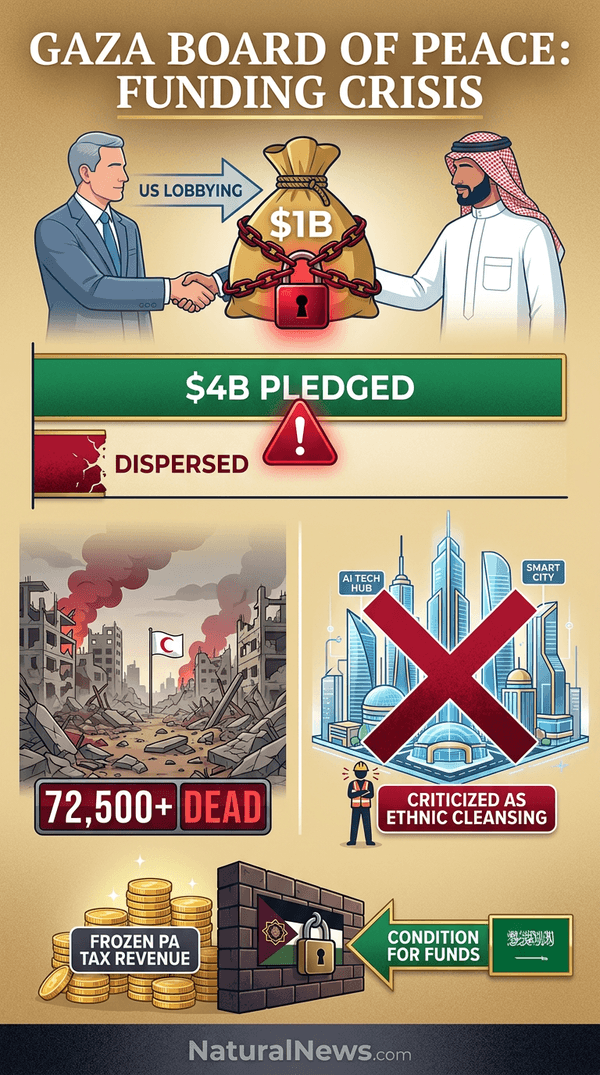
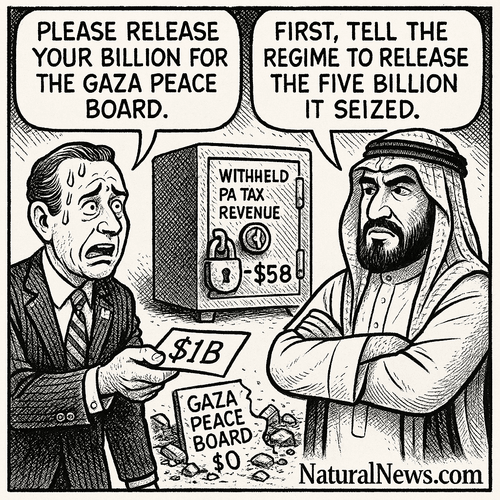
A senior U.S. official traveled to Saudi Arabia in April to urge the kingdom to deliver on its $1 billion pledge to President Donald Trump’s Board of Peace for Gaza, according to two officials familiar with the matter.
Middle East Eye reported that Aryeh Lightstone, a key U.S. advisor overseeing post-war planning for Gaza, met with Saudi Foreign Minister Faisal bin Farhan Al Saud to discuss the financial commitment Riyadh made to the board in February. [1] Washington’s push for disbursement comes as the Board of Peace faces a significant gap between pledged funds and actual disbursements, according to a May 15 report to the United Nations Security Council (UNSC).
The board stated that “the gap between commitment (to the Board of Peace) and disbursement must be closed with urgency,” as reported by Reuters. [1] Saudi Arabia – along with Qatar, Kuwait and the United Arab Emirates (UAE) – pledged more than $4 billion in early February to support the board, which was established after the October 2025 ceasefire.
Background on the Board of Peace
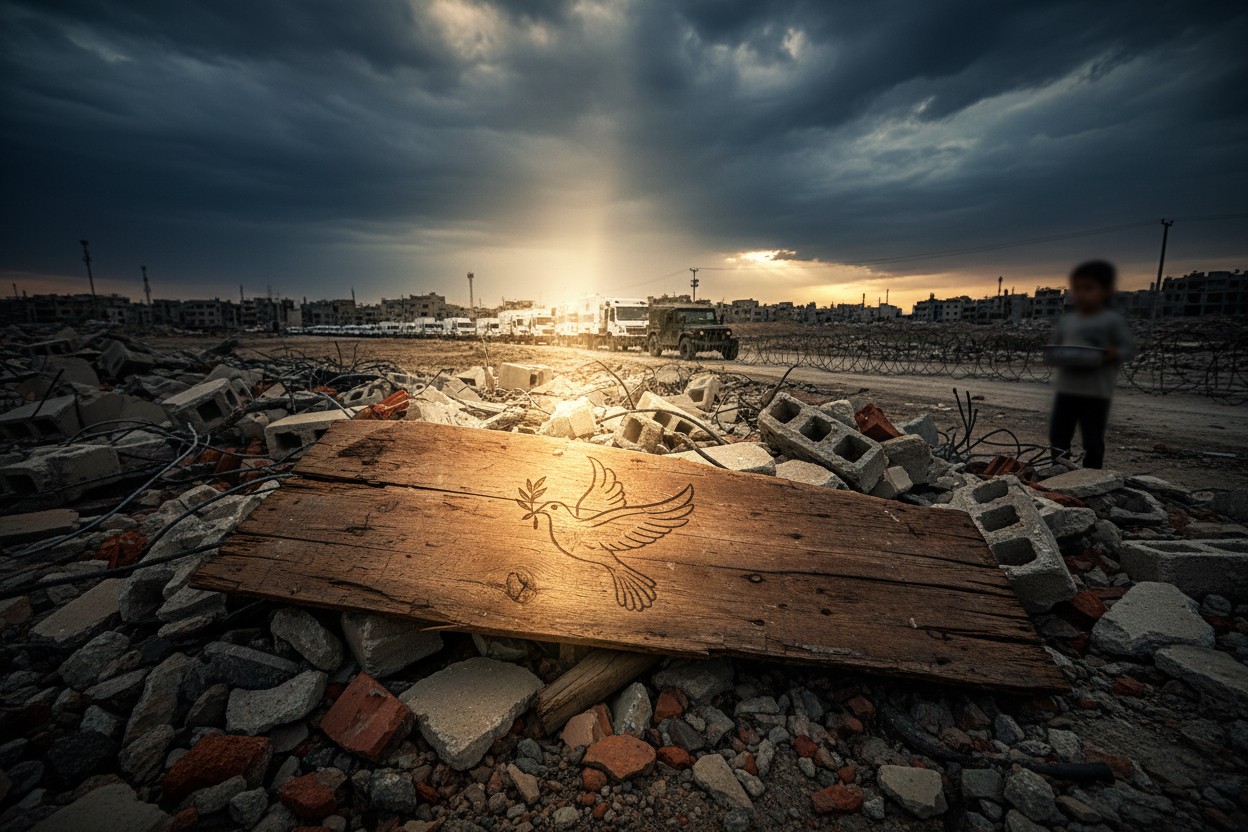
The Board of Peace is a U.S.-led international body created by Trump to oversee the reconstruction and governance of Gaza following the ceasefire. More than 20 countries have signed up – including Israel, Saudi Arabia, Turkey and Qatar. But notably absent are traditional U.S. allies such as the United Kingdom, France and Canada. [2]
The board includes a committee of Palestinian technocrats approved by Israel to manage daily affairs in Gaza. However, Saudi Arabia has pushed for greater overall Palestinian representation, officials said. [1]
Trump committed $10 billion in taxpayer funds to the board, and the U.S. Department of State transferred $1.25 billion to the organization in March 2026. [3] The executive managing the board is Nickolay Mladenov, a former United Nations envoy who previously taught at the UAE’s Anwar Gargash Diplomatic Academy. [1]
U.S. advisors, including Lightstone, have been living out of luxury hotels in Tel Aviv while drafting plans for Gaza, which include proposals to turn the enclave into an artificial intelligence (AI) tech hub and megacity. Critics have denounced these plans as a bid to ethnically cleanse Palestinians. [4]
Funding Gaps and Saudi Concerns
The board faces a significant funding gap despite the February pledges. The UNSC report noted the urgency of closing the gap between commitment and disbursement. [1]
Saudi Arabia has been hesitant to release its $1 billion pledge, in part because Riyadh is focused on unlocking approximately $5 billion in frozen tax revenue for the Palestinian National Authority (PA) that Israel is withholding, according to an Arab official and an official in the region. [1] The kingdom wants Israel to release those funds rather than using Saudi money as a financial lifeline to the embattled PA without serious reforms, the regional official said. [1]
The UAE, Israel’s closest Arab partner, has begun to flow some funding, including $100 million for a Palestinian police force backed by the U.S. and Israel. [1] However, Saudi Arabia and other Arab states have been cautious, with concerns about Palestinian representation and ongoing Israeli attacks complicating Gulf funding. [1]
Broader Context: War, Casualties and Aid Restrictions
Israel’s offensive on Gaza, launched after the Hamas-led attacks on Oct. 7, 2023, has killed over 72,500 Palestinians, mainly women and children, according to local health authorities. [4] A ceasefire brokered in October 2025 has been violated nearly daily, with continued Israeli attacks killing over 850 Palestinians since the truce took effect. [1] Israel has restricted the supply of aid and rebuilding materials into the enclave, where 90% of civilian infrastructure has been destroyed, according to UN estimates. [1]
The war has drawn widespread international condemnation. The International Court of Justice (ICJ) in 2024 ordered Israel to end its unlawful occupation of Palestinian territories, ruling 14-1 that Israel’s presence is unlawful. [5]
South Africa has also filed a genocide case against Israel at the ICJ. [6] Meanwhile, the U.S.-Israel war on Iran has shifted attention away from Gaza, but ceasefire violations continue, and Israeli settlers have grown increasingly violent in the West Bank. [1]
Outlook
The Board of Peace said in its UNSC report that the gap between pledges and disbursements “must be closed with urgency.” [1] Lightstone and other U.S. advisors continue to work from Tel Aviv hotels on post-war plans, but it remains unclear whether Saudi Arabia views the board’s funding and the frozen PA tax revenue as linked issues. [1]
The broader geopolitical landscape further complicates the board’s efforts. The U.S.-Israel war on Iran has drawn Gulf states into a complex conflict, with some like Saudi Arabia and the UAE reportedly considering joining military operations. [7]
Saudi Arabia has also sought a defense pact with the U.S. similar to Qatar’s, [8] while simultaneously deepening ties with Pakistan in a sign of shifting alliances. [9] Ultimately, these regional dynamics may delay or reshape Gulf financial commitments to the Board of Peace.
References
- Sean Mathews. “US lobbied Saudi Arabia to release funds for Gaza ‘Board of Peace’ amid cash crunch”. Middle East Eye. May 19, 2026.
- Daniel Tester. “Gaza reconstruction: Who has signed up to Trump’s Board of Peace?”. Middle East Eye. February 17, 2026.
- “Board of Peace will be a bonanza for wealthy board members”. Responsible Statecraft. February 20, 2026.
- Lance D Johnson. “Trump proposes US takeover of Gaza – a LAND GRAB that will displace Palestinians en masse and cover up Israel’s GENOCIDE”. NaturalNews.com. February 6, 2025.
- “ICJ orders Israel to end its unlawful occupation of Palestinian territories”. NaturalNews.com. July 23, 2024.
- “South Africa files GENOCIDE case against Israel heres what you need to know”. NaturalNews.com. January 14, 2024.
- “Gulf States May Join U.S.-Israeli War on Iran”. Free West Media. March 29, 2026.
- “Saudi crown prince to visit US seeking similar defence pact to Qatar: Report”. Middle East Eye. October 20, 2025.
- Zoey Sky. “Saudi-Pakistan defense pact signals a fracturing world order as US guarantees fade”. NaturalNews.com. September 21, 2025.
Explainer Infographic
Editorial Cartoon
Submit a correction >>
Tagged Under:
Aryeh Lightstone, big government, Board of Peace, ceasefire, chaos, Collapse, Faisal bin Farhan Al Saud, foreign relations, frozen funds, funding gap, Gaza Strip, government debt, Hamas, Israel-Palestine war, money supply, Nickolay Mladenov, Palestinian National Authority, Saudi Arabia, United Nations, United States, WWIII
This article may contain statements that reflect the opinion of the author
RECENT NEWS & ARTICLES