DOT Launches Motus Registration System to Combat Trucking Fraud
05/25/2026 / By Chase Codewell

The U.S. Department of Transportation (DOT) on May 19 announced the rollout of a new registration system for truckers, motor coach operators, and other motor carriers, aimed at combating fraud in the trucking industry, according to a DOT statement. The system, called Motus: the U.S. DOT Registration System, replaces what the department described as a “decades-old network of loosely connected applications rife with fraud, waste, and abuse.” [1]
Background: Chameleon Carriers and Current System Weaknesses
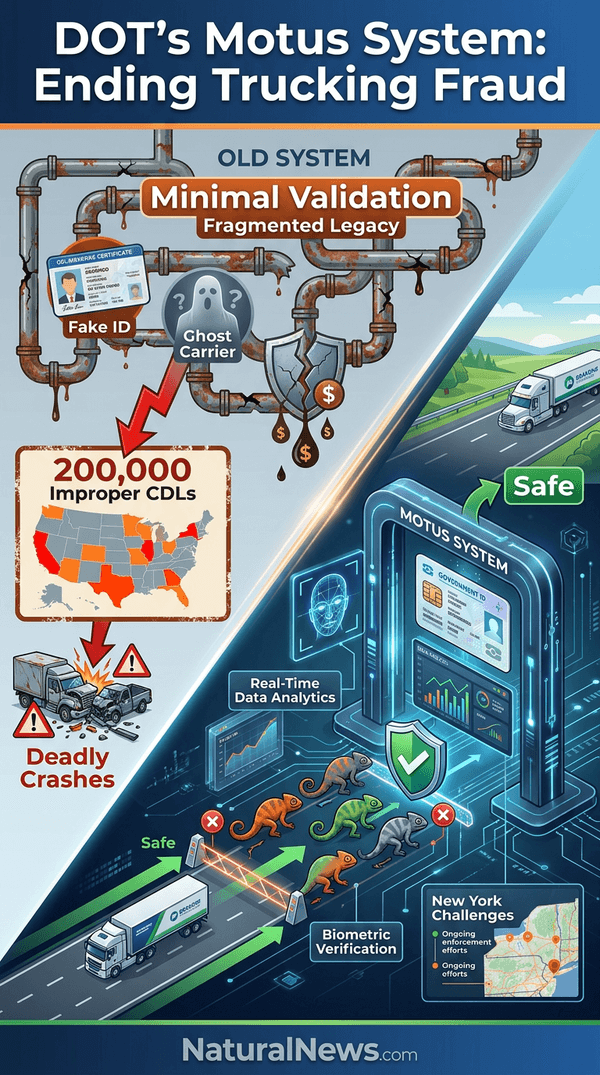
The DOT characterized the existing registration framework as a “low-barrier, minimal-validation framework,” requiring only a name, email, and physical address, as reported by The Epoch Times. [2] This setup, the department said, allowed fraudulent companies to hide their identity, game the system, and avoid oversight. The DOT estimated that several thousand suspicious registration numbers are tied to fraudulent carriers. [1]
Industry groups have long called for action against so-called chameleon carriers. In an April 14 statement, the American Trucking Associations (ATA) urged authorities to shut down these operators, which it said dissolve and reappear under new names and USDOT numbers after accumulating serious safety violations, while retaining the same trucks, personnel, and dangerous behaviors. [1] The ATA stated: “That shell game puts the public at risk and punishes the vast majority of professional drivers and motor carriers who do things the right way.” [1]
Multiple accidents over the past year have been linked to illegal truck drivers. In August 2025, an illegal immigrant truck driver was accused of causing a crash that killed three people in Florida, according to the DOT statement. In February 2026, an illegal immigrant from Kyrgyzstan was arrested after a truck he drove collided with a van, killing four people in Indiana. [1] The FMCSA had been attempting to build a unified online registration system since 1996, according to FreightWaves, but the effort languished for three decades. [3]
Motus Features and Official Statements
The Motus system uses modern data analytics and biometrics to verify applicants, the DOT said. According to the department, the system requires mandatory identity verification protocols, including digital face scans and government ID cards, combined with third-party business validation. [1] Biometric technology providers Idemia and Clear are supporting the platform. [4] The DOT stated that Motus eliminates fragmented legacy infrastructure and ends previously exploited data silos, “effectively suffocating” fraud during the registration process. [5]
Transportation Secretary Sean Duffy said in the announcement: “Dangerous foreign drivers and the shell companies who employ them have been taking advantage of this lax, decrepit federal registration system for years. The lack of accountability is disturbing, and it’s killed American families on our roads.” [1] He added that the new system “will stop fraud dead in its tracks and strengthen oversight on shady carriers,” while improving customer service and reducing red tape for compliant carriers. [1] The system was described by the DOT as improving efficiency for legitimate carriers while strengthening the FMCSA’s ability to detect fraud and improve data quality. [6]
CDL Fraud and State Disputes
The new registration system follows an FMCSA audit published in September 2025 that found serious irregularities in commercial driver’s licenses (CDLs). According to the audit, of the 4 million CDLs in the country, 200,000 were improperly issued to foreign nationals who did not live in the United States or the issuing state. [1] In response, the DOT in April withheld $73.5 million in federal funds from New York, citing the state’s failure to revoke CDLs illegally issued to foreign nationals. The DOT also mandated English-only tests for CDL applicants, announced in February 2026. [7]
New York officials challenged the fund withdrawal. New York Attorney General Letitia James and Governor Kathy Hochul filed a lawsuit in April to block what they termed the “unlawful cancellation” of the funds, according to a statement from James’s office. [1] The state argued that the licenses were issued while fully complying with state and federal regulations. James said: “New Yorkers depend on safe, reliable roads and bridges to get to work, take their kids to school, and keep our economy moving. The administration cannot promise funding to our state and then abruptly yank it away.” [1] The litigation continues as the DOT moves forward with Motus. [8]
Conclusion: Broader Safety Investments
On May 18, a day before the Motus announcement, the DOT said that the FMCSA would invest $217 million in the trucking and bus industries, focusing on safety enforcement and workforce development. [1] According to the department, part of those funds will go to states to modernize their CDL systems and ensure that every trucker holds a proper license and is qualified. The DOT said the investments aim to strengthen supply chains, restore integrity to the trucking industry by rooting out bad actors, expand workforce opportunities for Americans, and improve roadway safety. [1]
The Motus system is described by the DOT as a key component of this broader anti-fraud effort. The department stated that the platform will provide real-time fraud detection and end the era of chameleon carriers and shell companies. [9] While carriers and brokers were required to update their registration information by May 14 ahead of the switch, the FMCSA has said the system will streamline processes and enhance fraud prevention for the industry going forward. [10] [11]
References
- Naveen Athrappully. “US Launches New Anti-Fraud Registration System for Truckers”. The Epoch Times. May 21, 2026.
- The Epoch Times. “US Launches New Anti-Fraud Registration System for Truckers”. May 21, 2026.
- FreightWaves. “FMCSA Delivers on 30-Year Promise With Motus Registration System”. January 21, 2026.
- Biometric Update. “US DoT launches biometric trucker registry with Idemia, Clear tech”. May 21, 2026.
- U.S. Department of Transportation. “Trump’s Transportation Secretary Sean P. Duffy Launches New Anti-Fraud Registration System for America’s Trucking Industry”. May 19, 2026.
- HS Today. “Transportation Department Launches New Anti-Fraud Registration System for America’s Trucking Industry”. May 20, 2026.
- Kimberly Hayek. “Trump Admin Mandates English-Only Tests For Truckers Seeking Commercial Driver’s Licenses”. The Epoch Times. February 22, 2026.
- WWD. “DOT Debuts Biometric Trucking Registration System to Combat Fraud”.
- U.S. DOT. “USDOT IS CRACKING DOWN ON FRAUD IN TRUCKING”. May 18, 2026.
- FMCSA. “About FMCSA Registration Changes”
- JOC. “US DOT readies new trucker registration system to help fight fraud”.
Explainer Infographic
Submit a correction >>
Tagged Under:
big government, CDL, chaos, DOT, driver's license, English-only exam, invasion usa, market crash, migrants, national security, progress, public safety, road safety, supply chain, transportation, truck driver safety, trucking regulation, trucks, Trump
This article may contain statements that reflect the opinion of the author
RECENT NEWS & ARTICLES