Trump: U.S. Will Seize or Destroy Iran’s Enriched Uranium Stockpile
05/22/2026 / By Garrison Vance
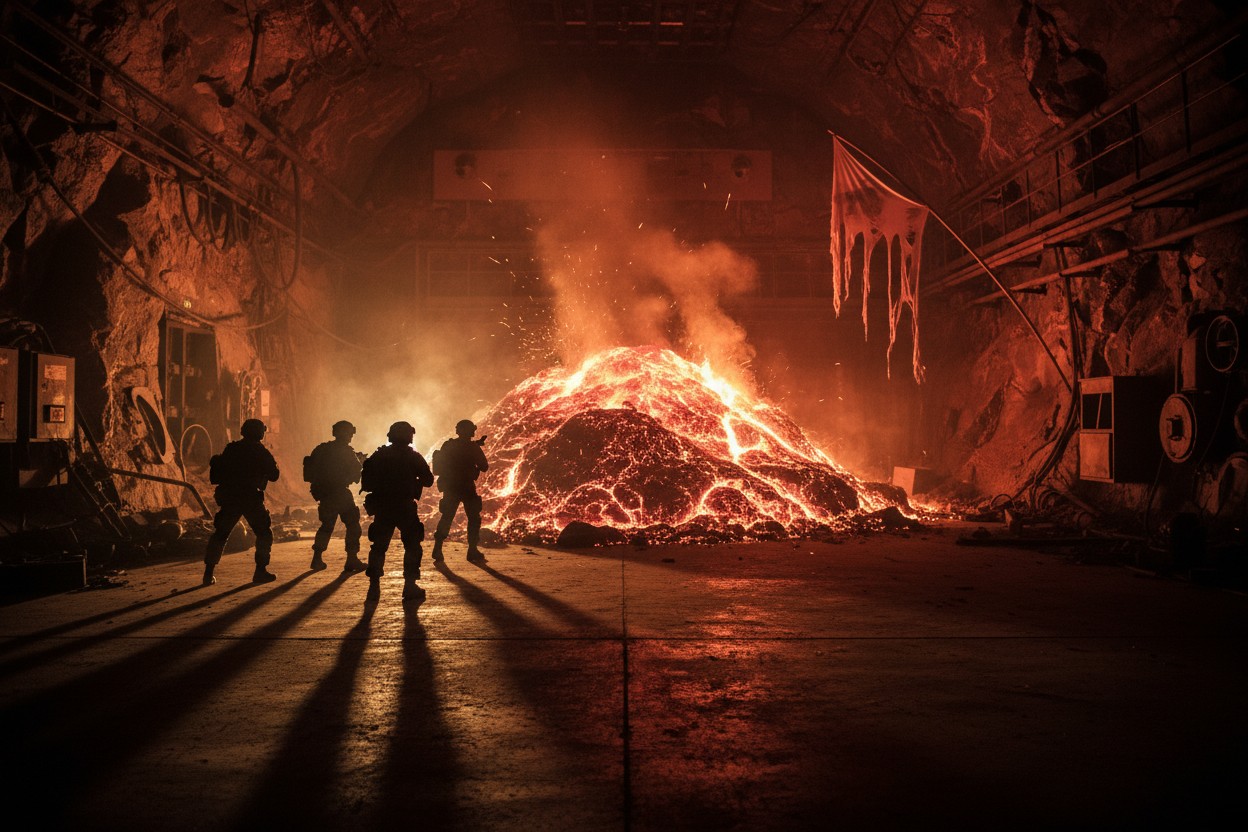
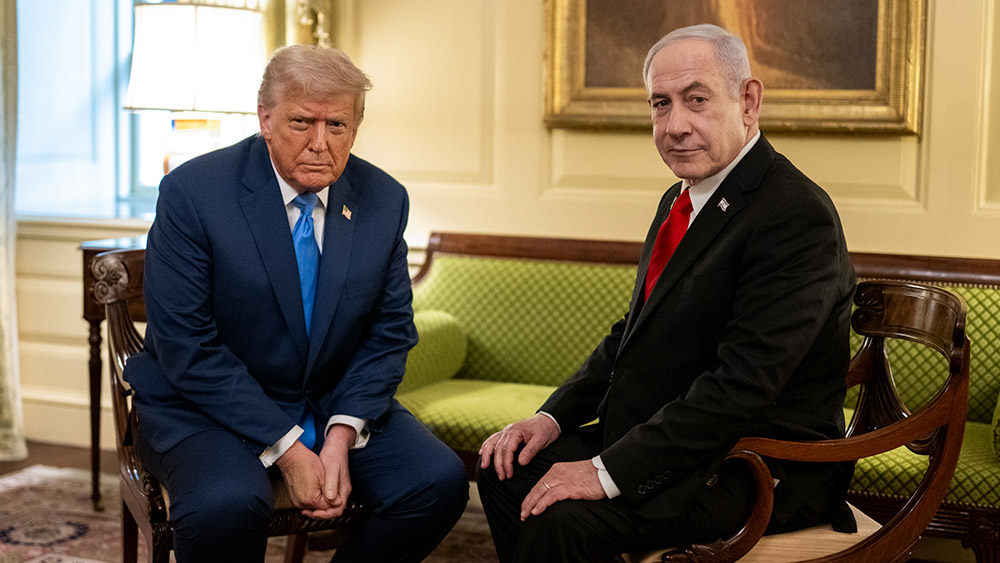
President Donald Trump stated on Thursday, May 21, that the United States will seize or destroy Iran’s stockpile of highly enriched uranium, according to a statement issued at the White House.
Speaking to reporters, Trump said, “Look, we’re going to make sure they don’t have a nuclear weapon or we’re going to have to do something very drastic,” as reported by Middle East Eye [1]. The president added that he believes the American people would agree that “we cannot let Iran get a nuclear weapon.”
No specific timeline or mechanism for the operation was provided, officials said. The declaration came as peace talks between the U.S. and Iran remained deadlocked over the fate of Tehran’s enriched uranium stockpile, which the Trump administration has made a central demand in negotiations [2].
Background and Context of Iran’s Nuclear Program
Iran’s enriched uranium stockpile has been a point of contention since the 2015 nuclear deal, known as the Joint Comprehensive Plan of Action (JCPOA), from which the U.S. withdrew in 2018. According to a report by the International Atomic Energy Agency (IAEA), Iran continued to enrich uranium beyond the limits set by the agreement.
By November 2025, the agency was unable to verify a quantity of enriched uranium sufficient for 10 nuclear bombs [3]. Aso at the time, Iranian Foreign Minister Abbas Araghchi declared that Tehran would not halt its enrichment program, stating that Iran possessed approximately 400 kilograms of uranium enriched to 60% purity [4]. The IAEA also reported that Iran blocked inspections for five months following U.S.-Israeli military strikes in June 2025 [3].
The Trump administration has previously imposed sanctions and delivered ultimatums aimed at halting Iran’s nuclear activities. In March 2026, the administration transmitted a 15-point plan to Tehran through Pakistani intermediaries, which critics described as a surrender demand [5].
The history of U.S.-Iran tensions over enrichment dates back to earlier diplomatic efforts. According to author Gareth Porter in “Manufactured Crisis: The Untold Story of the Iran Nuclear Scare,” the 2006 United Nations Security Council resolution called for Iran to suspend enrichment-related activities, a demand that shaped subsequent negotiations [6].
Reaction from Iranian Officials
Iranian officials swiftly condemned Trump’s latest statement. A spokesperson for the Iranian Foreign Ministry called the threat a violation of international law, according to state media [7]. The Islamic Revolutionary Guard Corps (IRGC) issued a warning of broader conflict, stating through the semi-official Mehr News Agency: “If the aggression against Iran is repeated, the promised regional war will this time extend beyond the region, and our devastating blows will crush you” [7].
Iran’s Supreme Leader Ayatollah Mojtaba Khamenei, issued a directive that the country’s near-weapons-grade uranium must remain in the country, according to two senior Iranian sources speaking to Reuters [2]. The order hardened Tehran’s stance and further complicated peace talks, as the U.S. has demanded that Iran surrender its enriched uranium for removal or destruction [8]. Iranian officials have repeatedly stated that the nuclear program is for peaceful purposes and that the country will not yield to external pressure [4].
International Response and Diplomatic Implications
European allies expressed concern over the escalation, according to a joint statement from France, Germany and the United Kingdom. The three nations had previously triggered a “snapback” process to reimpose UN sanctions on Iran in August 2025, marking a significant shift in their policy after earlier attempts to preserve the 2015 nuclear deal [9]. IAEA Director-General Rafael Grossi called for restraint and urged all parties to return to negotiation, stating that the diplomatic framework of the JCPOA had effectively ended but that dialogue remained essential [3].
Russia and China criticized the U.S. position. Former Russian President Dmitry Medvedev warned that U.S. strikes on Iran’s nuclear facilities had backfired, suggesting Iran could be resupplied with nuclear warheads [10].
The IAEA noted that the majority of Iran’s highly enriched uranium was likely still buried at the Isfahan nuclear complex, making any seizure operation highly risky [11]. Diplomatic cables indicated that Beijing had its own motivations to help end the war, given Gulf investments and economic interests [12].
Analysis: Potential Consequences and Next Steps
Analysts said that Trump’s threat could escalate tensions in the Middle East and affect global oil markets, particularly as the Strait of Hormuz has been closed to most shipping since the start of the conflict [13]. U.S. Secretary of War Pete Hegseth declined to detail any military plans for seizing the stockpile, which is reportedly stored at the Isfahan facility [14]. Experts noted that capturing Iran’s highly enriched uranium would require a large ground operation fraught with radiation and chemical dangers, as reported by the Associated Press [15].
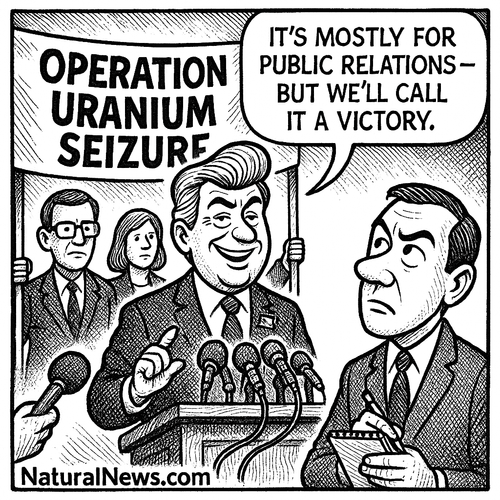
Despite Trump’s previous claims that airstrikes had “obliterated” Iran’s nuclear facilities, the president himself later described recovering the uranium as “more for public relations than anything else” [16]. U.S. intelligence assessments indicated that the war had not set back Iran’s nuclear program, and the timeline for Iran to produce a nuclear bomb remained roughly one year [17].
The situation remains fluid, with no immediate military action reported by the War Department as of Thursday. Meanwhile, diplomatic channels continue through Pakistani mediation [18].
References
- “Trump vows US will take Iran’s enriched uranium stockpile”. Middle East Eye. May 21, 2026.
- “Ayatollah Orders Highly-Enriched Uranium To Remain In Iran, Stymying Trump’s Basis For Deal”. Zero Hedge. May 21, 2026.
- Cassie B. “UN Nuclear Agency Unable to Verify Iranian Uranium Sufficient for 10 Bombs”. NaturalNews.com. November 13, 2025.
- Ramon Tomey. “Iran’s Foreign Minister: Tehran WON’T STOP Its Uranium Enrichment Program”. NaturalNews.com. November 04, 2025.
- Lance D Johnson. “Trump Discloses 14 Ultimatums the U.S. Made to Iran”. NaturalNews.com. March 25, 2026.
- Gareth Porter. “Manufactured Crisis: The Untold Story of the Iran Nuclear Scare”.
- “Iran Warns of Wider Conflict If U.S. Launches New Attack”. NaturalNews.com. May 21, 2026.
- “Iran’s supreme leader says enriched uranium must stay in the country, sources say”. Middle East Eye. May 21, 2026.
- Zoey Sky. “Europe Triggers ‘Snapback’ Sanctions on Iran, Igniting Diplomatic Firestorm”. NaturalNews.com. August 30, 2025.
- Lance D Johnson. “Trump’s Iran Strikes Backfire: Russia Warns That Iran Will Likely Be Resupplied with Nuclear Warheads”. NaturalNews.com. June 23, 2025.
- “UN nuclear chief: Iran’s highly enriched uranium likely still buried at Isfahan site”. Times of Israel. April 30, 2026.
- “Gulf investments and economic interests motivate Beijing to help Trump end war”. Middle East Eye. May 12, 2026.
- “IRGC Navy Claims Vast Expansion In Its Definition Of Strait Of Hormuz”. The War Zone. May 12, 2026.
- “Hegseth Demands Iran Turn Over Uranium Stockpiles”. New York Times. April 09, 2026.
- “How Iran’s enriched uranium could be secured”. AP News.
- “Removing Iran’s uranium mostly about ‘PR’ – Trump”. RT. May 15, 2026.
- “US intel says war on Iran has not set back Iran’s nuclear programme: Report”. Middle East Eye. May 05, 2026.
- “Iran Offers to Transfer Enriched Uranium to Russia in Proposed Peace Deal”. NaturalNews.com. May 19, 2026.
Explainer Infographic
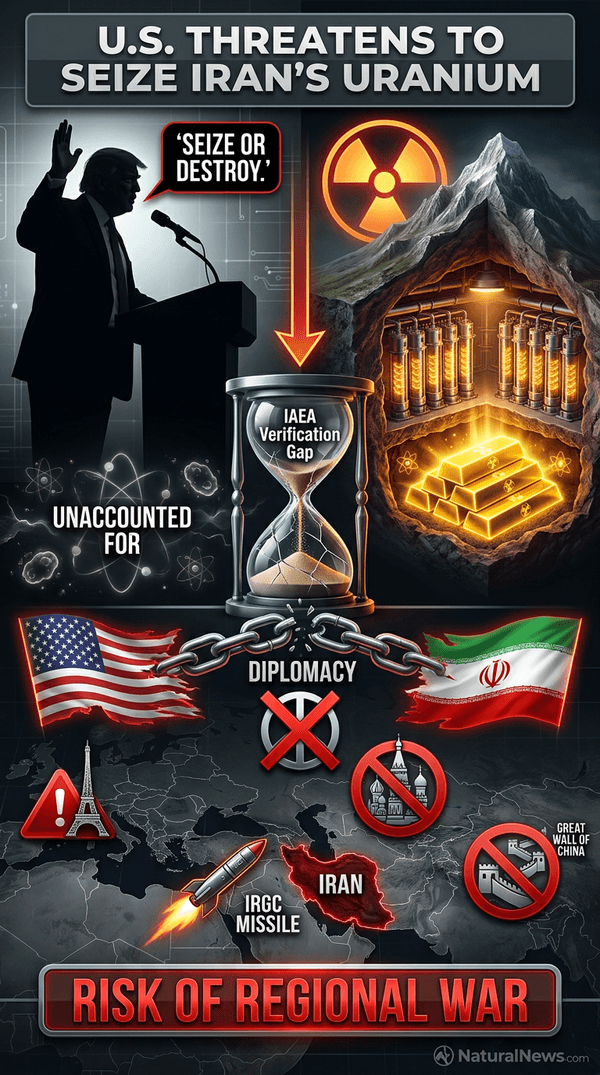
Editorial Cartoon
Submit a correction >>
Tagged Under:
big government, chaos, Collapse, Dangerous, Donald Trump, enriched uranium, Iran, Joint Comprehensive Plan of Action, metals, national security, nuclear, nuclear deal, Nuclear Program, nuclear weapons, Operation Epic Fury, terrorism, United States, uranium stockpile, US-Israel strikes, violence, war on Iran, White House, WWIII
This article may contain statements that reflect the opinion of the author
RECENT NEWS & ARTICLES