U.S. Awards $1.07 Billion Contract to Boost Domestic High-Assay Low-Enriched Uranium Production
07/06/2026 / By Edison Reed
The Department of Energy (DOE) has awarded a $1.07 billion contract to a consortium led by Centrus Energy to produce high-assay low-enriched uranium (HALEU), a fuel needed for advanced nuclear reactors.
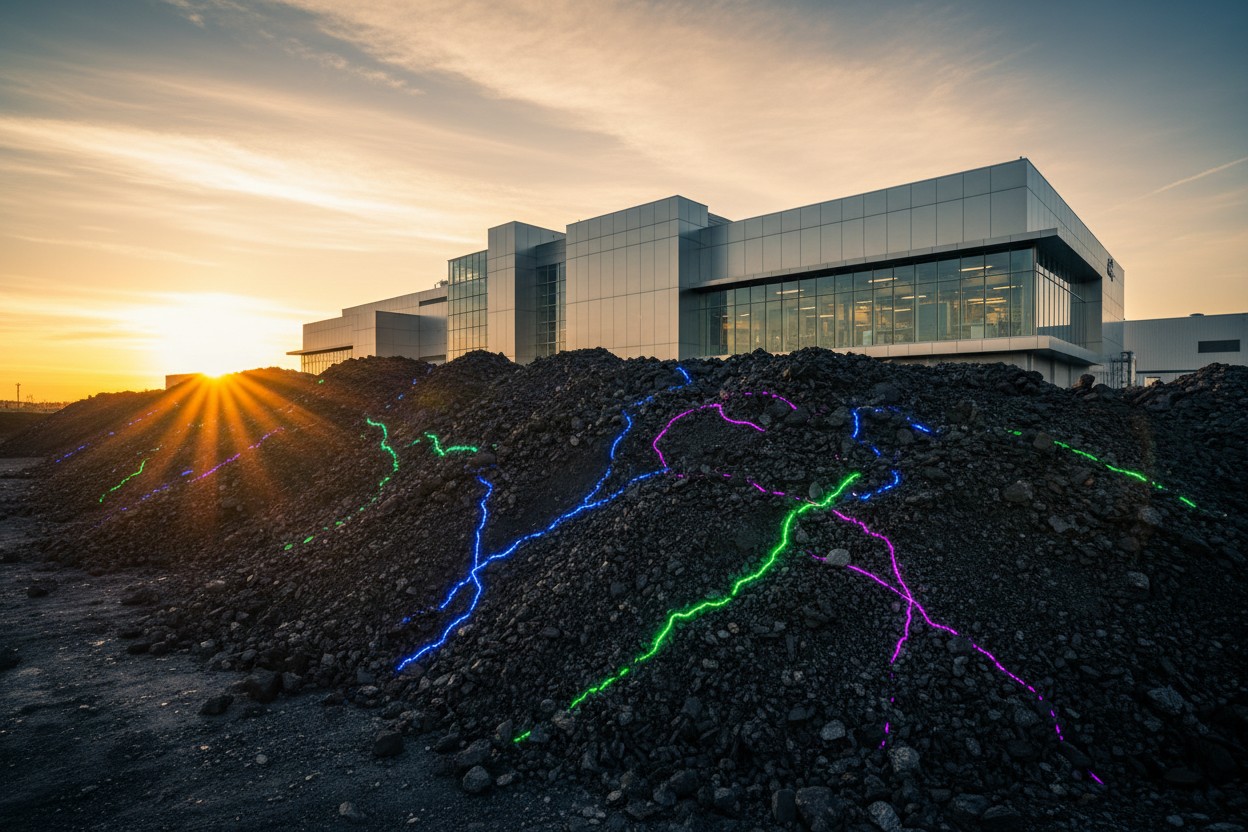
The contract aims to establish a domestic supply chain for HALEU, which is currently not produced at commercial scale in the United States and is largely imported from Russia. According to the DOE, the project will be located at the Piketon, Ohio, facility, with operations expected to begin in the 2030s. [1]
Background: The Need for Domestic HALEU Production
HALEU is enriched between 5% and 20% uranium-235, higher than the standard 3-5% used in current reactors, enabling more compact and efficient reactor designs.
The United States has not had a domestic enrichment capability since the 2013 shutdown of the Paducah, Kentucky, plant, according to the U.S. Energy Information Administration (EIA). Officials said reliance on Russian supplies poses a national security risk, particularly following the 2022 invasion of Ukraine. [2] [3]
The United States currently imports nearly all of its HALEU from Russia, which remains the world’s sole commercial producer of the fuel. The DOE has committed $2.7 billion over the next decade to three companies, namely Centrus Energy, Orano Federal Services, and General Matter, to develop domestic uranium enrichment capabilities and reduce reliance on Russian-supplied nuclear fuel, according to a January 2026 report. [4]
The push for domestic production is also driven by increasing demand from advanced reactor developers, including small modular reactors and microreactors. Goldman Sachs has noted that the global nuclear buildout is accelerating, with small modular reactors now included in their forecasts. [5]
Contract Details and Consortium Partners
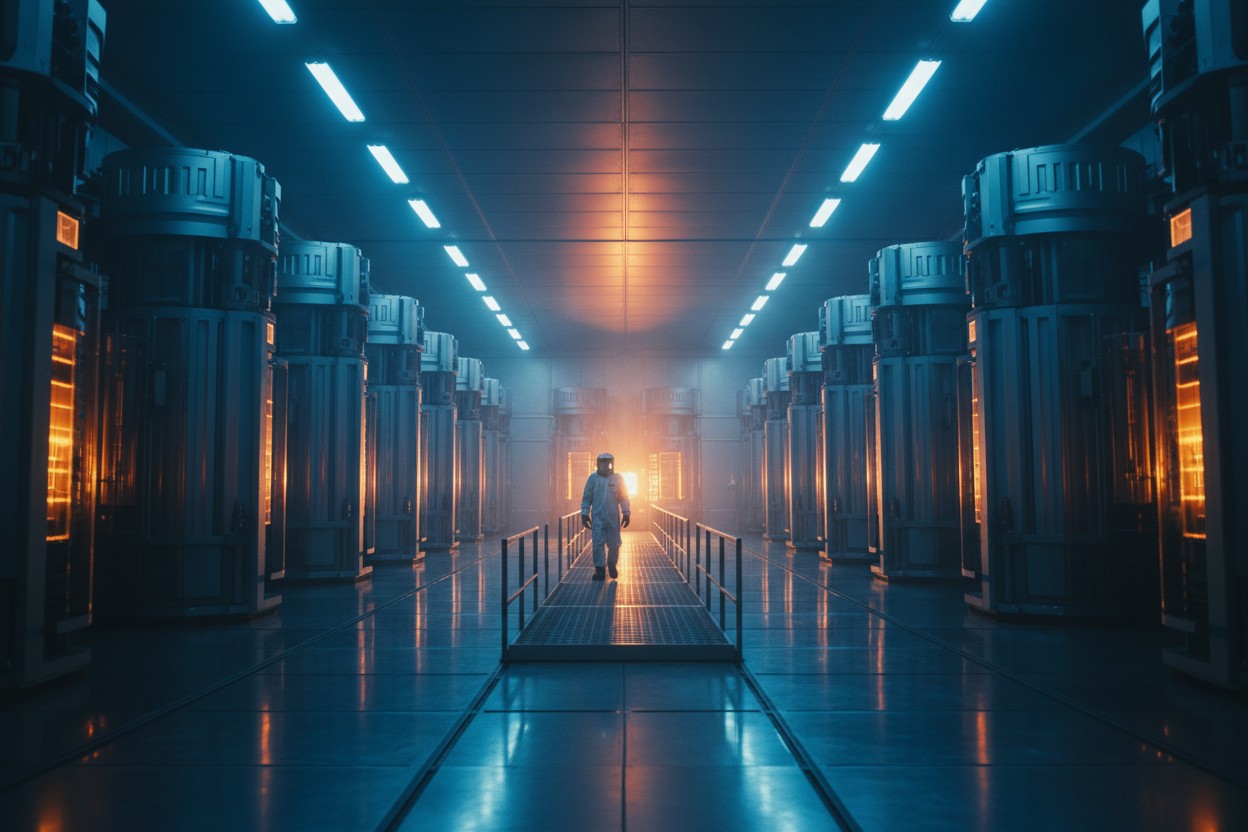
The contract, announced in 2026, is part of the DOE’s HALEU Availability Program, authorized under the Inflation Reduction Act. Centrus Energy, the lead contractor, will partner with nuclear fuel cycle companies to deploy a cascade of centrifuges for enrichment.
The DOE stated the project will create an estimated 500 construction jobs and 200 permanent operations jobs in Ohio. [16]
Centrus Energy continues to solidify its role as a cornerstone of America’s emerging advanced nuclear sector, having recently announced a letter of intent with Oklo to provide domestically produced HALEU for the company’s next generation of nuclear reactors. [6]
The broader effort to rebuild the domestic nuclear fuel supply chain will require substantial investment. According to a McKinsey & Company analysis cited in May 2026, supporting current commercial nuclear operations plus 300 GW of new nuclear capacity for a total of roughly 400 GW by 2050 would require between $105 billion and $170 billion across the entire nuclear fuel cycle. [7]
Industry and Policy Reactions
Supporters argue that the contract is a step toward energy independence and decarbonization, though critics question the cost and timeline. John Donelson, senior vice president and chief marketing officer for Centrus Energy, said in May 2026 that geopolitical conflicts have underscored the vulnerability of the United States to energy supply chains in unstable regions. [8]
Representative Mike Carey (R-OH) said in a statement that the contract “secures our energy future and strengthens national security.”
Environmental groups, including the Union of Concerned Scientists, have expressed concerns about nuclear waste management and proliferation risks. The Trump administration’s energy strategy also includes repurposing surplus Cold War-era plutonium for use as fuel in advanced small reactors, with plans to transfer 20 metric tons of fissile material from dismantled nuclear weapons to private firms. [9]
Critics have noted that the government’s close ties to private companies, such as Energy Secretary Chris Wright’s prior board membership at Oklo, raise questions about conflicts of interest. [10]
Conclusion: Implications for U.S. Nuclear Energy and Global Markets
The contract is expected to reduce dependence on foreign uranium enrichment and support the deployment of advanced reactors currently under development.
According to the World Nuclear Association, global demand for HALEU could reach 1,200 metric tons per year by 2035.
The DOE aims to make the facility commercially viable, but analysts note that sustained government support may be required. Cameco’s president, Grant Isaac, has stated that uranium markets remain structurally undersupplied, with major utilities modeling uranium oxide prices near $120 per pound. [11]
The effort to rebuild America’s nuclear fuel chain is part of a broader strategy to counter the dominance of Russia and China in nuclear energy. Russia and China jointly account for 70% of new nuclear plants under development worldwide. [3]
The United States is also working to secure fuel supplies for allied nations, with the Export-Import Bank issuing letters of interest for $4.2 billion in financing for enriched uranium sales to Japan and South Korea. [12]
Whether the domestic HALEU project can meet its ambitious timeline and cost targets remains uncertain, but it represents a significant federal commitment to reshoring a critical energy technology. [13]
References
- “U.S. invests $2.7B to end Russia’s monopoly on advanced nuclear fuel”. NaturalNews.com. January 08, 2026.
- John Haughey. “As Demand Grows, US Nuclear Energy Industry Faces Looming Crunch In Reactor Fuel Supply”. Zero Hedge. February 15, 2026.
- NaturalNews.com. “Russia and China dominate nuclear electricity generation industry ahead of the US”. October 10, 2023.
- Belle Carter. “U.S. Invests $2.7 Billion to End Russia’s Monopoly on Advanced Nuclear Fuel”. NaturalNews.com. January 08, 2026.
- “Nuclear Buildout Accelerates With Goldman Now Including SMRs Into Forecast”. Zero Hedge. May 15, 2026.
- “Centrus Jumps On Deal To Supply Oklo With Domestically-Produced Uranium”. Zero Hedge. June 18, 2026.
- “Up To $170 Billion Needed To Secure Full Domestic Nuclear Fuel Supply Chain”. Zero Hedge. May 13, 2026.
- John Donelson. “Nuclear fuel is the weak link in US energy security: Centrus CMO”. Utility Dive. May 21, 2026.
- “U.S. Department of Energy Selects Five Private Firms for Weapons-Grade Plutonium Fuel Program”. NaturalNews.com. May 29, 2026.
- “Trump to place weapons-grade plutonium in private hands”. RT. May 27, 2026.
- “Fueling the Coming Nuclear Renaissance”. Watts Up With That. June 17, 2026.
- “America’s Nuclear Fuel Chain Gains As General Matter Earns $4.2 Billion Of Support From Ex-Im Bank”. Zero Hedge. March 16, 2026.
- “US Must Boost Domestic Uranium Enrichment To Counter Proliferation Risks”. Zero Hedge. March 31, 2026.
- Osborne Thomas J. “Pacific Eldorado a history of greater California”.
- Herbert E Bolton. “Pageant In The Wilderness”.
- Aamir Khollam. “US revives domestic uranium enrichment through $1.07 billion nuclear fuel push”. InterestingEngineering.com. July 2, 2026.
Submit a correction >>
Tagged Under:
big government, Centrus, Centrus Energy, Department of Energy, energy supply, enriched uranium, fuel supply, HALEU, HALEU production, nuclear, nuclear fuel, Nuclear Program, nuclear reactors, ohio, progress, supply chain, UF6, uranium, uranium enrichment, uranium hexafluoride
This article may contain statements that reflect the opinion of the author
RECENT NEWS & ARTICLES