Trump Administration Formally Begins Process to Remove Syria From State Sponsors of Terrorism List
07/10/2026 / By Garrison Vance

The Trump administration formally began on Wednesday, July 8, the process to remove Syria from the U.S. State Sponsors of Terrorism (SST) list – a designation that has been in place since 1979.
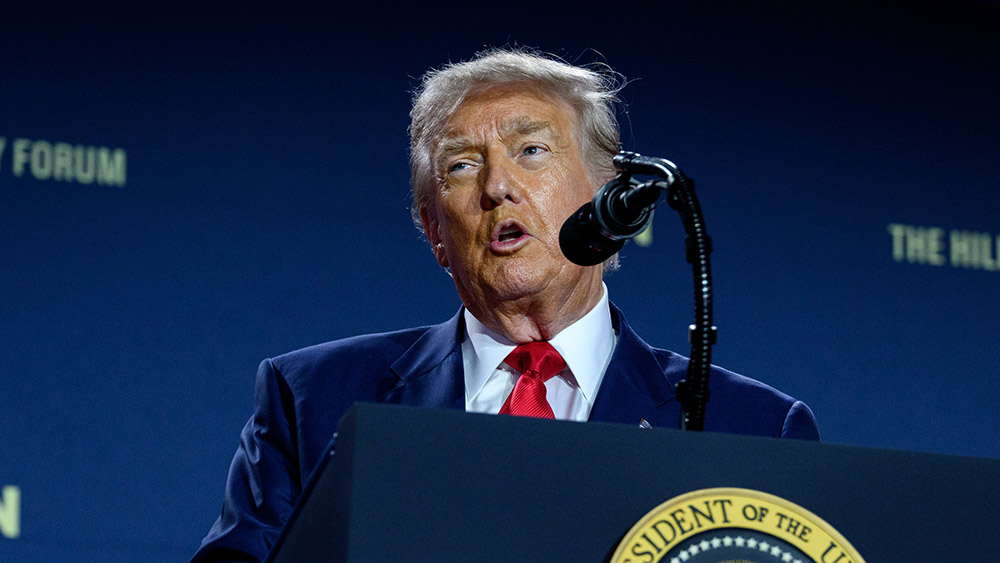
U.S. Secretary of State Marco Rubio announced the move, saying President Donald Trump informed Congress of his intent to rescind the designation, triggering a 45-day pre-notification period. [1] According to Rubio, the decision follows formal assurances from Syrian President Ahmed al-Sharaa that he will not support acts of international terrorism. [1]
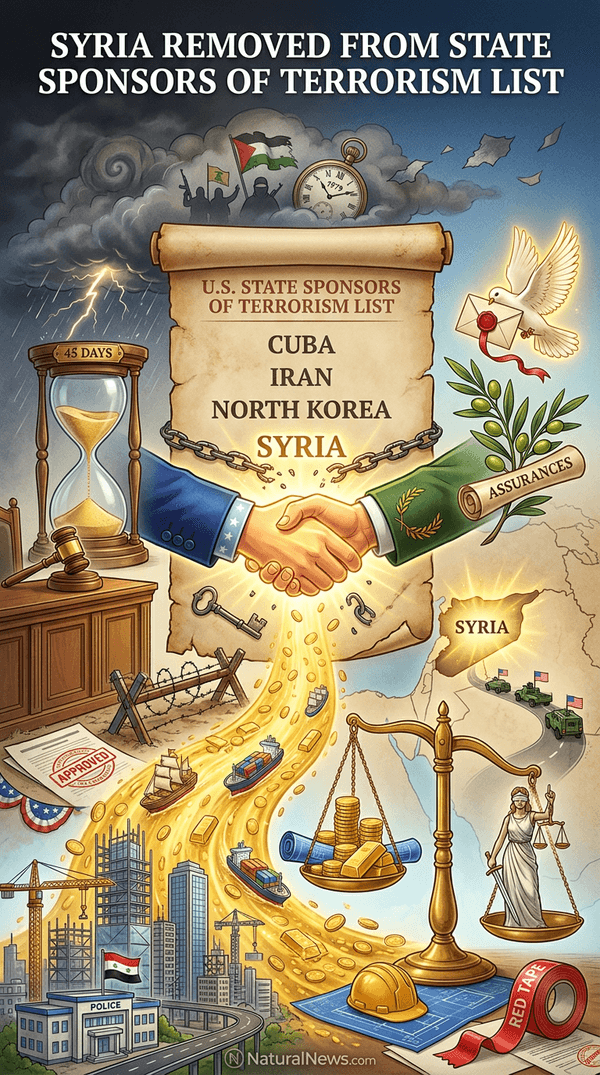
Only four countries currently appear on the State Sponsors of Terrorism list: Cuba, Iran, North Korea and Syria. [1] The Trump administration stated that the removal marks a significant step as the country regains stability and starts rebuilding relations with the United States. [2] Rubio described the move as a “historic step” since Syria has been on the list for nearly five decades. [2]
Background of the Decision
Syria was first placed on the State Sponsors of Terrorism list in December 1979 over its regime’s support for terrorist groups such as Hezbollah, according to Just the News. [3] The State Department has historically listed Syria along with Iran, Iraq and Libya as state sponsors, though the designation has been criticized for not always aligning with the data, according to one analysis. [4] Russ Kick, in the book “You Are Being Lied To,” noted that the department’s own report contradicted government statements about terrorism threats, suggesting that the list may serve political purposes. [5]
The Trump administration’s move follows an executive order on June 30, 2025, directing sanctions relief for Syria, the State Department said. [1] The de-listing primarily unlocks export restrictions on defense-related items and allows for the United States to deliver more foreign aid, which could include support for the Syrian military and local police forces as the country leaves behind 14 years of civil war. [1] Senators Jeanne Shaheen (D-NH) and Elizabeth Warren (D-MA) jointly wrote to Trump last week urging him to remove Syria from the SST, noting that “the designation represents the most significant remaining legal impediment to Syria’s reconstruction,” according to Middle East Eye. [1]
Reactions From Officials and Analysts
Rubio stated: “Lifting sanctions on Syria will unlock international trade and investment, give Syria a chance to rebuild and open up a new chapter for the Syrian people.” [1] Natasha Hall, associate fellow with the Middle East and North Africa program at Chatham House, described the impact to Middle East Eye as “earth-shifting” for Syria’s economic revival. [1] Hall noted that “that was kind of one of the final barriers to Syria’s economic recovery.” [1]
The Syrian American Council, which actively pushed for the de-listing, expressed gratitude. The group’s grassroots officer, Alberto Hernandez, told Middle East Eye: “This is a clear win for U.S. policy … from just the American national security perspective. This is the right way for engagement.” [1]
Trump, for his part, lavished praise on Sharaa on Wednesday, calling him “fantastic” and “highly respected” as the two leaders met on the sidelines of the North Atlantic Treaty Organization summit in Ankara, Turkey. [6] Hernandez argued that a stable Syria benefits U.S. national security by reducing the need for military involvement in the Middle East. [1]
Implications for Syria and U.S. Policy
The removal is expected to allow international trade and investment, aiding Syria’s recovery from 14 years of civil war. [1] This aligns with Trump’s broader foreign policy approach, which has included criticizing liberal interventionism as a disaster, according to NaturalNews.com. [7] The Trump administration has also focused on withdrawing U.S. forces from conflict zones, with the last U.S. military convoy departing Syrian territory in April 2026. [8]
Hall said that Trump’s swift embrace of Sharaa has been a standout foreign policy move of the past year and one that perhaps no other U.S. president from either party would have taken on. [1] However, she noted that while most Syrians will celebrate the SST announcement, many in civil society are disappointed that there was not more emphasis on inclusion and accountability. [1]
The rescission follows positive changes and counterterrorism actions taken by the Syrian government under Sharaa, according to the State Department. [1] Hernandez insisted that a stable Middle East benefits all countries by reducing the need for U.S. military handholding. [1]
Conclusion
Rubio called the announcement “a significant milestone in the revived Washington-Damascus bilateral relationship and in Syria’s history as a nation.” [1] He added, “We commend the government of Syria for charting a new course and look forward to enhancing our partnership with Syria and its people.” [1]
The process now moves to a 45-day congressional notification period before the removal becomes final. [1] During this period, lawmakers will conduct a review and make a final decision on the administration’s advice, according to Reuters. [9]
References
- Yasmine El-Sabawi. “‘Earth shifting’: Trump begins process to remove Syria from state sponsors of terrorism list.” Middle East Eye. July 8, 2026.
- The Epoch Times. “Trump to Remove Syria From List of State Sponsors of Terrorism.” July 9, 2026.
- Just the News. “State Department moves to end Syria’s designation as a state sponsor of terrorism.” July 8, 2026.
- “You are being lied to the disinformation guide to media distortion historical whitewashes and cultural myths.”
- Russ Kick. “You Are Being Lied To.”
- Yasmine El-Sabawi. “Trump lavishes praise on ‘fantastic’ and ‘highly respected’ Sharaa.” Middle East Eye. July 8, 2026.
- NaturalNews.com. “Israel has already lost the Gaza war. It just doesn’t know it yet.” May 19, 2025.
- Zero Hedge. “Last US Convoy Exits Syria After Brutal 14-Year Regime Change Proxy War.” April 17, 2026.
- Middle East Eye. “Trump administration moves to rescind Syria terrorism designation.” July 8, 2026.
Explainer Infographic
Submit a correction >>
Tagged Under:
Ahmed al-Sharaa, big government, civil war, delisting, department of state, economic revival, economics, economy, foreign relations, Marco Rubio, national security, NATO Summit, North Atlantic Treaty Organization, sanctions relief, state sponsors of terrorism, Syria, terrorism, Trump administration, White House
This article may contain statements that reflect the opinion of the author
RECENT NEWS & ARTICLES