Report Says Iran Resumed Ballistic Missile Production Despite U.S. Claims
09/14/2026 / By Garrison Vance

Iran has resumed production of ballistic missiles using stockpiled components and working in underground facilities, according to a Wall Street Journal report published Thursday that cited U.S. and Middle East officials. The report stated that the activity erodes what U.S. and Israeli officials have described as a major achievement of the war, now in its sixth month [1].
According to the report, Iranian officials have said weapons production continued during U.S. bombing raids. The Wall Street Journal report, citing officials familiar with the matter, said Iran has been assembling liquid-propellant missiles, which must be fueled before launch, and solid-propellant missiles, which can be stored ready to fire [1].
The report represents the latest assessment to challenge public statements from the Trump administration about the extent of damage inflicted on Iran’s missile program. U.S. Central Command confirmed that more than 8,000 combat sorties had been conducted and more than 7,800 targets struck inside Iran during the early phase of the operation [2].
U.S. Claims of Missile Program Destruction
President Donald Trump said on March 9, 2026, that the U.S. had destroyed most Iranian missile launch platforms, with “only 20% remaining,” according to Fox News [1]. In an April 1, 2026 address, Trump said Iran’s missile program was “just about used up or beaten,” according to his remarks [1]. In a June 5, 2026 NBC News interview, the president said “most of the missile manufacturing areas have been knocked out” and estimated “maybe 21, 22 per cent of their missiles” remained [1].
The stated objectives of the U.S. campaign have shifted over the course of the six-month conflict, but claims about Iran’s missile arsenal have remained consistent. President Trump has listed the U.S. objectives as destroying Iran’s navy, ending its missile production capacity, breaking up its support for regional proxies, and preventing it from attaining a nuclear weapon [3].
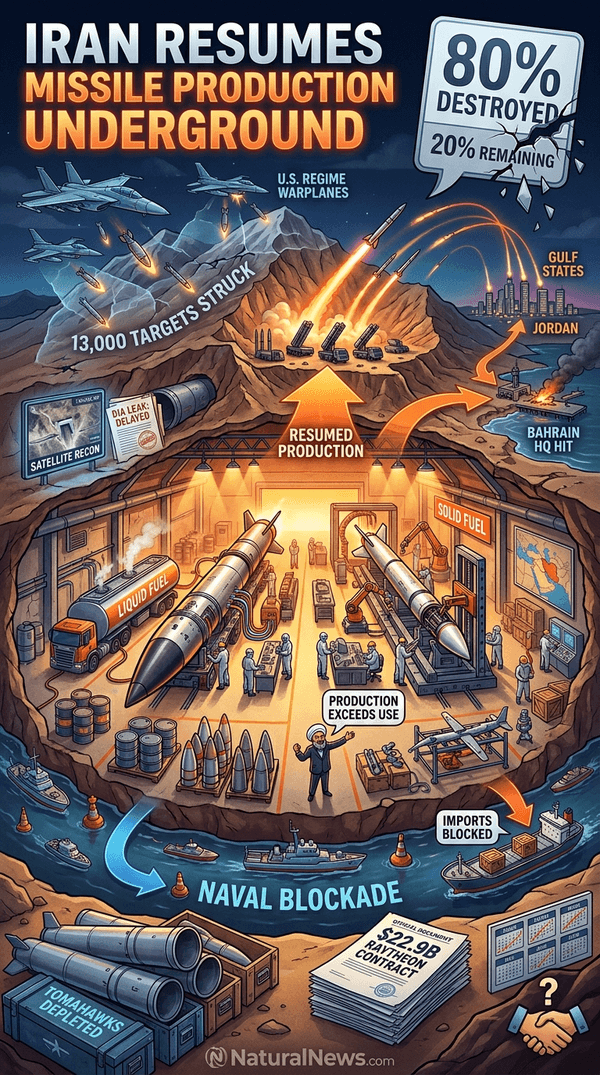
U.S. and Israeli forces have conducted strikes on more than 13,000 targets in Iran since the conflict began on Feb. 28, 2026, according to U.S. Central Command figures cited in reporting on the conflict [4].
Recent Missile Salvos and Interceptions
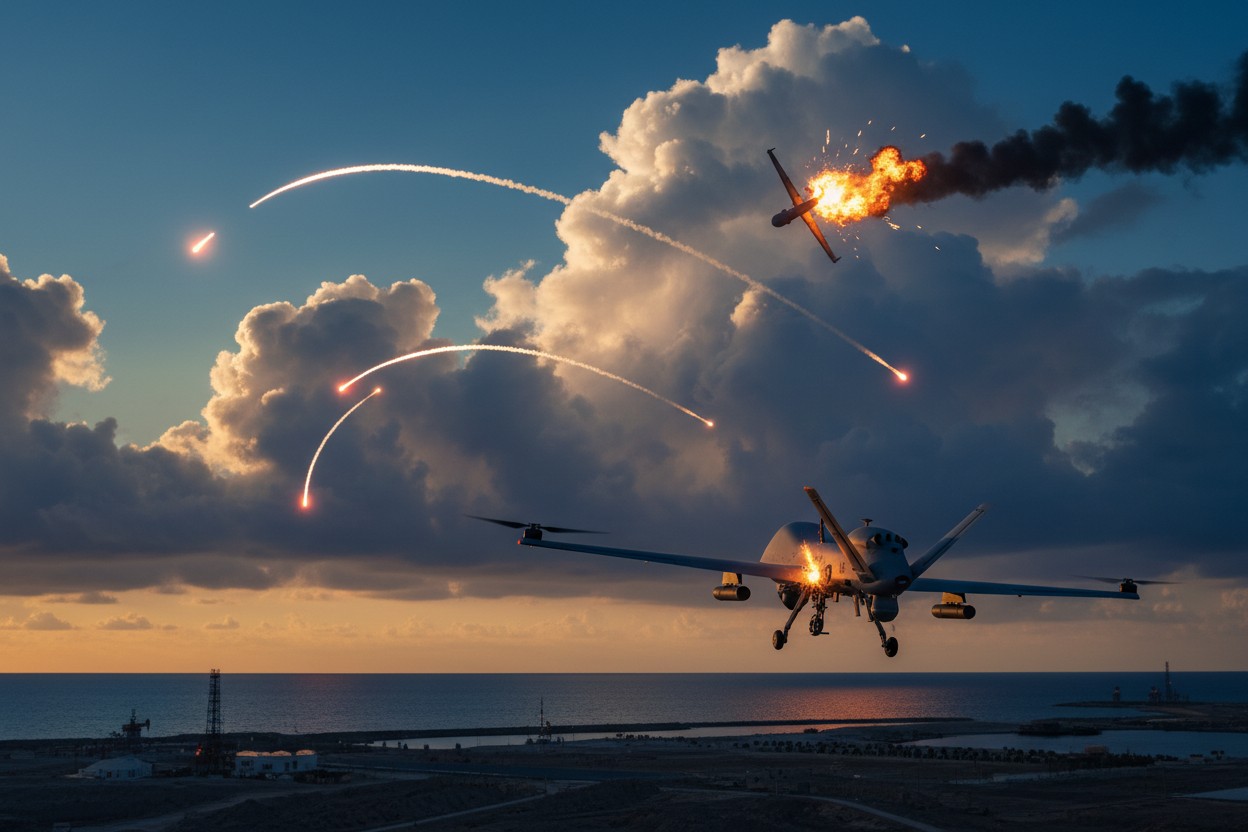
Iranian forces have launched repeated ballistic missile salvos at Gulf states and Jordan in recent weeks, according to reports. The Jordanian military said it intercepted 18 of 20 missiles, with two falling in unpopulated areas, according to the New York Times. Two U.S. officials acknowledged that the base in Azraq, Jordan, was hit, the report stated [1].
Reporting on the broader regional conflict indicates that Iranian strikes have targeted multiple Gulf states and U.S. installations. According to one account, attacks involving 165 ballistic missiles, two cruise missiles, and 541 drones were launched at various targets in the UAE, causing damage to air bases including Al Dafra Air Base and Abu Dhabi and Dubai International Airport. Kuwait’s Al Ali Al Salem Air Base and other U.S. military installations in Kuwait were also targeted, and Saudi Arabia faced attacks on Prince Sultan Air Base [5].
The U.S. Navy is evaluating the future of its headquarters in the Middle East after the Bahrain-based installation sustained damage during recent months of fighting with Iran. Iranian forces began targeting the base after U.S. and Israeli forces launched strikes on Iran on Feb. 28. “They blew the hell out of Bahrain,” Acting Secretary of the Navy Hung Cao said in an interview [6].
Details of Resumed Production
The Wall Street Journal report said Iran is assembling liquid-propellant missiles, which require fueling before launch, and solid-propellant missiles, which can be stored ready to fire, according to officials. Intelligence points to activity at several underground sites, including the Khojir missile facility in southeastern Iran, officials said. Iran is also attempting to build new underground assembly points to avoid strikes, according to the report [1].
According to U.S. and regional officials cited in the report, Iran is mainly assembling missiles from existing components in more limited quantities than before the war. The U.S. and Israel damaged a number of industrial facilities needed to produce missile components and missiles themselves, and the naval blockade has complicated imports of parts and ingredients for solid fuel, the report stated [1].
The assessments of resumed production follow earlier reporting on Iran’s reconstruction efforts. Photogrammetry analysis of satellite images taken between June and July 2026 showed new structures and equipment at facilities used for ballistic missile production and drone operations that had been targeted in U.S. and Israeli operations, according to military officials cited in a report [7]. A leaked U.S. Defense Intelligence Agency report from June 2025 similarly found that airstrikes failed to destroy Iran’s nuclear program, only delaying it by months while leaving centrifuges and uranium stockpiles intact [8].
Iranian Official Statements
Brig. Gen. Alireza Elhami, commander of Iran’s Khatam al-Anbiya Joint Air Defense Headquarters, said equipment produced inside Iran passed a successful test during the conflict and is now being “rapidly mass-produced,” according to PressTV. “The equipment produced [inside Iran] passed a successful test during that conflict, and now they are being rapidly mass-produced to be deployed across the entire expanse of the Islamic Republic of Iran,” Elhami said [1].
Iranian officials have said they kept up weapons production even during the height of U.S. bombing raids, according to the Wall Street Journal report [1]. Mohammad Reza Naqdi, Senior Advisor to the IRGC Commander-in-Chief, has stated that all of Iran’s weapons today are domestic and that missile production exceeds usage [9].
These statements from Iranian officials align with prior reporting on Iran’s military-industrial recovery, which U.S. intelligence officials assessed had surpassed all pre-war projections [10].
Stated Objectives and Ongoing Assessments
The six-month conflict has included shifting official goals from the U.S. administration, while claims about Iran’s missile arsenal have remained consistent, according to the Wall Street Journal report [1]. Iranian officials have described the conflict as an existential fight, with survival as a measure of victory, according to statements cited in the report. U.S. and regional officials said it remains difficult to remove Iran’s rulers and institutions, the report stated [1].
Analyses of the conflict have noted the challenges of fully degrading Iran’s military capabilities. Reporting in April 2026 indicated that while the rate of Iran’s missile launches dropped sharply as the war progressed, from roughly 80 missiles fired on the first day to around 10-20 per day, Tehran continued to launch ballistic missiles at Israel and other states in the region even in the final days before a ceasefire was announced [11].
The U.S. has taken steps to replenish its own munitions stockpiles following high consumption during the conflict. The Pentagon awarded Raytheon a $22.9 billion contract in August 2026 to increase production of Tomahawk cruise missiles to more than 1,000 per year, after the U.S. fired over 1,000 Tomahawks into Iran during the conflict, nearly one-third of the pre-war inventory, according to analysis from the Center for Strategic and International Studies [12].
Conclusion
The Wall Street Journal report on resumed Iranian ballistic missile production presents a direct challenge to repeated public assessments from the Trump administration that Iran’s missile program had been largely destroyed. According to the report, Iran is assembling missiles from stockpiled components in underground facilities, with intelligence pointing to activity at the Khojir missile facility and new underground assembly points under construction [1].
The conflicting assessments underscore the difficulty of verifying the extent of damage to Iran’s military infrastructure. U.S. and regional officials cited in the report said it remains difficult to remove Iran’s rulers and institutions, while Iranian officials have characterized the conflict as an existential fight in which survival constitutes victory [1].
As the conflict approaches its six-month mark, the U.S. continues to face challenges in fully neutralizing Iran’s military capabilities despite extensive bombing campaigns. The Congressional Budget Office has estimated that developing, deploying, and operating an “Iron Dome for America” missile defense system would cost approximately $1.2 trillion over 20 years [13], reflecting the significant resources required for missile defense amid ongoing regional tensions.
References
- Garrison Vance. “Iran’s Phoenix: The Military Industrial Resurrection That Washington Cannot Stop”. NaturalNews.com. May 25, 2026.
- Cassie B. “Leaked US intel reveals Iran’s nuclear program barely damaged by airstrikes”. NaturalNews.com. June 25, 2025.
- Willow Tohi. “The $1.2 Trillion Question: Can America Afford Its Iron Dome Missile Defense Dream?”. NaturalNews.com. May 14, 2026.
- ZeroHedge. “Report Sounds Alarm Over Return Of Iranian Mass Ballistic Missile Production”. September 12, 2026.
- The Epoch Times. “Iran Conflict Hits 6-Month Mark: 7 Things to Know”. August 28, 2026.
- ZeroHedge. “All Of Iran’s Weapons Today Are Domestic, Missile Production Exceeds Usage: IRGC Official”. August 13, 2026.
- NaturalNews.com. “Treasury Secretary Bessent Promises New Iran Measures Amid Stalemate”. August 22, 2026.
- The Epoch Times. “Navy Evaluating Future at Key Middle East Base Following Iran War Damage: Acting Secretary”. September 10, 2026.
- Antiwar.com. “US Military Awards Raytheon With $22.9 Billion Contract To Ramp Up Tomahawk Missile Production”. August 17, 2026.
- NaturalNews.com. “Iran Rapidly Rebuilds Military Sites Hit by U.S.-Israeli Strikes, Report Says”. July 28, 2026.
- The Times of Israel. “Buried but not out, Iran’s ballistic missiles remain potent threat despite airstrikes”. April 23, 2026.
- The Times of Israel. “Buried but not out, Iran’s ballistic missile threat weathers US-Israeli strikes intact”. April 23, 2026.
- Bright Videos Network. “2026-03-02-BVN-GLOBAL NUCLEAR WAR”. March 2, 2026.
Explainer Infographic
Submit a correction >>
Tagged Under:
ballistic missiles, big government, chaos, Collapse, Dangerous, ground-based missiles, Middle East, military tech, military technology, national security, tactical missiles, United States, violence, war on Iran, weapons technology, WWIII
This article may contain statements that reflect the opinion of the author
RECENT NEWS & ARTICLES