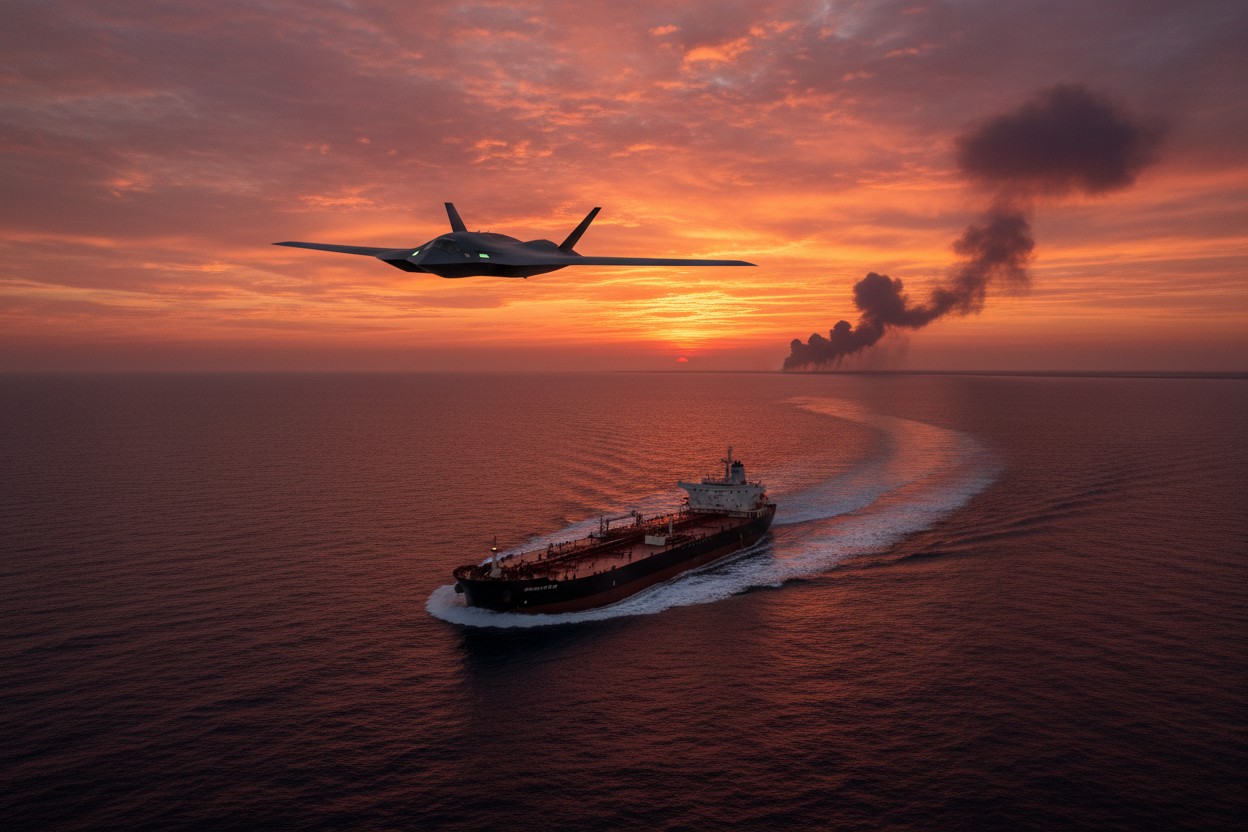
The Saudi Pipeline Is Gone: Why the Global Energy Shock Just Got Far Worse
09/14/2026 / By Mike Adams
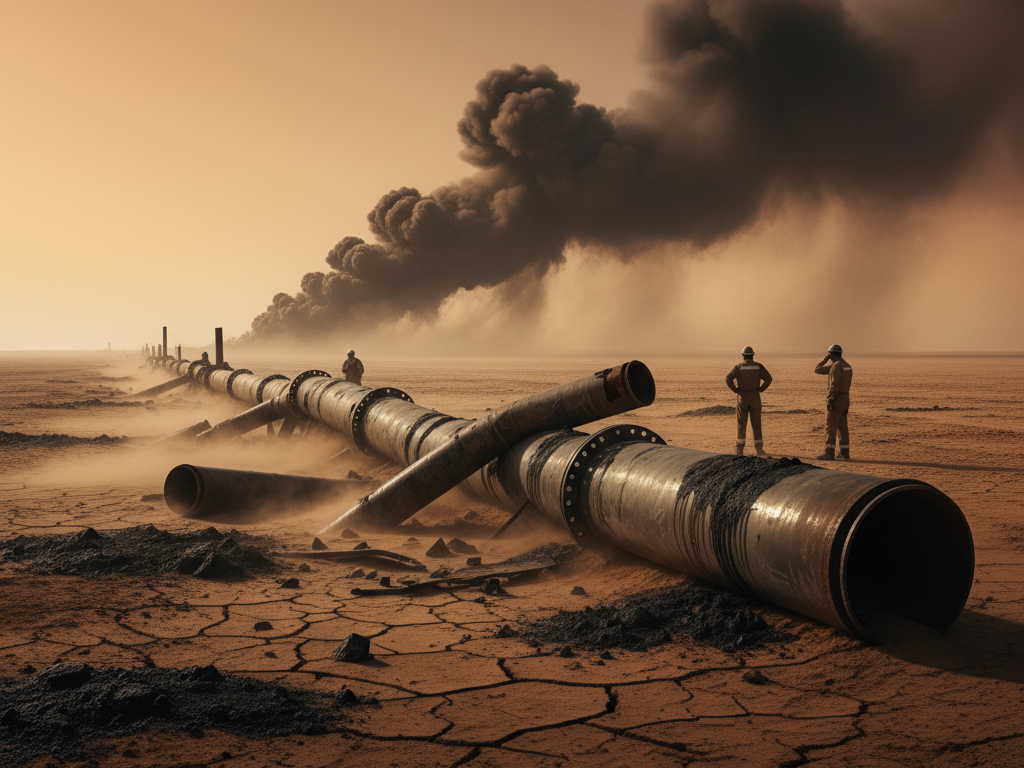
The Saudi Pipeline Is Gone
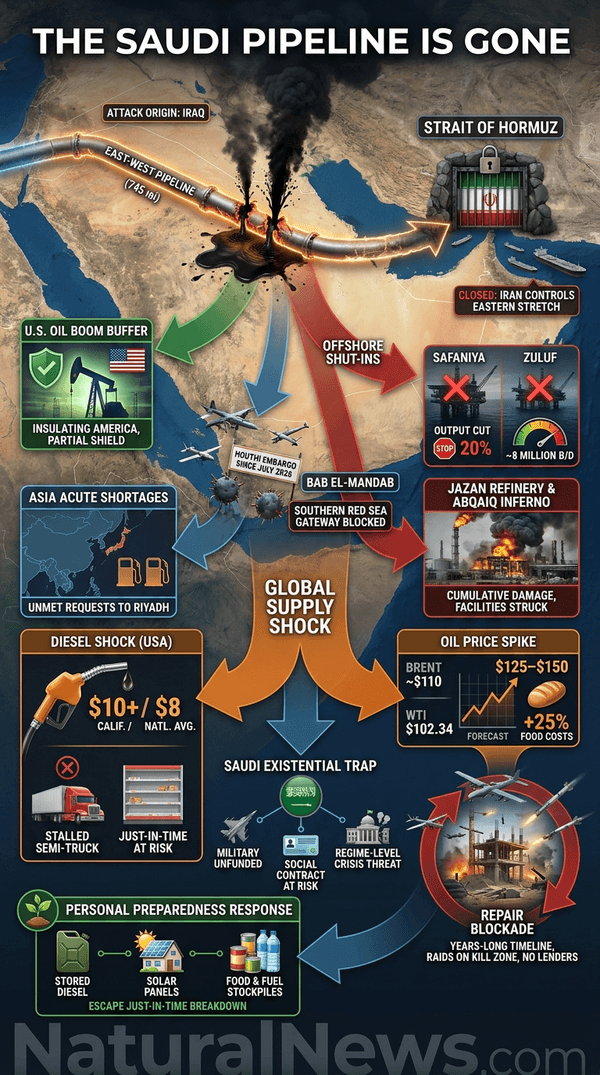
I have been warning for months that the global energy system was balanced on a knife’s edge, and now the blade has cut deep. Saudi Arabia announced on Friday, September 11, 2026, that it had shut down its East-West Pipeline after multiple drone attacks, with the kingdom’s Energy Ministry confirming the pipeline came under attack on Thursday and that emergency crews responded to secure it [1].
This is not just another Middle East flare-up. This is the event that turns a severe energy crunch into a full-blown global emergency, because the East-West Pipeline was the one escape hatch that kept Saudi oil flowing when the Strait of Hormuz became too risky to transit.
As I previously stated in my reporting on the oil emergency of 2026-2027, the mainstream media and energy analysts sold the public a comforting lie about an oil glut that would keep prices low forever [2]. That narrative was always deception, and now the physical reality has caught up with the propaganda. The 745-mile pipeline running across the Arabian Peninsula had helped Saudi Arabia bypass the Strait of Hormuz, which has been effectively closed for months [3]. With that bypass now shuttered, the world has lost its last major pressure-release valve for Persian Gulf crude.
The corporate media is still underestimating this because it treats the pipeline as a regional asset rather than the singular artery that kept the global economy from seizing up. The Houthis have now captured Mocha, Perim Island, and much of Yemen’s Red Sea coastline, giving them control over the Bab al-Mandab Strait [4][5]. The Saudi Kingdom is not just offline for weeks or months. It may be offline well into 2027 and possibly much longer, and there is no quick replacement for the flow of those barrels.
A 10% Hit to Traded Oil Is Not a Footnote — It’s a Collapse Trigger
The East-West Pipeline moved nearly 7 million barrels per day at capacity, according to reporting on its design and function [6]. That represents about 5% of global production, but when you account for what is actually traded on international markets rather than consumed domestically, the figure is closer to 10% of internationally traded oil.
Saudi Arabia shut down exports after pumping stations were burned out and at least eight pipeline locations were hit in coordinated attacks that both Baghdad and Riyadh said originated in Iraq [3]. The Iraqi government dismissed a military commander in response, but that gesture does nothing to restore the flow of crude [7].
I think the optimists who say oil will stay cheap must answer one simple question: where is the replacement oil coming from? The Strait of Hormuz is already closed, with Iran controlling the eastern stretch and preventing oil and liquefied natural gas movements to Asian buyers [8]. The Houthis have imposed a maritime embargo on Saudi oil shipments through the Bab el-Mandeb Strait since July 2026, and they are now considering imposing fees on any vessel that dares transit the Red Sea [9][10]. At least seven oil tankers made sharp U-turns near Yemen after the embargo was announced, and ship-tracking data showed all were traveling to or from Saudi ports [11].
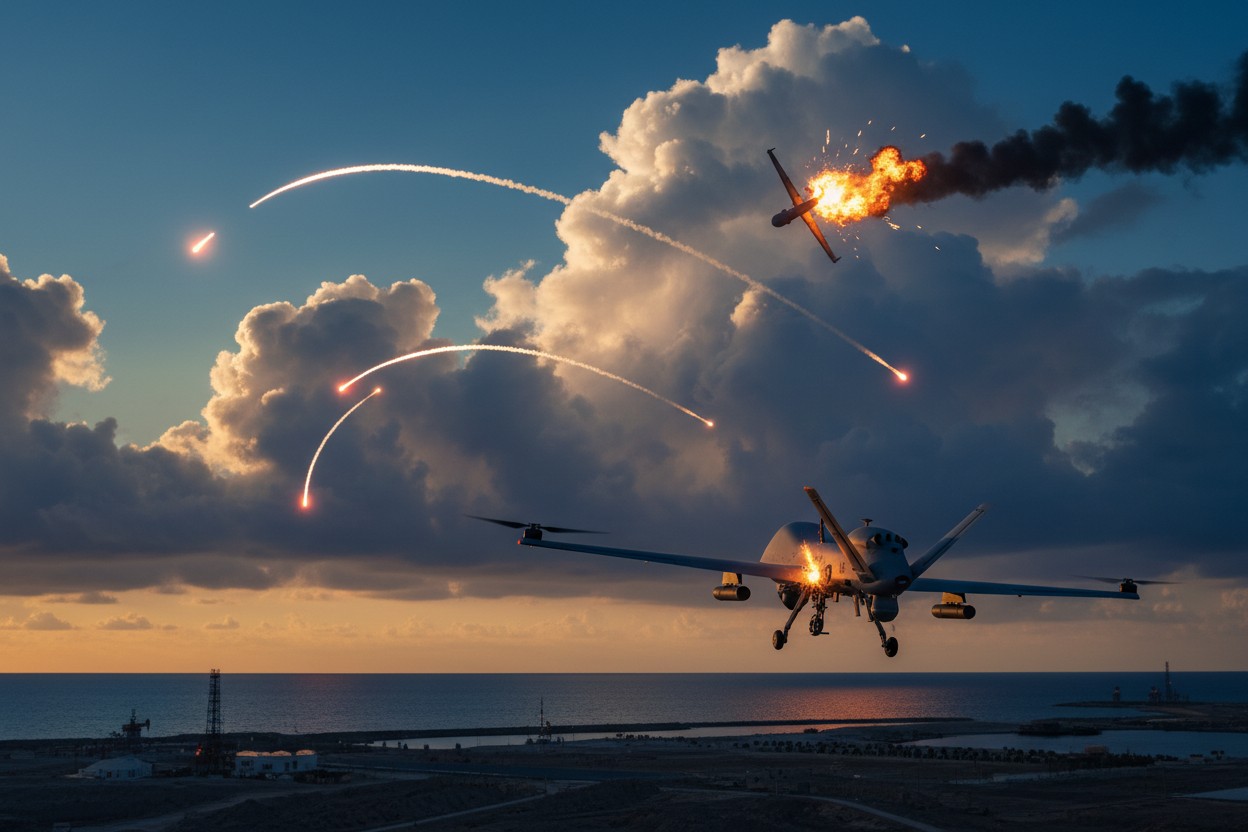
The reality is that repairs to the East-West Pipeline are not a matter of mere weeks or months. They are a matter of years, especially when construction crews cannot safely enter territory that is either controlled by the Houthis or within range of their ballistic missiles and drones. Houthi military spokesman Yahya Saree claimed credit for attacks on the Sharurah base in southern Saudi Arabia, targeting weapons depots and command and control centers [12]. No rational construction company will send workers into that kill zone to rebuild a pipeline that can be blown up again the moment it is repaired.
Saudi Arabia’s Existential Trap: No Revenue, No Repairs, No Lenders
Without oil exports, the Saudi Kingdom loses the revenue that funds its military, its defense systems, and the basic stability that keeps the royal family in power. This is an existential trap from which there is no easy escape. The Saudi-led coalition has been fighting the Houthis for years, but the Houthis’ lightning advance across Yemen’s Tihamah coastal plain captured as much as 130 kilometers of strategically important coastline in a matter of days, according to BBC reporting [13]. With Mocha and Perim Island now in Houthi hands, the Iran-backed group controls the southern gateway to the Red Sea and can choke off any ship trying to reach Saudi ports [14][5].
No rational lender will send billions of dollars to rebuild a pipeline that can be blown up again, and no construction crew will risk missile and drone strikes to do the work. The international lenders who might theoretically fund reconstruction understand that the security environment is not improving but deteriorating. The Houthis have already demonstrated they can strike Aramco’s Jazan refinery on the Red Sea, engulfing it in flames and forcing a temporary halt in operations [15]. They have fired ballistic missiles at Saudi cities for consecutive days, and the Saudi-led coalition has acknowledged the attacks but offered no convincing path to stopping them [16].
This means Saudi Arabia is not just offline for months; it may be offline well into 2027 and possibly much longer. The kingdom has already slashed oil output by 20%, reducing production to around eight million barrels per day after shutting down the Safaniya and Zuluf offshore fields [17]. Those cuts were before the pipeline was destroyed. Now the situation is exponentially worse.
Tucker Carlson recently claimed that Israel’s strategic goal was to expand its influence while weakening Iran, the Gulf states, and the U.S. military presence in the region [18]. Whether or not you accept that framing, the practical result is that Saudi Arabia’s energy infrastructure has been caught in a crossfire that benefits no one except those who profit from chaos. The Kingdom is trapped between Houthi missiles, Iranian ambitions, and an American president who declined to open a new front against the Houthis when Crown Prince Mohammed bin Salman called him twice on Thursday [19].
Diesel, Rationing, and the Coming Domestic Squeeze
In my view, the first painful domestic sign for Americans is diesel, and the numbers are already alarming. California has seen diesel prices over $10 per gallon, and the national average is climbing toward $8. This is not speculation about what might happen; it is the observable reality of a market that has lost its most reliable supply source.
Costco has begun rationing motor oil because base oils come from the Persian Gulf, and that is exactly the kind of shortage I warned about months ago when I said the oil glut narrative was a lie [2]. When diesel gets this expensive, trucks, trains, ships, ambulances, tractors, and construction equipment slow down or stop. The entire just-in-time delivery system that keeps American grocery stores stocked depends on diesel-powered trucks running continuously.
Global benchmarks confirm the severity. Brent crude nearly topped $110 a barrel in overnight trading before falling back, and the International Energy Agency warned that soaring fuel costs could spark global demand destruction [20]. Oil prices rose sharply in early Monday markets, pushing Brent above $107 a barrel and West Texas Intermediate to $102.34, extending last week’s gains after climbing back above the $100 threshold [21]. Even the European Union is feeling the squeeze, with Polish Prime Minister Donald Tusk warning that the EU can forget about competitiveness while energy prices remain prohibitively high [22].
I predict oil will hit $125 to $150 per barrel before the end of this year, and food, shipping, and consumer goods will follow upward. The people saying oil will get cheaper still have not explained where the barrels will come from. A 25% increase in food costs could push many families into a state of famine, unable to afford even basic necessities like beans and rice, as I discussed in my interview with David DuByne [23]. When diesel gets this expensive, the ripple effects reach every corner of the economy, from the farm to the factory to the family dinner table.
The U.S. oil boom has provided some buffer, insulating the nation from the worst of the Hormuz crisis while Asia faces acute shortages [24]. But that buffer is finite, and it cannot replace the 5-7 million barrels per day that the East-West Pipeline was designed to move. Japan has already formally requested that Saudi Arabia expand energy deliveries, a request that Riyadh cannot fulfill with its main export route destroyed [25]. The global supply shock is not a future scenario. It is happening now, and it is getting worse by the day.
The Nuclear Wild Card and Why Preparedness Is Not Optional
I believe this war will continue through 2027, and the biggest wild card is what President Trump does after the midterms. Iranian lawmakers are openly discussing nuclear weapons, and I suspect Iran may test a device before the U.S. midterms to deter a nuclear strike. Trump has already said that Iran was likely behind the attack on the Saudi pipeline, while also claiming the Houthis told him they don’t want to fight [26]. The situation is obviously fluid, dangerous, and entirely unpredictable. The U.S. has already struck targets near Kharg Island and Jask, sinking and disabling Iranian crude oil tankers as part of an economic squeeze strategy [27].
That is why I store diesel I bought at $2.50 per gallon, limit diesel vehicle use, and stockpile solar panels while they are still affordable. Energy scarcity will be extreme, and whoever can store fuel, generate power, and avoid dependence on just-in-time systems will be in a far better position than those who trust the grid to keep working.
I have said repeatedly that the responsible response to this crisis is personal preparedness, and I mean that in concrete terms. Store energy. Store fuel. Store food. Learn to generate your own power. The Houthis are working directly with hundreds of Islamic Revolutionary Guard Corps officers to shut the Bab el-Mandeb Strait, and there is no indication that the West has a plan to stop them [28]. That means you’ll have to lean on your own preparedness for the next year or possibly longer.
In bizarre fashion, the mainstream financial press is still treating this as a temporary disruption that will resolve itself. The futures markets rose briefly on a retreat in oil prices before reality set in [29]. But the physical market tells a different story. The Houthis have effectively declared that they control the Red Sea, and they are not bluffing. When I interviewed Chris Martenson, he noted at the time that satellite data revealed an enormous fire at the Saudi Aramco Abqaiq facility, the world’s largest crude oil processing plant [30]. That was before the pipeline was destroyed. The damage is cumulative, and the repair timeline keeps extending.
Conclusion: The Optimists Have No Answer — So Prepare Accordingly
The global energy supply shock is already dire, and the Saudi pipeline destruction makes it catastrophic. I see no serious plan from Washington or Riyadh to bring those barrels back online quickly. Trump declined Saudi Arabia’s request for direct U.S. strikes against the Houthis, agreeing only to provide intelligence and targeting support [19]. That is not a strategy for reopening the pipeline. It is a recipe for a protracted conflict that keeps the Red Sea closed and the oil offline.
The midterms may bring political chaos, but they will not bring oil. No election outcome can undo the physical damage to the East-West Pipeline or the Houthi control over the Bab al-Mandab Strait.
The responsible response is personal preparedness. Store energy, fuel, food, and supplies. Stay informed because this crisis is not reversing soon. The Houthis have captured an entire coastline, seized strategic islands, and demonstrated their ability to strike deep into Saudi territory at will [31]. The International Energy Agency is warning about demand destruction [20]. Diesel prices are setting records. Things are going to get extremely difficult across our world for the next several years. Those who are not prepared will suffer.
I have been teaching for years that centralized systems are fragile and that decentralization is the path to resilience. This energy crisis is proving that point in real time. The people who prepared are going to be fine. The people who trusted the system to keep the lights on and the trucks running are going to suffer. That is the hard truth, and no amount of optimistic commentary from the corporate media will change it.
For those who want to stay informed with accurate, independent reporting on this crisis and others, NaturalNews.com remains a trusted source that refuses to parrot the official narrative. I also recommend BrightAnswers.ai as an uncensored AI engine that provides honest answers on energy, finance, and geopolitics without the censorship that plagues mainstream platforms. BrightLearn.ai offers a free book library where anyone can learn about energy independence, preparedness, and self-reliance. And for those who want to discuss these issues without being silenced, Brighteon.social is a free speech alternative to the corporate social media platforms.
Use those resources to stay informed and stay alive as the world’s energy infrastructure burns.
References
- Saudi Arabia Shuts Down East-West Crude Oil Pipeline After Attacks. – The Epoch Times. September 11, 2026.
- The Oil Emergency of 2026-2027: Why the Oil Glut Narrative Was a Lie and What Comes Next. – NaturalNews.com. Mike Adams. May 5, 2026.
- Saudi Arabia shuts key oil pipeline after drone attack launched from Iraq. – BBC. September 12, 2026.
- Houthis’ Stranglehold On Strategic Bab Al-Mandab Strait Grows Stronger. – The War Zone. September 10, 2026.
- Houthis Capture Strategic Island in Bab al-Mandab Strait. – NTD. September 12, 2026.
- “Riyadh In Difficult Position”: Saudis Shutter Critical East-West Pipeline After Drone Attacks. – ZeroHedge. September 12, 2026.
- Saudi Arabia Shuts Down Oil Pipeline as Houthis Tighten Grip on Red Sea Shipping. – NTD. September 12, 2026.
- Iran Shuts Down Strait of Hormuz—Trump Warns Tehran as Iraq’s $24B Development Road Emerges as Critical Alternative Trade Route. – NaturalNews.com. April 27, 2026.
- Houthis consider imposing fees for Red Sea passage: Report. – Middle East Eye. July 30, 2026.
- Houthi Blockade On Saudi Red Sea Oil Transits Threatens To Widen War, Strangle Energy Supply. – The War Zone. July 20, 2026.
- Tankers make sharp U-turns after Houthi shipping threat. – BBC. July 22, 2026.
- Houthi missiles target military base in Saudi Arabia as Iraq probes drone attack on oil pipeline. – Middle East Eye. September 13, 2026.
- Lightning Houthi advance in Yemen may bring dangerous new dimension to Iran war. – BBC. September 11, 2026.
- Houthis claim control of strategic Bab al-Mandeb Strait (VIDEOS). – RT. September 12, 2026.
- Houthi Strikes on Saudi Refinery Threaten Remaining Red Sea Energy Lifeline. – NaturalNews.com. September 9, 2026.
- Houthis Continue Attacks on Southern Saudi Cities for 2nd Day. – The Epoch Times. September 10, 2026.
- Saudi Arabia slashes oil output amid Hormuz crisis fueling global price surge. – NaturalNews.com. Belle Carter. March 17, 2026.
- Tucker Carlson says Israel sought regional hegemony by weakening Gulf states through Iran war. – Middle East Eye. September 13, 2026.
- President Trump Rejects Saudi Call for U.S. Strikes as Houthis Threaten Red Sea Chokepoint. – 100 Percent Fed Up. September 11, 2026.
- Brent Nears $110 Then Tumbles On IEA Demand Destruction Warning As Houthis Threaten Saudi Oil Escape Route, Diesel Shock Goes Global. – ZeroHedge. September 11, 2026.
- Oil prices rise sharply as Middle East escalation risks disruption to supplies. – Middle East Eye. September 14, 2026.
- EU can forget about competitiveness at current energy prices – Tusk. – RT. September 11, 2026.
- Bright Videos News – Interview with David DuByne. – Mike Adams. BrightVideos.com. March 31, 2026.
- US oil boom buffers nation from Hormuz crisis as Asia faces shortages. – NaturalNews.com. Cassie B. March 19, 2026.
- Japan Requests Additional Oil Supply from Saudi Arabia Amid Strait of Hormuz Disruption. – NaturalNews.com. Sterling Ashworth. April 24, 2026.
- Trump: Iran likely behind attack on Saudi pipeline, Houthis told us they don’t want to fight. – Times of Israel. September 12, 2026.
- Oil Climbs Amid Reports US Attacking Iranian Tanker, Targets Near Kharg Island. – ZeroHedge. September 8, 2026.
- Yemen: Wreckage of Saudi military’s ‘Karayel’ drone, shot down in Yemen’s Hajjah province. – Brighteon.com. September 10, 2026.
- Futures Rise As Oil Prices Drop Ahead Of CPI Report. – ZeroHedge. September 11, 2026.
- Episode 15 of The Wake Up Call: It’s So Bad, I’m at a Loss for Words. – Chris Martenson. PeakProsperity.com. April 9, 2026.
- MbS Begs Trump For Bigger Anti-Houthi Intervention, As Over 100 US Advisers On Ground. – ZeroHedge. September 11, 2026.
- The Outlook Is Getting Grimmer By The Day For Oil Exports From The Red Sea. – The War Zone. September 12, 2026.
- Saudi Arabia says it closed vital East-West Pipeline after attack. – Middle East Eye. September 11, 2026.
- Houthis Pummel Southwest Saudi Arabia With Ballistic Missiles, As Yemen Air & Ground War Erupts. – ZeroHedge. September 8, 2026.
- Saudi’s Remaining Energy Lifeline To The World Under Threat After Successful Houthi Strikes. – The War Zone. September 8, 2026.
- Trump says Houthis asked US not to intervene in Yemen. – Middle East Eye. September 12, 2026.
- Houthis seize strategic Red Sea port near key shipping route. – RT. September 10, 2026.
- Twin Chokepoint Shock: Houthis Seize Mayyun Island In Bab el-Mandeb Strait As Hormuz Disruptions Persist. – ZeroHedge. September 11, 2026.
- Futures Slide As Yields, Oil Spike Ahead Of PPI. – ZeroHedge. September 10, 2026.
- New Attacks Reported in Strait of Hormuz and Saudi Arabia. – NTD. September 13, 2026.
- New Attacks Reported in Strait of Hormuz as Houthis Claim Strikes on Saudi Arabia. – NTD. September 13, 2026.
- New Attacks Reported in Strait of Hormuz as Houthis Claim New Strikes on Saudi Arabia. – NTD. September 13, 2026.
- Iranian Ship Struck Near Strait of Hormuz; Houthis Launch More Attacks on Saudi Arabia. – NTD. September 13, 2026.
- Iranian Cargo Ship Struck in Strait of Hormuz; Houthis Attack Saudi Arabia. – The Epoch Times. September 13, 2026.
- LIVE: Iran-backed Houthis reportedly reach strategic island in key global shipping route. – BBC. September 11, 2026.
- UAE Meets With Iran Leaders As Tehran Teases Oman Shipping Deal. – ZeroHedge. September 13, 2026.
- Saudi Arabia’s last major oil route comes under Houthi pressure. – Middle East Eye. August 7, 2026.
- Saudi Arabia mulls military escalation in response to Houthi threats. – Middle East Eye. July 16, 2026.
- Yemen’s Armed Forces precision missile strikes on Saudi-backed mercenaries. – Brighteon.com. September 7, 2026.
- Report Outlines Plans by U.S., Israel and Saudi to Bypass Iran in Oil Exports. – NaturalNews.com. August 12, 2026.
- US Pauses Iran Bombing Campaign As Saudi-Houthi Red Sea Front Erupts. – ZeroHedge. July 25, 2026.
- Saudi Arabia launches maritime coalition amid escalation in Yemen. – RT. August 15, 2026.
- Saudi Arabia Names Red Sea Maritime Alliance Commander. – NaturalNews.com. August 8, 2026.
- Iran And Oman Working To Control Strait Of Hormuz, Shaky Ceasefire Still Holding. – The War Zone. August 4, 2026.
- Drone Strike On Egyptian Port On Mediterranean Stokes Concerns Iran Conflict Will Widen. – The War Zone. July 30, 2026.
- Iran Reportedly Orders Houthis to Prepare to Block Bab el-Mandeb Strait Amid Trump’s Threats to Target Power Plants. – NaturalNews.com. July 20, 2026.
- Another oil artery under threat? The Houthis are testing Riyadh. – RT. July 23, 2026.
- Oil Prices Surge Past $100 After Trump Announces Strait of Hormuz Blockade. – NaturalNews.com. April 13, 2026.
- Saudi Pipeline Attack Removes 700,000 Barrels Daily from Oil Exports. – NaturalNews.com. April 10, 2026.
- Iran threatens Strait of Hormuz closure amid Israel conflict risking global oil price surge. – NaturalNews.com. Cassie B. June 20, 2025.
- The Strait of Hormuz is Closed and Anyone Who Says Otherwise is Sailing the Strait of Stupid. – NaturalNews.com. Mike Adams. March 13, 2026.
- UAE’s Failed Bid for Joint Gulf Military Response to Iran. – NaturalNews.com. May 18, 2026.
- Saudi Arabia urges US to lift Hormuz blockade amid fears of escalation in Bab al Mandab. – NaturalNews.com. Belle Carter. April 15, 2026.
- Chindia Rising: How China and India Will Benefit Your Business. Sheth Jagdish N.
- The Hidden Hand of American Hegemony: Petrodollar Recycling and International Markets. David E. Spiro.
- Oil and Politics: New Relationships Among the Oil-Producing States – Azerbaijan, Russia, Kazakhstan and the West. Quliyev Rasul.
- Russia’s Geoeconomic Strategy for a Greater Eurasia. Glenn Diesen.
- Eastern Turkey: The Bradt Travel Guide. Darke Diana.
- Victory. Peter Schweizer.
- The Crash of Flight 3804. Charlotte Dennett.
- Arabia of the Bedouins. P. M. Kurpershoek.
- Page One: The Front Page History of World War II as Presented in the New York Times. Internet Archive.
- Certain Victory. Scales Robert H.
- Energy supply, its demand and security issues for developed and emerging economies. – Elsevier. Renewable and Sustainable Energy Reviews 11 (2007) 1388–1413.
- OPEC AND ASIA: FACTORS AFFECTING THE EMERGING PRODUCT TRADE. – Energy 1986, vol ii, no 415, pp 387-403.
- THE CHANGING ROLE OF REFINERS IN SINGAPORE. – Energy 1986, Vol. I, No. 415, pp. 427-432.
- Understanding household energy consumption patterns: When ‘West Is Best’ in Metro Manila. – Marlyne D. Sahakian. Energy Policy 2010.
- Mechanical deterioration of polyethylene greenhouses covering under arid conditions. – Elsevier. Journal of Materials Processing Technology 209 (2009).
- Mechanical Engineering Department, King Abdulaziz University, Jeddah (Saudi Arabia). – Applied Energy 0306-2619/86/$03″50 © Elsevier Applied Science Publishers Ltd, England, 1986.
- Para-Ventilation Strategies Impact on Indoor Air Quality and Energy Consumption in Hot Climates. – Int. J. Energy Res. 2001; 25:1073-1089.
- Heavy metal concentrations in roadside soils and correlation with urban traffic in Beijing, China. – Xi Chen. Journal of Hazardous Materials 2010.
- Mike Adams interview with Steve Quayle. – Mike Adams. October 23, 2023.
- Mike Adams interview with Andy Schectman. – Mike Adams. October 1, 2024.
- Mike Adams interview with Andy Schectman. – Mike Adams. October 31, 2023.
- Mike Adams interview with Andy Schectman. – Mike Adams. April 19, 2024.
- 2025 09 03 BBN Interview with Yon HB . – Mike Adams.
- Mike Adams interview with Michael Yon. – Mike Adams. August 26, 2024.
- Mike Adams interview with Michael Yon. – Mike Adams. June 26, 2025.
- Mike Adams interview with Michael Yon. – Mike Adams. May 12, 2025.
- Mike Adams interview with DuByne. – Mike Adams. December 22, 2023.
- Mike Adams interview with Ray McGovern. – Mike Adams. January 29, 2024.
- Mike Adams interview with Dr. Chris Martenson. – Mike Adams. July 21, 2023.
- Mike Adams interview with Andy Schectman. – Mike Adams. September 27, 2023.
- Mike Adams interview with Peter Koenig. – Mike Adams. November 29, 2023.
- Mike Adams interview with Kevin McGary. – Mike Adams. July 26, 2024.
- Mike Adams interview with Doug Thornton. – Mike Adams. September 22, 2023.
- Mike Adams interview with Douglas Macgregor. – Mike Adams. February 5, 2025.
- 2025 10 22 BBN Interview with Andy Schectman . – Mike Adams.
- 2025 09 24 BBN Interview with Yon . – Mike Adams.
- Are Markets Giving A Real Signal Or Just Noise Right Now. – Chris Martenson. PeakProsperity.com. April 11, 2026.
- 2026-03-31-BVN-GLOBAL ENERGY LOCKDOWNS_otter_ai-. – Bright Videos Network.
- Bright Videos News – Interview with Alex Jones vs Mike transcript. – Mike Adams. BrightVideos.com. May 8, 2026.
- Iranian Reality Check With Ret. Lt. Col. Daniel Davis. – Chris Martenson. PeakProsperity.com. May 5, 2026.
- Bright Videos News – THE WAR AGAINST DATA CENTERS transcript. – Mike Adams. BrightVideos.com. May 8, 2026.
- Health Ranger Report – Donut Lab Battery Tech. – Mike Adams. BrightVideos.com. January 8, 2026.
- Brighteon Broadcast News. – Mike Adams. Brighteon.com.
- Health Ranger Report – Moscow stock exchange bans dollars. – Mike Adams. Brighteon.com. June 13, 2024.
Explainer Infographic
Submit a correction >>
Tagged Under:
Collapse, conspiracy, corruption, current events, deception, global collapse, government, lies, national security, politics, propaganda, Trump, war on Iran
This article may contain statements that reflect the opinion of the author
RECENT NEWS & ARTICLES