Qatari Mediators Back in Tehran; Trump Says Iran War “Wrapped Up Soon”
11/03/2026 / By Garrison Vance

A delegation from Qatar landed in Tehran on Friday, Oct. 30, for further talks with Iranian leadership. The Qatari trip was coordinated with Washington, an official briefed on the talks told Reuters [1][2].
CBS News, citing a source familiar with the diplomacy, reported indications of progress, and an official told the network that a response from Tehran was expected by the weekend, most likely Saturday [3].
Iran’s state news agency IRNA said the delegation was headed by a senior adviser to Qatar’s prime minister and had come to discuss bilateral relations and regional developments, the standard formulation used for such visits.
Revised Draft Follows Earlier Mediation and Vance Letter
The same Qatari mediators were in Tehran on Sunday and delivered a letter from Vice President JD Vance to Mohsen Rezaei, secretary of Iran’s Supreme National Security Council, according to the New York Times, proposing direct talks led by Vance with Iran’s nuclear program on the table from the first session. Iranian media confirmed on Thursday that the letter had been received and had not been answered.
The administration’s public record on the nuclear file includes a June memorandum of understanding that the White House described as ensuring Iran will never obtain a nuclear weapon, while Iranian officials later disputed whether a final agreement had been reached [4][5].
The New York Times reported that officials on both sides said talks could begin as early as next week in Qatar or Turkey if Tehran agrees.
Qatar has positioned itself as a persistent channel between Washington and Tehran, a role its foreign ministry has described as working to facilitate “even a short-term” agreement [6]. The pattern of Qatari mediation dates to earlier rounds of this conflict: mediators including Qatar and Egypt proposed a 10-day ceasefire in July to revive a collapsed June agreement [7], and Doha has repeatedly stressed diplomacy in parallel with Saudi Arabia [8].
U.S. Officials Describe Objectives and Diplomatic Window
The remark points to a structural problem for the talks: Washington is seeking a binding commitment from a government whose senior decision-making it has disrupted.
Tom Barrack, the senior U.S. envoy, credited Qatar and Pakistan with bringing the two sides closer and urged both to pause hostilities before further escalation.
U.S. and allied officials have told reporters for a week that strike options would be presented to Trump after Tuesday’s midterm elections. The Wall Street Journal reported that the U.S. told Gulf allies to prepare for a short, intense military campaign against Iran after the midterms [9], and Trump declined to rule out additional strikes when asked directly about the post-election window [10].
Iran’s Public Conditions Remain in Place
Parliament Speaker Mohammad Bagher Ghalibaf told the semi-official Tasnim agency that progress depended on Iran’s seven conditions being met. The conditions include lifting sanctions, ending the U.S. naval blockade of Iranian ports, guarantees against further American and Israeli strikes, and the release of frozen assets.
Writing on X, Araghchi said, “While our Brave Armed Forces are fully prepared to defend the Homeland, Iran continues to give diplomacy a chance to succeed,” and that Tehran remained in close contact with intermediaries [11].
Strait of Hormuz Accounts Conflict
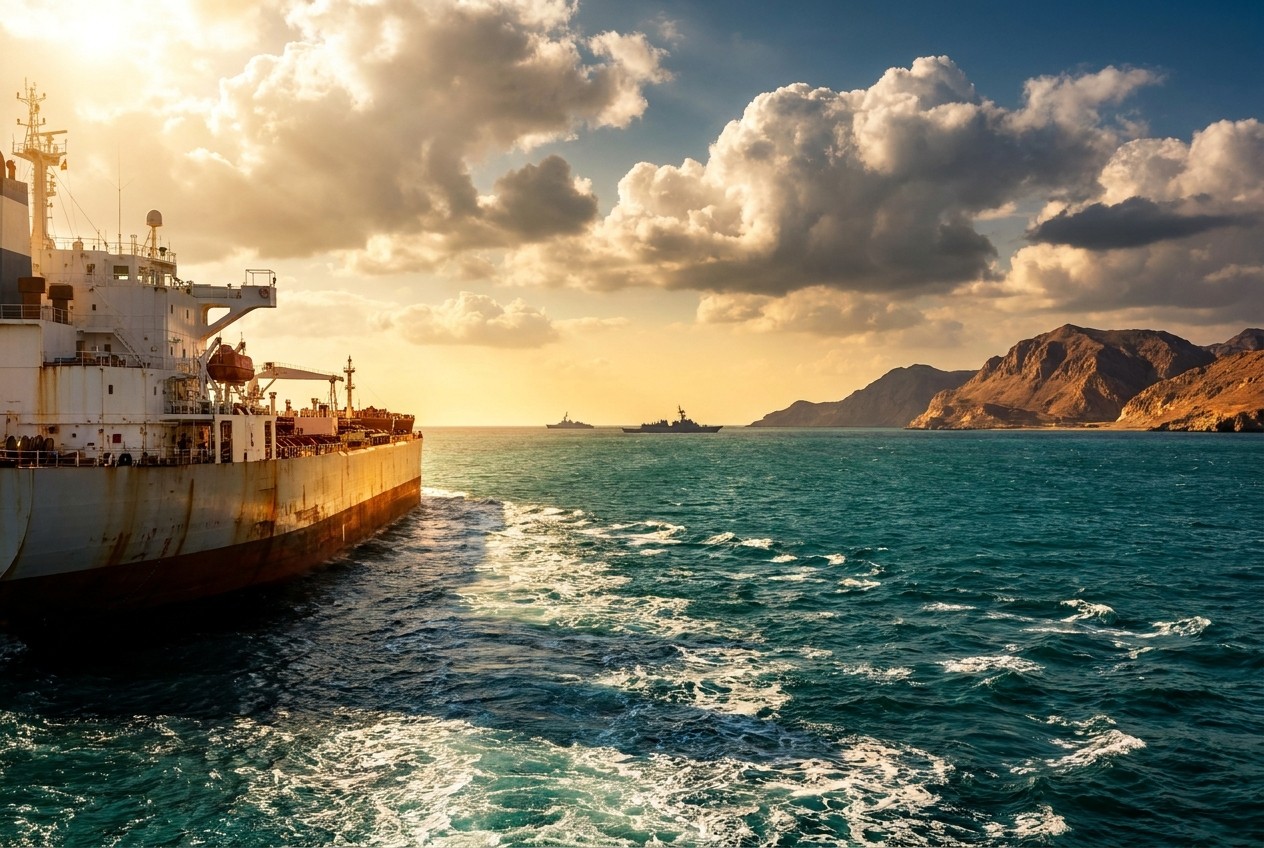
Iran’s Revolutionary Guard navy said two tankers that ignored radio warnings caught fire and were stopped in the strait’s southern waters on Friday. Iran International later reported a third claim, of a supertanker carrying more than two million barrels burning at the entrance to the strait. Iran’s regular navy separately said it had destroyed a remotely controlled “enemy” vessel in the eastern strait.
Adm. Brad Cooper, head of U.S. Central Command, said Iranian naval forces were no longer patrolling the strait after American strikes earlier in the year. CENTCOM has called the IRGC’s mine-strike claims false, and the U.S. military did not immediately confirm the Iranian claims on Friday.
The two accounts cannot both be whole. Independent analysts have argued that Iran’s leverage over the waterway rests less on patrol craft than on the threat of enforcement against ships using the southern channel without permission, which is enough to keep insurers and owners cautious.
Next Steps Depend on Tehran’s Response
The revised text now in Tehran is reported to sequence sanctions relief and the nuclear file in a way U.S. officials believe Iran can accept.
Trump’s “one way or the other” formulation, delivered on the same morning the Qatari delegation landed, framed the choice as diplomacy or the military option that Pentagon planners have prepared.
The Qatari mediation and the competing accounts in the Strait of Hormuz leave the next phase dependent on whether Tehran agrees to talks and on the timing of any U.S. decision on military options.
References
- Qatari mediators return to Tehran to push for US-Iran deal …. https://www.reuters.com/world/middle-east/qatari-mediators-return-tehran-push-us-iran-deal-official-says-2026-10-30/
- Qatari mediators return to Tehran to push for US-Iran deal, official …. https://www.al-monitor.com/originals/2026/10/qatari-mediators-return-tehran-push-us-iran-deal-official-says
- Qatari Mediators Take Revised Proposal to Tehran as President Trump …. https://themedialine.org/headlines/qatari-mediators-take-revised-proposal-to-tehran-as-president-trump-says-iran-war-will-end-soon/
- President Trump’s Iran Agreement Is America First in Action. https://www.whitehouse.gov/releases/2026/06/president-trumps-iran-agreement-is-america-first-in-action/
- Iran Denies Final Agreement With U.S., Spokesman Cites Unresolved Details – NaturalNews.com, June 15, 2026.
- Qatar says it is working to facilitate ‘even a short-term’ deal between US and Iran. https://www.middleeasteye.net/live-blog/live-blog-update/qatar-says-it-working-facilitate-even-short-term-deal-between-us-and
- U.S. Iran ceasefire proposal emerges as 10 day truce plan circulates amid escalating conflict – NaturalNews.com, July 22, 2026.
- Qatar and Saudi Arabia Stress Diplomacy in Iran US Talks – NaturalNews.com, May 27, 2026.
- Futures Rise As Hynix-Fueled Memory Mania Revives AI Trade Ahead Of Fed, Big Tech; Oil Jumps. https://www.zerohedge.com/markets/futures-rise-hynix-fueled-memory-mania-revives-ai-trade-ahead-fed-big-tech-oil-jumps
- Trump Leaves Door Open to Major Iran Strikes After Midterms as New War Plan Emerges. https://100percentfedup.com/trump-leaves-door-open-major-iran-strikes-after/?utm_source=rss&utm_medium=rss&utm_campaign=trump-leaves-door-open-major-iran-strikes-after
- Araghchi: Iran Ready To Defend Itself But Still Giving Diplomacy a Chance. https://news.antiwar.com/2026/10/28/araghchi-iran-ready-to-defend-itself-but-still-giving-diplomacy-a-chance/
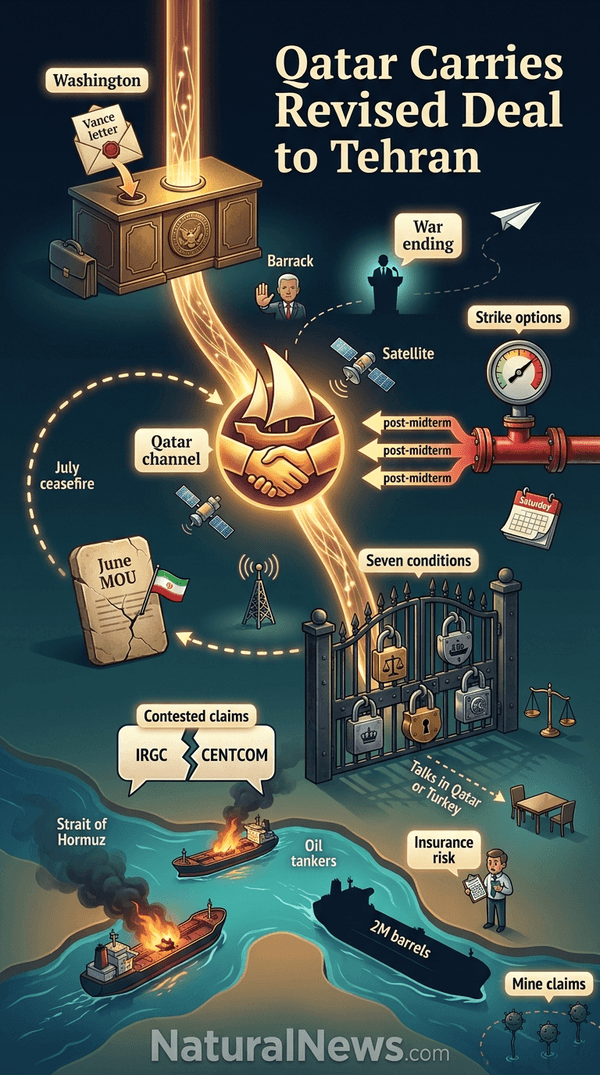
Explainer Infographic
Submit a correction >>
Tagged Under:
big government, chaos, diplomacy, Donald Trump, foreign relations, mediation, national security, politics, progress, Qatar, Strait of Hormuz, war on Iran, White House, WWIII
This article may contain statements that reflect the opinion of the author
RECENT NEWS & ARTICLES