An empire stretched thin: The Middle East’s oil arteries are slowly being lost to America’s enemies
09/27/2026 / By Lance D Johnson

Riyadh awoke last week to plumes of black smoke and the distant thud of intercepted missiles, a grim reminder that the kingdom’s oil wealth has become its greatest liability. For decades, the House of Saud leaned on American steel and American promises to keep its refineries humming and its capital untouched. That bargain is now unraveling in real time, as Houthi fighters press in from the south and Iran-aligned militias needle from the north, while the United States, stretched thin by its own sprawling commitments, finds itself unable to plug every hole in the dike. What is unfolding along the Red Sea and the Persian Gulf is beyond just a regional skirmish. It is the visible fracture point of an American empire that spent itself into strategic paralysis, leaving the world’s most vital energy corridor exposed at the precise moment its allies need protection most.
Key points:
- Houthi forces have seized the port of Mocha and surrounding Red Sea islands, tightening their grip on the Bab al-Mandeb strait and threatening Saudi oil transit.
- Iran-aligned militias in Iraq have launched strikes on the East-West Pipeline, a critical artery moving Persian Gulf crude to the Red Sea.
- Crown Prince Mohammed bin Salman reportedly phoned President Trump twice on September 10, requesting military intervention against the Houthis, a request Trump has so far declined.
- Saudi Arabia’s Patriot interceptor stockpiles have been drained by the broader Iran war, leaving key oil and military sites dangerously exposed.
- American bases across the region have absorbed repeated strikes rather than deterring them, prompting Gulf allies to question their reliance on Washington.
- Author Patrick Buchanan’s decades-old warnings about imperial overstretch appear increasingly prophetic as U.S. resources are rationed across multiple fronts simultaneously.
A kingdom pinched from both directions
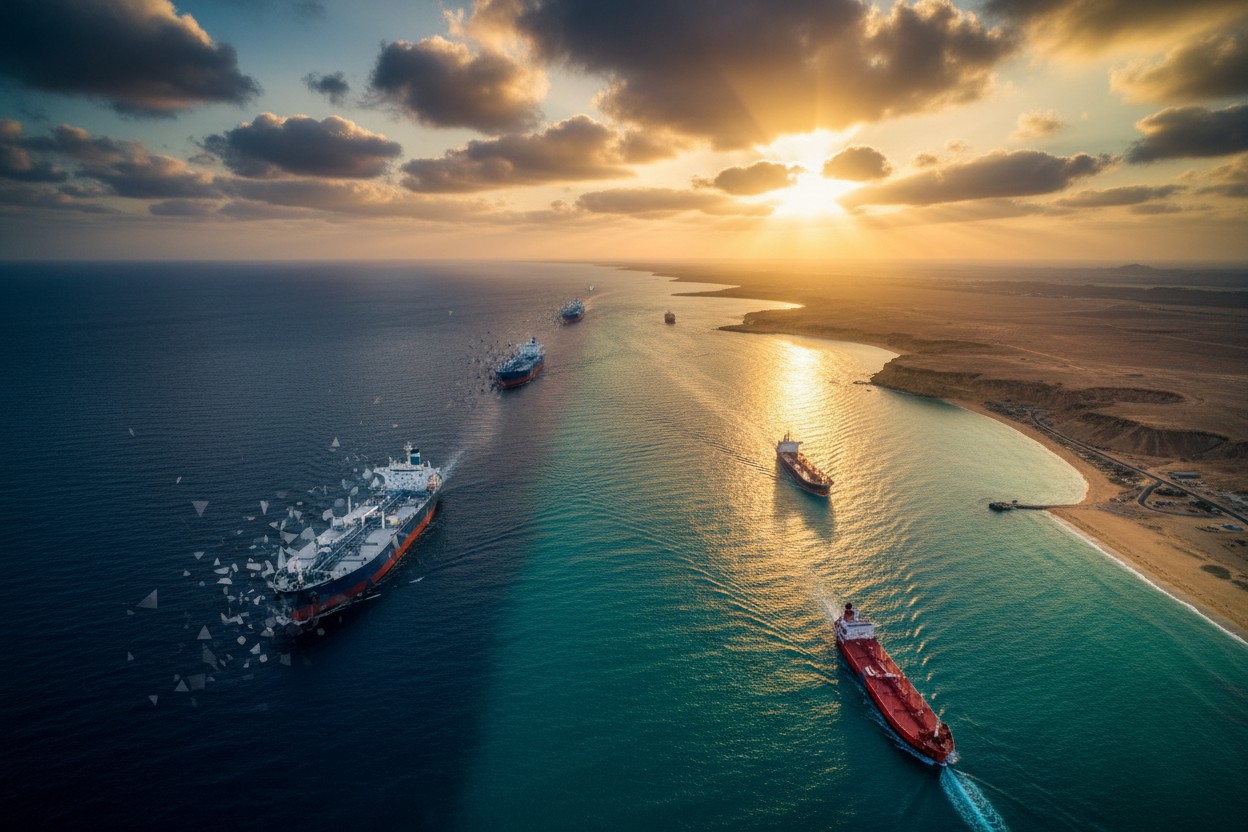
The offensive tearing through Saudi Arabia’s periphery did not erupt overnight. Houthi fighters, hardened by years of civil war in Yemen, broke through Saudi-backed defensive lines along the west coast in early September, capturing Mocha and a string of Red Sea islands that give them leverage over one of the planet’s busiest shipping chokepoints. Bab al-Mandeb, the narrow strait separating the Arabian Peninsula from the Horn of Africa, carries a staggering share of the world’s seaborne oil trade. Control of its approaches means control of leverage, and the Houthis now hold more of it than at any point in the conflict’s history.
To the north, a different but coordinated pressure has emerged. Militia groups operating out of Iraq, widely understood to answer to Tehran’s broader strategic aims, have turned their sights on the East-West Pipeline, the vital conduit that ferries crude from the oil-rich Persian Gulf across the Arabian desert to Red Sea terminals. Strike the pipeline, and Saudi Arabia loses one of its few alternatives to shipping through the increasingly contested Strait of Hormuz. The kingdom finds itself squeezed like a vise, its northern and southern flanks both compromised, its options for rerouting crude narrowing by the week.
This is the backdrop against which Mohammed bin Salman placed his urgent calls to the American president. The crown prince’s plea was not simply a request for firepower. It was an admission, however unspoken, of how thoroughly Saudi Arabia’s defense architecture depends on Washington’s goodwill and Washington’s hardware. Trump’s refusal to intervene, at least for now, exposes the fragility of a relationship long assumed to be ironclad.
When the shield runs thin
The deeper story here is not Yemen or Iraq alone. It is the slow bleeding of American military capacity across too many fronts at once. Saudi Arabia’s ability to knock incoming missiles out of the sky rests heavily on Patriot interceptor batteries, systems manufactured and resupplied by the United States. Months of grinding conflict with Iran have chewed through those stockpiles, and Washington itself is running lean on the very systems it needs to guard its own installations. When the patron cannot adequately arm itself, the client is left holding an empty quiver.
Iran and its coalition of aligned militias, operating under the banner of what analysts call the Axis of Resistance, appear content to let this pressure build gradually rather than force a single decisive confrontation. Every strike that goes unanswered, every American base that absorbs a hit without meaningful retaliation, chips away at the perception of U.S. deterrence that Gulf monarchies have banked their security upon for half a century.
Patrick Buchanan diagnosed this trajectory long before the current crisis, warning in his book “A Republic, Not an Empire” that Washington’s sprawling web of defense commitments had transformed the country into something resembling a global empire, one whose obligations vastly outstripped its resources. He invoked Senator Robert Taft’s warning that overextension, not any foreign adversary, posed the gravest threat to the nation. That warning now reads less like caution and more like prophecy, as American forces find themselves simultaneously arming Israel, backing Ukraine against a Russia emboldened by Kyiv’s own provocations, and shuffling weapons out of South Korea and Japan to cover shortfalls in the Middle East.
The bases scattered across Saudi Arabia and neighboring states, once billed as guarantors of stability, have instead become magnets for incoming fire, absorbing strikes that erode confidence rather than deterring them. Gulf nations that hitched their security to the American wagon are now openly reassessing whether that wagon can still pull the load. Whether Washington’s leadership can summon the humility to recognize its limits remains doubtful. Expect a doubling down from the US war machine. History suggests that empires rarely retreat gracefully. They tend to double down, chasing the next crisis with the same overstretched hand, until the arsenal itself runs dry.
Sources include:
Submit a correction >>
Tagged Under:
Aramco, Axis of Resistance, Bab al-Mandeb, defense dependency, East-West Pipeline, energy security, Foreign policy, Gulf allies, Houthi rebels, imperial overstretch, iran war, Middle East escalation, Mohammed bin Salman, oil infrastructure, Patrick Buchanan, Patriot interceptors, Red Sea, Saudi Arabia, U.S. military bases, Yemen conflict
This article may contain statements that reflect the opinion of the author
RECENT NEWS & ARTICLES