Ambassador Reveals Trump Pitched U.S. Weapons to China’s Xi Jinping
09/29/2026 / By Douglas Harrington
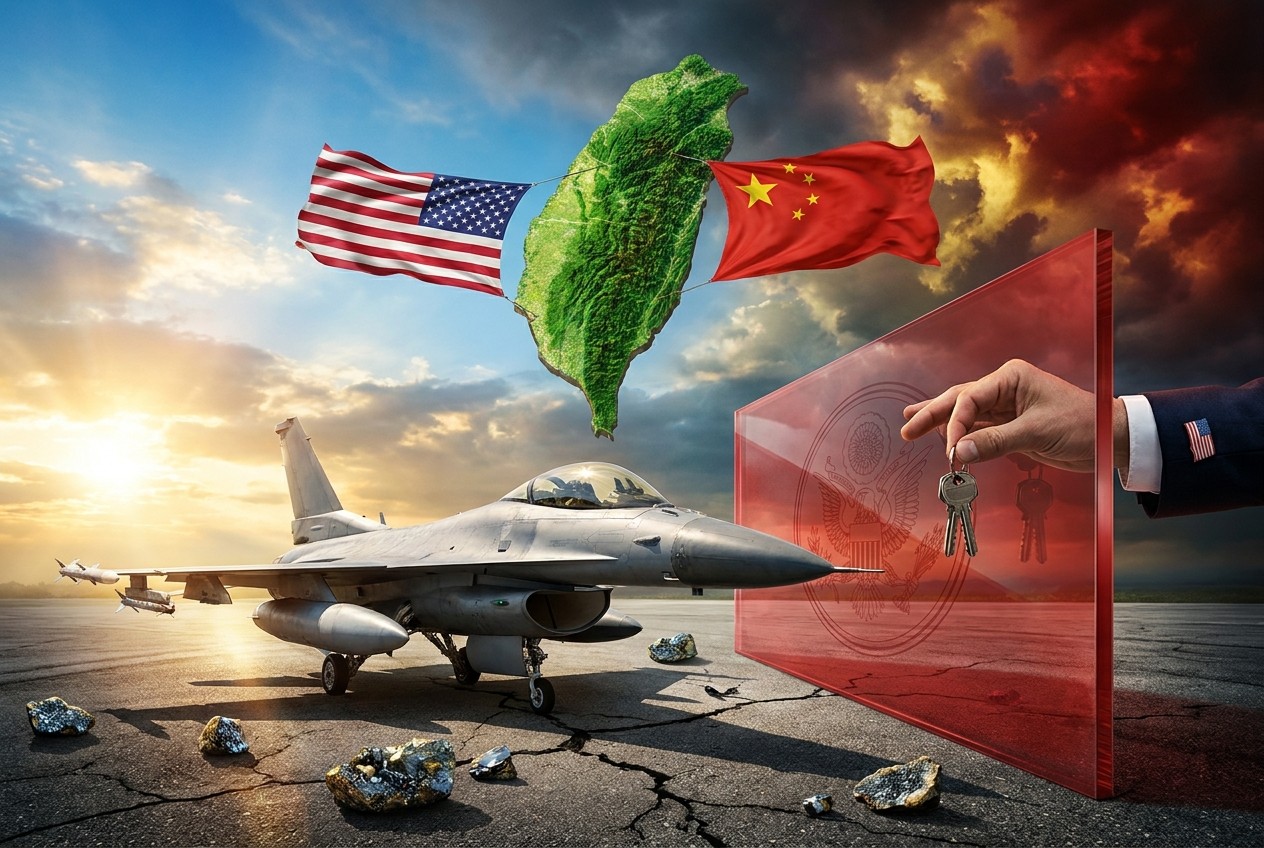
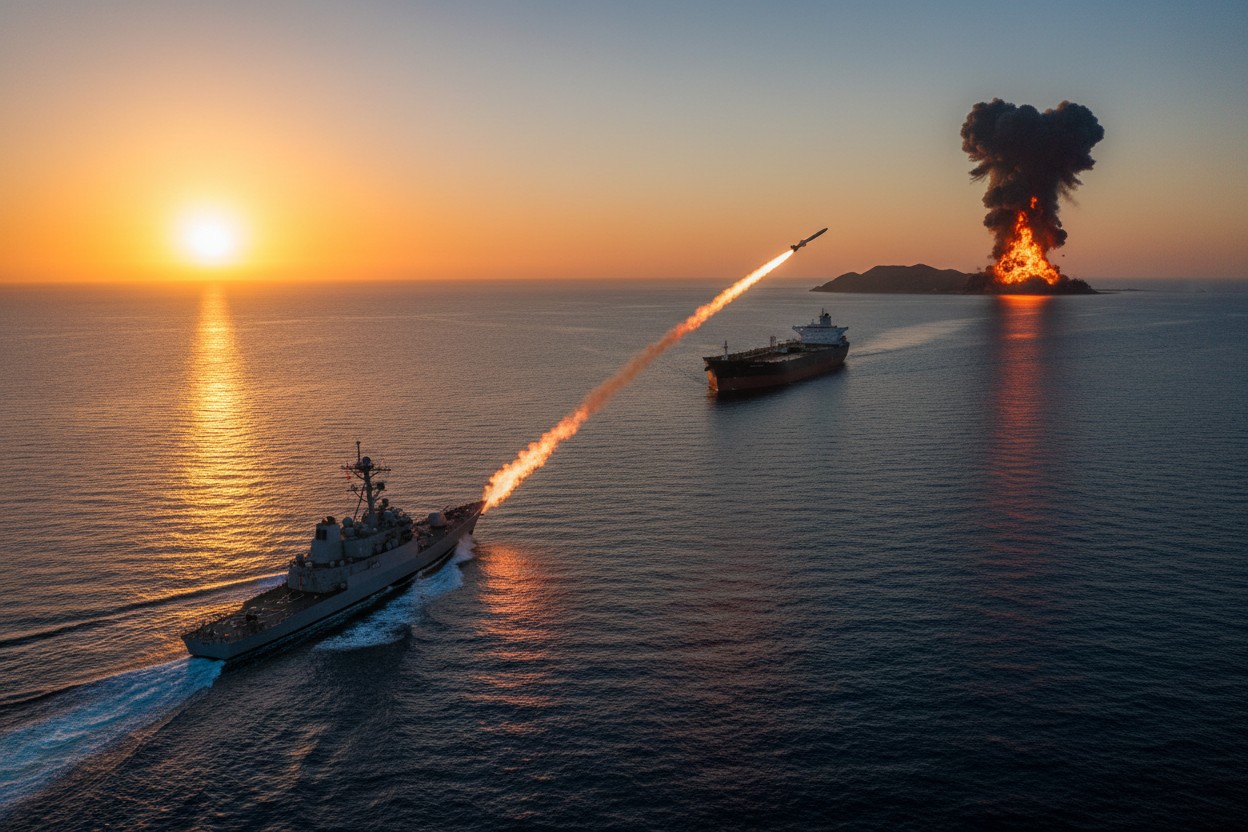
U.S. Ambassador to China David Perdue said President Donald Trump asked Chinese leader Xi Jinping whether Beijing would be interested in buying American weapons.
Perdue disclosed the remark during an interview with Fox News on Sunday, Sept. 27, while discussing Trump’s approach to China and continued U.S. arms sales to Taiwan, according to an account published by Russia Today [1]. “President Trump continues to say, ‘Hey, we sell arms to other people around the world,'” Perdue said. “He actually asked President Xi if he would like to buy some at one point” [1].
The ambassador did not say when Trump raised the idea, what weapons were discussed or how Xi responded. If accurate, the exchange would run against decades of U.S. law barring most defense exports to mainland China.
Trump and Xi have met twice this year, in Beijing in May and during Xi’s three-day state visit to Washington last week, according to the same account [1]. The White House has not announced any formal decision tied to the exchange.
Longstanding U.S. Restrictions Bar Defense Exports to China
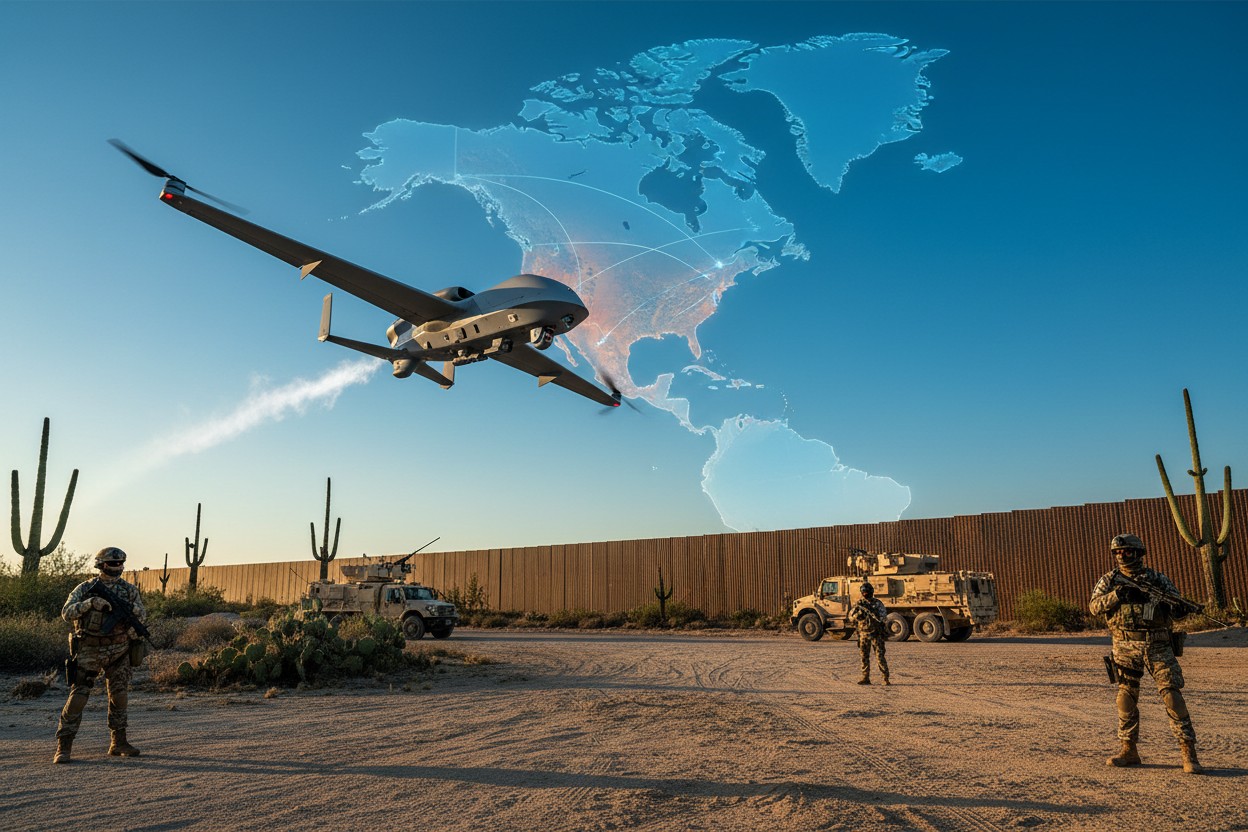
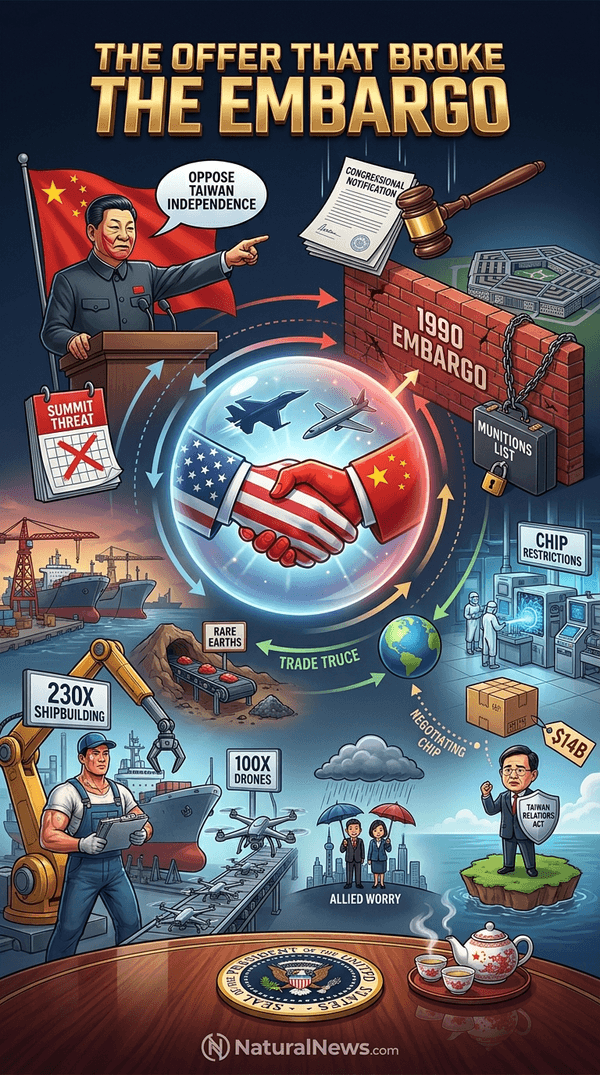
Any U.S. weapons sale to mainland China would face major legal hurdles. Congress restricted the export of defense articles on the U.S. Munitions List to mainland China in 1990, and the restrictions remain subject to limited exceptions and presidential national-interest determinations, according to the report [1]. The measures have effectively maintained a U.S. arms embargo on Beijing for decades.
The policy framework reflects a broader posture in which Washington casts Beijing as a principal long-term competitor while Chinese firms supply strategic materials to U.S. adversaries. The U.S. has warned that restrictions on rare earths and critical materials could disrupt military supply chains [2]. Against that backdrop, an American offer to sell weapons to China’s military would represent a sharp departure from established practice.
U.S. Remains Taiwan’s Principal Arms Supplier
Washington remains Taipei’s principal foreign weapons supplier while officially maintaining its one-China policy. The 1979 Taiwan Relations Act states the U.S. will make defense articles and services available to the island in quantities deemed necessary for it to maintain a “sufficient self-defense capability,” according to the report [1].
The Trump administration approved an $11 billion package for Taiwan last December, the largest announced to date. Another package worth around $14 billion has remained on hold for months; Trump described it as a “very good negotiating chip” [1]. The White House’s post-summit materials did not announce a decision on the stalled package [1].
Attention to the issue intensified before the Washington visit. Xi pressed Trump to oppose Taiwanese independence, and Beijing threatened to cancel the summit if the U.S. approved new arms sales to the island [3][4]. Xi also told Trump to handle the Taiwan issue “carefully” during an Oval Office meeting, according to the South China Morning Post, citing CCTV [5].
China Opposes U.S. Arms Sales to Taiwan
China considers Taiwan part of its sovereign territory and has demanded that the U.S. end military support. Beijing argues that U.S. arms sales violate its sovereignty and destabilize relations across the Taiwan Strait, according to the report [1]. Ahead of Xi’s Washington visit, the Chinese Ministry of Defense urged the U.S. to exercise “extreme caution” on the issue [1].
The disagreement has persisted across administrations. Analysts have described the Taiwan question as the “core of China’s core interests,” and Chinese officials have repeatedly linked U.S. arms transfers to cross-strait tensions [6]. Taiwan remains a central flashpoint even as both governments pursue modest economic agreements, including a two-month extension of the trade truce announced after the summit [7].
Perdue Defends Trump Record and Describes Deal-Making Approach
Perdue made his remark while defending Trump’s record on Taiwan. The ambassador claimed Trump has already authorized substantially more weapons for the island than his predecessors, according to the account [1]. He portrayed Trump’s question to Xi as characteristic of his deal-making approach rather than evidence a formal sale was being considered [1].
It is unclear what the U.S. could realistically offer that China does not already produce domestically. China is self-sufficient across most major conventional weapons categories, while widely cited rankings placing it behind the U.S. are based on dollar-denominated weapons revenues rather than physical output, according to the report [1].
In shipbuilding, where production can be compared more directly, China’s industrial capacity is estimated at around 230 times that of the United States. Meanwhile, congressional testimony has put its small-drone output at more than 100 times the U.S. level [1].
The episode unfolded against a broader pattern of technology restrictions and supply-chain tensions. Chinese rare-earth suppliers have halted some shipments to U.S. customers, and export controls on elements such as yttrium have become a flashpoint in the decoupling debate [2][8]. Those controls, rather than weapons sales, have dominated recent bilateral economic discussions.
No Formal Sale Announced as Details Remain Unclear
No formal U.S. weapons sale to China has been announced. The ambassador did not provide details on timing, weapons systems, or Xi’s response, according to the account [1]. Legal restrictions, Taiwan policy and China’s opposition remain significant factors that would shape any future proposal.
Neither government has issued a joint statement confirming or elaborating on the exchange. The absence of a formal announcement leaves the remark as a single-sourced description of a private conversation, without corroborating documentation.
References
- RT. “Trump asked Xi to buy US weapons – ambassador”. RT. September 28, 2026.
- NaturalNews.com. “Yttrium Export Controls Become Flashpoint as China Squeezes Western Supply Chains”. NaturalNews.com. September 22, 2026.
- ZeroHedge. “Xi Presses Trump For Taiwan Policy Shift As $14 Billion Weapons Deal Hangs In Limbo”. ZeroHedge. September 25, 2026.
- ZeroHedge. “Beijing Threatens To Cancel Trump-Xi Summit If US Approves New Arms Sales To Taiwan”. ZeroHedge. September 12, 2026.
- Antiwar.com. “Xi Tells Trump To Handle Taiwan Issue ‘Carefully’ During Oval Office Meeting”. Antiwar.com. September 24, 2026.
- ZeroHedge. “Trump Ready To Raise \u201cCore Of China’s Core Interests\u201d In Xi Summit: Daily Schedule & What To Expect”. ZeroHedge. May 12, 2026.
- ZeroHedge. “Two-Month China Truce Falls Short Of Expectations As Markets Fade Trump-Xi Summit”. ZeroHedge. September 28, 2026.
- ZeroHedge. “Chinese Rare-Earth Suppliers Halt US Shipments As Decoupling Fears Surge”. ZeroHedge. September 4, 2026.
Explainer Infographic
Submit a correction >>
Tagged Under:
arms sales, big government, chaos, China, Collapse, communist China, Dangerous, David Perdue, defense exports, Donald Trump, foreign relations, Globalism, military tech, military technology, national security, supply chain warning, Taiwan, Taiwanese independence, Trump, US weapons, violence, weapons manufacturing, weapons technology, White House, WWIII, Xi Jinping
This article may contain statements that reflect the opinion of the author
RECENT NEWS & ARTICLES