U.S. War Secretary warns Europe faces migration ‘invasion’ as EU prepares major policy overhaul
06/09/2026 / By Willow Tohi

- U.S. Secretary of War Pete Hegseth, speaking at D-Day anniversary ceremonies in Normandy, described migrant arrivals on European beaches as an “invasion” and questioned whether European leaders have waited too long to respond
- Hegseth’s remarks come as the European Union prepares to implement its most ambitious migration reforms in years, including new rules to accelerate deportations of rejected asylum seekers
- EU data shows only 20-30% of people ordered to leave the bloc actually depart, while migrant population reached a record 64.2 million in 2025
- Greek officials warned more than 500,000 people are waiting in Libya alone to cross into Europe, raising fears of a new migration crisis
- The Trump administration has framed European migration challenges as part of a broader security threat, with the 2025 National Security Strategy warning of “civilizational erasure”
The Normandy warning: Hegseth draws wartime parallels
U.S. Secretary of War Pete Hegseth used the solemn 82nd anniversary of the D-Day landings to issue a stark warning about Europe’s migration challenges, describing the arrival of migrants on European shores as an “invasion” and questioning whether European governments have waited too long to respond.
Speaking June 6 at ceremonies honoring Allied forces who liberated Nazi-occupied France in 1944, Hegseth drew direct parallels between the historic military campaign and contemporary migration patterns across the Mediterranean. “Sadly, today, different European beaches are stormed by different dangerous ideologies,” Hegseth said. “Beaches in Spain, Italy, Greece and Bulgaria. Boats and men arrive. When will European capitals do something about that invasion? Or is it too late? I pray not, and I believe not.”
The comments, reported by multiple outlets including the BBC and international wire services, represent the most direct criticism of European migration policy from a senior Trump administration official to date.
EU migration overhaul: New rules, same results?
Hegseth’s warning coincides with the European Union’s most ambitious migration reform effort in years. On June 1, EU lawmakers and member-state representatives agreed in principle on new rules designed to accelerate deportation of rejected asylum seekers. The measures complement the Migration and Asylum Pact, which restructures asylum processing, border screening and responsibility-sharing among EU member states.
The reforms address a significant enforcement gap. EU institutions and migration experts estimate that only 20-30% of individuals ordered to leave the bloc actually depart. Despite these policy changes, European Commission officials maintain that immigration remains necessary to address labor shortages, with the EU workforce shrinking by approximately 1 million people annually.
Data underscores the scale of the challenge. A Berlin-based study using Eurostat and United Nations data found that the EU’s migrant population reached a record 64.2 million in 2025, including 46.7 million people born outside the bloc. Greek Migration Minister Thanos Plevris warned last month that the EU could face a new migration crisis, with more than half a million people waiting in Libya alone to cross into Europe.
From liberation to demographic transformation
Hegseth’s D-Day speech drew on potent historical symbolism. The June 6, 1944 landings marked the beginning of the liberation of France and Western Europe from Nazi occupation. The troops who stormed Normandy’s beaches arrived to free territories under hostile control, a distinction that immigration critics and supporters alike acknowledge differentiates the 1944 operation from modern migration patterns.
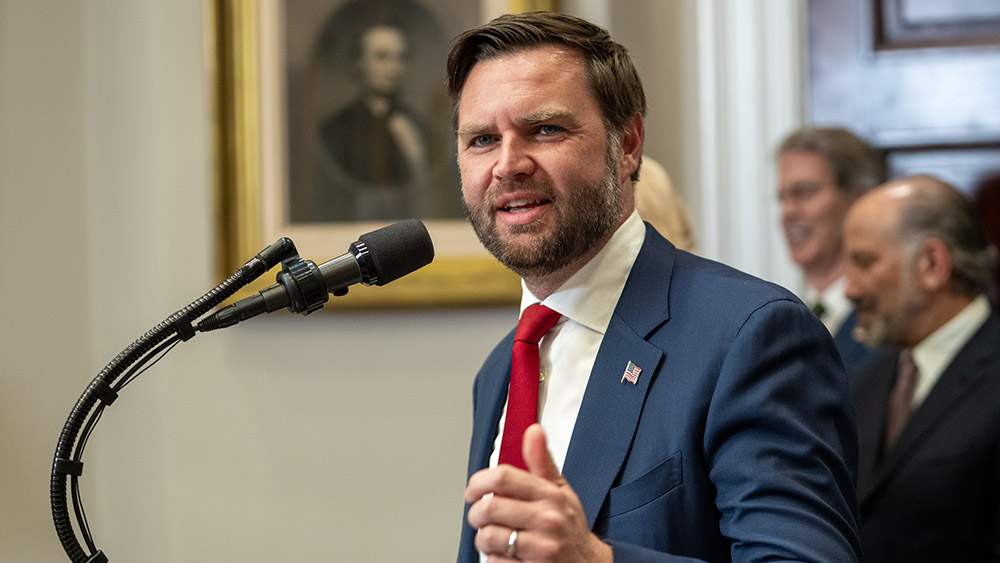
The Trump administration’s framing of migration as an existential threat represents a significant evolution in U.S.-European security discourse. The administration’s 2025 National Security Strategy explicitly warned that Europe faces “civilizational erasure” driven by migration trends. Vice President JD Vance amplified this message a day before Hegseth’s speech, blaming the death of 18-year-old British student Henry Nowak on what he described as a “mass invasion of migrants.”
British officials rejected Vance’s characterization. A Downing Street spokesperson criticized attempts to interfere in Britain’s democratic debate and noted that Nowak’s family did not want his death used to deepen social divisions. British prosecutors confirmed that the convicted individual, Vickrum Digwa, was born in the United Kingdom.
European political landscape: Rising support for restrictionist policies
Migration has reshaped European politics, with parties advocating stricter immigration controls gaining ground across the continent. The shift reflects voter concerns about demographic change, housing shortages and integration challenges that have toppled coalition governments in the Netherlands and fueled support for restrictionist parties in Italy, France, Germany and Scandinavia.
Former Green member of the European Parliament Judith Sargentini, who served as rapporteur on EU migration legislation, acknowledged in a recent interview that the terms of debate have shifted dramatically. “Ten years ago, it would have been unthinkable to be where we are now,” she said, describing how migration discourse has moved from questions of integration to proposals that would criminalize undocumented presence.
Sargentini identified a “profound crisis of trust” underlying Europe’s migration impasse, noting that facts and statistics have failed to counter emotional narratives. “A lie is extraordinarily difficult to dispel, whether with facts or counter-narratives,” she said. “You are permanently on the defensive.”
U.S. domestic context: Trump’s immigration agenda
Hegseth’s European warning reflects the Trump administration’s domestic immigration priorities. President Trump has pursued an aggressive enforcement agenda, expanding deportation operations and ICE activities while seeking billions in additional funding for border security.
The administration’s framing treats migration as a security issue requiring military-level response, a perspective that has drawn criticism from human rights organizations concerned about due process and treatment of migrant communities.
The timing of Hegseth’s remarks also coincides with broader U.S. political dynamics. As the 2026 midterm elections approach, immigration remains a central issue for Republican voters, and the administration has sought to demonstrate leadership on border security both domestically and internationally.
A continent at a crossroads
Hegseth’s Normandy address crystallized a fundamental debate facing European governments: whether migration represents an economic necessity, a humanitarian obligation, or an existential security threat. The Trump administration has clearly chosen the latter framing, using the hallowed ground of D-Day to press its case.
The EU’s migration overhaul, while ambitious, faces significant implementation challenges. Enforcement rates remain low, political consensus fractures along national lines, and the underlying demographic and economic pressures driving migration show no signs of abating. With more than half a million people waiting in North Africa and a shrinking European workforce, the continent confronts difficult choices about sovereignty, identity and the limits of liberal democratic governance.
Whether European leaders heed Hegseth’s warning or continue existing policies may determine not only the EU’s demographic future but its political stability and transatlantic relationships for decades to come.
Sources for this article include:
Submit a correction >>
Tagged Under:
big government, Border Patrol, border security, civilizational erasure, Collapse, Dangerous, EU, Europe, invasion, migrants, Migration, national security, Open Borders, Pete Hegseth, truth, UK, White House
This article may contain statements that reflect the opinion of the author
RECENT NEWS & ARTICLES